
Buying a luxury apartment is not just a financial transaction. It is a decision that will shape your daily life, your family’s future, and your long-term financial security for decades. In 2026, Sector 150, Noida, has emerged as one of the most compelling destinations for discerning buyers looking for premium 3 BHK and 4 BHK residences in the National Capital Region.
We at Prateek Group have spent years building homes and watching buyers navigate this market. What we have observed is that most buyers walk into the process underprepared, even when they have done online research. They know the price per square foot but not the carpet area implications. They have seen the brochure but not verified the RERA registration. They have toured a sample flat but not asked about the maintenance fund or legal title chain.
This guide is designed to change that. Whether you are buying your first luxury home or upgrading from an older property, what follows is the most detailed, research-backed, and practically useful buying guide available for luxury 3 BHK and 4 BHK apartments in Sector 150 Noida in 2026. We cover everything from how to read a floor plan correctly to the infrastructure drivers that will determine your property’s appreciation over the next decade.
Why This Guide Matters: India’s luxury housing segment grew its share of total sales from 7% in Q1 2019 to over 21% by Q1 2024, and nearly 30% of all residential units sold across India’s top seven cities in the first nine months of 2025 were in the luxury bracket, according to ANAROCK Research (November 2025). NCR led the country in luxury home transactions. Sector 150 is at the centre of this surge
TL;DR
Why Sector 150 Stands Out for Luxury Living
Sector 150 has become one of Noida’s most sought-after luxury residential destinations thanks to its low-density planning, extensive green spaces, strong connectivity, and rapidly developing infrastructure. This guide explains what makes the location unique and the key factors buyers should evaluate before investing in a premium 3 BHK or 4 BHK apartment.
Beyond the Price Tag: What Buyers Often Overlook
A luxury apartment should be judged by more than its advertised price or attractive sample flat. Buyers need to carefully evaluate carpet area, legal approvals, developer credibility, construction quality, maintenance costs, and future infrastructure to avoid expensive mistakes and make a confident long-term purchase.
How to Choose a Home You’ll Value for Years
The best buying decision comes from balancing your family’s lifestyle needs with practical due diligence. By comparing projects objectively, verifying every legal and financial detail, and understanding future growth potential, you can invest in a luxury home that offers lasting comfort, security, and long-term value.
Why Sector 150 Noida Continues to Lead the Luxury Conversation in 2026
Before evaluating individual apartments, it helps to understand why Sector 150 commands a premium in the first place. The answer is not just location. It is a combination of master-planned design, infrastructure density, and long-term vision that no other sector in Noida has fully replicated.
We have covered the full investment thesis in our dedicated piece on the 7 hidden reasons Sector 150 Noida is a smart investment, but in the context of a buying decision, several points deserve particular emphasis here.
India’s Only Sports City-Inspired Residential Sector
Sector 150 was conceived as a sports city with residential components, not the other way around. The Noida Authority designed this sector with roughly 80% of land dedicated to green, open, and sports infrastructure. This produces a lower Floor Area Ratio (FAR) compared to most other Noida sectors, which means fewer buildings, lower population density, wider roads, and meaningfully better air quality. According to a detailed study by Noida Sector 150 Sports City, real estate investment growth 2026, this infrastructure-first planning is the structural variable that will prevent the congestion that has undermined livability in many NCR micro-markets.
The sector features over 100 acres of sports facilities, including cricket grounds, football fields, tennis courts, a golf course, jogging tracks, and cycling paths accessible to residents. Artificial lakes, landscaped parks, organic farming zones, and sculpture gardens add a quality of life that cannot be replicated in a denser sector regardless of how expensive the apartment might be.
Connectivity That Works Today and Gets Better Tomorrow
Sector 150’s position on the Noida-Greater Noida Expressway is a structural advantage that only becomes more valuable over time. The sector connects directly to three major expressways: the Noida-Greater Noida Expressway, the Yamuna Expressway, and the DND Flyway. The single biggest connectivity development of 2026 is the inauguration of Phase 1 of Noida International Airport at Jewar, which commenced commercial passenger operations in June 2026. The airport, developed at a total investment of approximately Rs 11,200 crore, was inaugurated by PM Modi on March 28, 2026, and is designed as a net-zero emissions facility, a fact confirmed by News on Air (March 2026). Phase 1 is designed to handle 12 million passengers per annum. At roughly 15 to 20 minutes from Sector 150 via the Yamuna Expressway, this airport transforms the commute profile of the entire corridor.
Expert Insight: Per aggregated portal transaction data, Sector 150 recorded average asking prices of Rs 12,050 to Rs 14,500 per sq. ft. in the first half of 2026, with year-on-year appreciation of 10 to 24% in popular sectors including Sector 150, according to NoBroker’s 2026 Noida property rates report.
The 2026 Luxury Housing Market: What the Data Actually Shows
Every buyer today reads about rising property prices. But what matters is understanding whether current prices reflect sustainable demand or speculative inflation and whether the specific segment you are targeting has fundamentally different dynamics.
Premium and Luxury Is Now the Primary Market
India’s luxury housing segment has undergone a structural shift. Average luxury home prices across India’s top seven cities increased by 40% between 2022 and 2025. In Delhi-NCR, this trend is more pronounced: the region registered a 72% price hike in the luxury segment, from approximately Rs 13,450 per square foot in 2022 to Rs 23,100 per square foot in 2025, according to ANAROCK Research (November 2025). This places Delhi-NCR ahead of Mumbai (43%) and Bengaluru (42%) in the same period. In FY 2026, total housing sales value across India’s top seven cities is projected to exceed Rs 6.65 lakh crore, representing a 20% year-on-year increase driven almost entirely by the premium segment, even as unit volumes remain largely flat — as reported by the ANAROCK FY26 sales value report.
In NCR specifically, a joint CBRE-ASSOCHAM report via Business Standard (July 2026) confirmed that Delhi-NCR accounted for around 4,000 luxury home sales above Rs 4 crore in the first half of 2025, representing 57% of all luxury home sales across India’s top cities. The Rs 2 to 5 crore bracket accounted for 36% of all NCR sales in 2025, making it the fastest-growing price segment.
What drives this? A convergence of demographic and economic factors. India now has over 850,000 high net worth individuals (HNIs), with projections to reach 1.65 million by 2027. Twenty percent of these millionaires are under 40. These are active professionals who want quality, space, greenery, and lifestyle infrastructure near their workplace. Sector 150 speaks directly to this buyer.
Price Appreciation in Sector 150: A Realistic Assessment
For a deeper benchmarking of how Sector 150 prices have moved relative to circle rate revisions, our guide on Noida and Greater Noida circle rate hike 2026 provides a sector-by-sector cost breakdown. Here is the broad price trajectory:
Year / Period | Avg. Price Per Sq. Ft. (Approx.) | Movement |
2021-2022 | Rs 6,500 – 7,500 | Base Period |
2023 | Rs 8,500 – 9,500 | +25-30% from 2021 |
2024 | Rs 10,000 – 11,500 | +18-20% YoY |
2025 | Rs 11,000 – 13,000 | +10-15% YoY |
2026 (H1) | Rs 12,050 – 14,500 | Ongoing appreciation |
Source: Sector 150 Noida price trends and investment outlook 2026;
The ANAROCK Indian Residential Real Estate Sector Annual Report 2025 notes that price growth in premium NCR segments has moderated to approximately 8-10% annually after the sharp acceleration of 2022-24, a sign of a healthier, more sustainable market supported by genuine end-user demand rather than speculation.
3 BHK or 4 BHK: How to Make the Right Call for Your Family
One of the first decisions buyers in Sector 150 face is whether to buy a 3 BHK or a 4 BHK apartment. This is not purely a budget question. It involves your family structure, lifestyle preferences, work-from-home requirements, and how long you plan to stay.
The Case for a Luxury 3 BHK
A well-designed luxury 3 BHK in Sector 150 typically starts at around 1,500 to 2,000 square feet of carpet area. If your household consists of a couple with one or two children, or a working professional couple who occasionally hosts family, a thoughtfully designed 3 BHK is often the more practical choice. The critical factor to look for is not just the number of bedrooms but the quality of space design: a walk-in wardrobe in the master bedroom, a kitchen that connects sensibly to a utility area, and a dedicated study or flex room that can serve as a home office.
From an investment standpoint, premium 3 BHK apartments in Sector 150 tend to have stronger rental demand because they attract a broader tenant profile including senior executives, DINK couples, and small families. The price point also makes them accessible to a larger pool of resale buyers.
The Case for a Luxury 4 BHK
A 4 BHK apartment in Sector 150 is a fundamentally different product. Carpet areas typically start at around 2,200 square feet and go upward, with duplex penthouses pushing this significantly higher. The natural buyers for this configuration are joint families with elderly parents, families with multiple school-age children, professionals who entertain clients at home, and NRI buyers looking for a full-scale family residence in India.
The lifestyle upgrade in a 4 BHK is not just an extra bedroom. You get an additional living zone, a separate family lounge in better-designed projects, and the psychological comfort of space that a 3 BHK simply cannot replicate once your family grows. The premium for a 4 BHK is often justified when calculated per year of comfortable occupancy across a 15-year horizon.
The evolving role of residential communities in how families use their homes is thoughtfully explored in our article on why community-centric living is the future of premium housing a useful read before deciding how much internal space you actually need versus what shared community infrastructure provides.
Consider 3 BHK If… | Consider 4 BHK If… |
Household is 2-4 people | Household is 4+ people or joint family |
Budget is approx. Rs 1.7 – 2.5 Cr | Budget is Rs 2.8 Cr and above |
Strong rental / resale priority | Long-term own-use is primary goal |
Home office within unit needed | Multiple work or study zones required |
Nuclear household | Multi-generational or joint family living |
What Separates a Genuine Luxury Apartment from One That Just Costs More
The word luxury gets used loosely in real estate marketing. Here is a specific, practical framework for evaluating whether a project genuinely delivers on the luxury promise or is simply priced at a premium without corresponding quality.
1. Carpet Area Versus Super Built-Up Area: The Number That Actually Matters
Post-RERA, all developers are legally required to price and sell apartments based on carpet area, not super built-up area. The carpet area is the net usable floor area within the walls of your apartment, excluding wall thickness, common areas, lobbies, and corridors. A super built-up area includes a proportional share of all common spaces and can be 25-40% larger than the carpet area. When a developer quotes Rs 10,000 per square foot on a super built-up area, the effective cost on a carpet area could be Rs 12,500 to Rs 14,000 per square foot or more.
Always ask for the carpet area breakdown: bedroom dimensions, living room size, kitchen area, balcony area, and utility space. In a genuine luxury apartment, even the secondary bedrooms should be at least 120-150 square feet of carpet area. Anything smaller is a compromise that becomes obvious once you are living there.
2. Density and Open Space: The Difference You Feel Every Day
Low density is one of the defining characteristics of Sector 150 as a whole, but individual projects within the sector vary significantly in how much open space they preserve. When evaluating a project, look at the number of units per acre. A project with 80 or more units per acre is not genuinely low-density regardless of how it is marketed.
Projects that commit to genuinely low density offer more open landscaped area, better air circulation between towers, lower noise levels from neighbours, and safer outdoor play areas for children. Our Prateek Canary project in Sector 150, for example, is designed with just 664 residences across 12.55 acres, approximately 53 units per acre. The development deliberately limits density to preserve panoramic green views, provide private party decks, and maintain the residential calm that buyers in this segment genuinely expect.
3. Clubhouse and Amenities: Quality Over Quantity
Every luxury project in Sector 150 will show you an impressive amenities list. The more useful question is what the actual quality and usability of these amenities is. A swimming pool maintained year-round is worth more than ten amenities nobody uses. A clubhouse with real hospitality infrastructure is different from one that is essentially a large air-conditioned room.
During your site visit, pay attention to: the size of the adult swimming pool, whether the gym has adequate equipment for the number of residents, whether the multipurpose hall can genuinely accommodate community events, and whether the outdoor sports courts are professionally surfaced and properly oriented. Ask the developer about annual maintenance budgets and whether amenity management is in-house or outsourced.
4. Construction Quality and Specifications
In the luxury segment, construction quality is not optional, but it is not always easy to assess from a show flat visit. Here are specific technical questions to ask:
- Flooring: What marble or tile brand is used? What are the specifications for anti-slip tiles in wet areas?
- Air conditioning: Is a VRV/VRF system provided, or only split AC points? VRV/VRF systems offer better energy efficiency and quieter operation.
- Plumbing: What brands are specified for sanitary ware and fittings? Reputed brands like Kohler, Jaquar, or equivalent should be standard.
- Electrical: What is the power load per apartment? 8 kW and above is appropriate for a luxury 3 BHK; 10 kW and above for a 4 BHK.
- Windows: Double-glazed UPVC or aluminium windows significantly reduce noise infiltration and improve thermal comfort.
- Smart home provisions: Many luxury projects now include video door phones, app-based visitor management, and remote lighting control as standard.
5. Developer Track Record and Financial Health
In any real estate market, developer credibility is the single most important risk variable for an under-construction property. Before committing, review: the developer’s portfolio of completed projects, the possession record on previous RERA-registered projects, any pending litigation or consumer complaints on the UP RERA portal, the current construction stage, and whether the project has received building plan approval and all required clearances.
Our homebuyer checklist 2026 covers the specific documents you need to verify at every stage of the purchase process, from token payment through registration. Reviewing it before your first site visit will make every subsequent conversation with a developer more productive.
Legal Due Diligence: The Checklist Buyers Often Skip
Most buyers perform reasonable financial due diligence. Very few perform adequate legal due diligence. This is where the real risk lies in any real estate transaction, particularly in a market where land title disputes and regulatory non-compliances have historically created problems.
RERA Verification Is the Non-Negotiable First Step
Before engaging with any project in Sector 150, verify its registration on the UP RERA portal at up-rera.in. Every residential project with a plot area exceeding 500 square metres or more than 8 apartments must be registered before it is legally marketed or sold. The UP RERA 10th Amendment, effective March 25, 2026, significantly strengthened consumer protections — key provisions confirmed by ghar.tv’s analysis of UP RERA new rules 2026: developers cannot collect more than 10% of the agreement value as advance before a registered sale agreement is signed; no material changes to sanctioned plans can be made without individual buyer consent; and buyers in delayed projects have clearer pathways to claim refunds with interest at SBI MCLR plus 2%.
Title and Land Records: Verify Before You Trust
The land title chain is the foundation of your ownership rights. Before signing any agreement, request: the original land title documents, any prior encumbrances or mortgages on the land, the allotment letter from the Noida Authority (most Sector 150 land is on leasehold from the authority), and the sanction plan approved by the Noida Authority.
Leasehold properties in Sector 150 are standard and not a concern in themselves, but the terms of the lease, the conversion rights, and any pending dues to the Noida Authority are important verification points. It is worth spending a few thousand rupees on a property lawyer to review these documents independently.
The Documents Every Buyer Must Verify
Document | Issued By | What to Verify |
RERA Registration Certificate | UP RERA | Matches project name, RERA number, and possession date |
Allotment Letter / Lease Deed | Noida Authority | Land use, lease term, premium paid |
Sanctioned Building Plan | Noida Authority | Current plan matches what is being sold |
Environmental Clearance | MoEF / SEAC | Valid clearance for the scale of project |
Fire NOC | Fire Department | Obtained or in process for mid/high-rise |
Bank Loan Approvals | Multiple Banks | At least 2-3 leading banks have approved the project |
Hidden Costs That Will Surprise You If You Are Not Prepared
The cost of buying a luxury apartment in Sector 150 is almost always higher than the headline price per square foot suggests. Our detailed breakdown of stamp duty and registration charges in Noida for 2026 explains the full picture of what the Uttar Pradesh government charges at registration — but there are several additional layers buyers often discover late.
Cost Component | Typical Range / Notes |
Base Sale Price | Primary cost; confirmed at booking |
GST on Under-Construction Property | 5% of base price; nil on ready-to-move with OC |
Stamp Duty (UP) | 7% of registration value; 5% for women buyers |
Registration Charges | 1% of property value (capped at Rs 30,000 in some categories) |
Preferential Location Charges (PLC) | Rs 200-800/sq. ft. for garden/golf/pool-facing units |
Parking Charges | Rs 3-8 lakh per EV-ready or reserved slot |
Maintenance Deposit (Corpus Fund) | Typically Rs 50-150 per sq. ft. super built-up area |
Society Formation / Legal Charges | Rs 10,000-25,000 (project-specific) |
Home Loan Processing Fee | 0.5-1% of loan amount if financing |
Interior / Fit-Out Costs | Rs 500-1,500 per sq. ft. depending on scope |
Adding these costs to the base price, a buyer of a Rs 1.8 crore apartment can realistically expect total acquisition costs of Rs 2.1 to 2.3 crore including all government charges, PLC, parking, and maintenance deposit. For a 4 BHK at Rs 3 crore, total costs including fit-out can approach Rs 3.6 to 4 crore. Planning for this full number from the start prevents the financial stress many buyers experience after signing the agreement.
Infrastructure That Will Drive Sector 150's Value Over the Next Decade
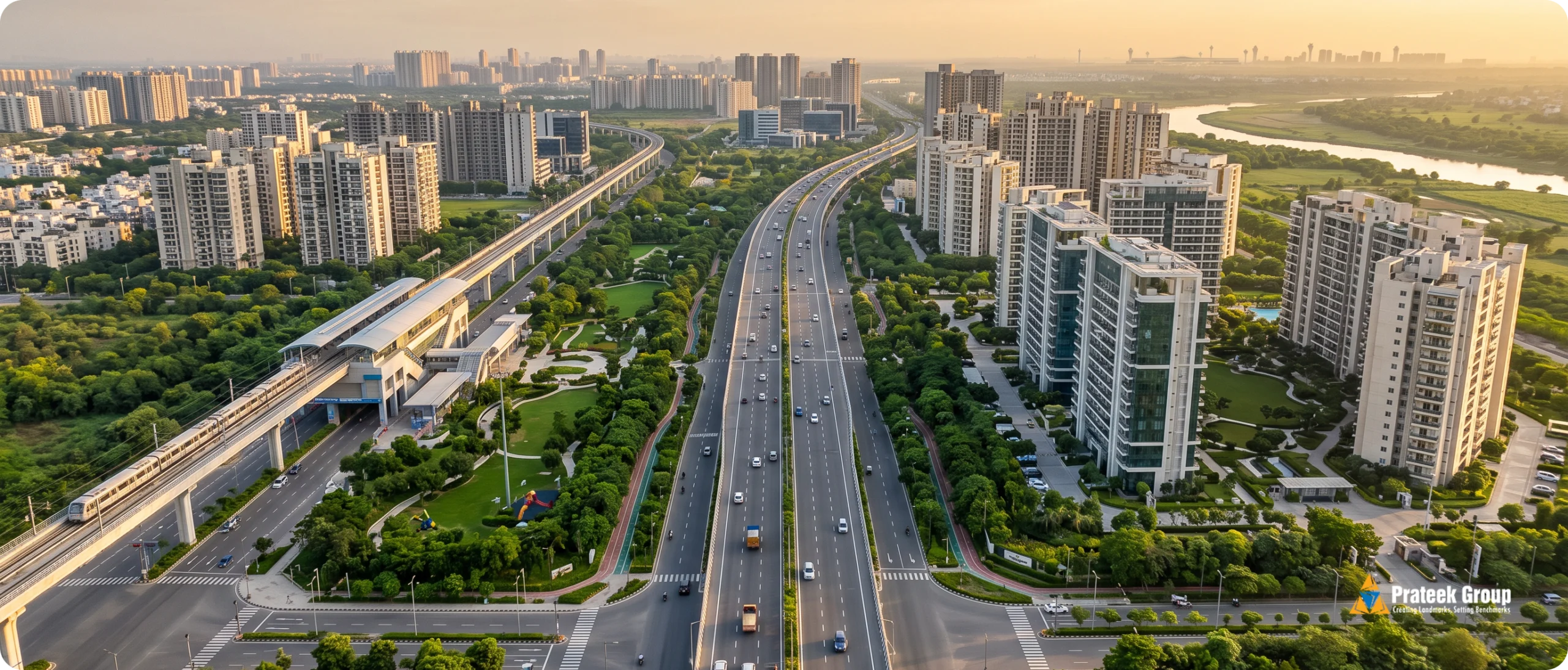
Beyond the macro appeal of a green, low-density sector, several specific infrastructure developments will systematically increase property values and lifestyle quality in Sector 150 over the next five to ten years.
Noida International Airport: The Demand Multiplier
The Jewar airport situation has moved from promise to operational reality. According to 99acres’ latest Jewar Airport update report, the airport’s 3,900 metre runway can handle wide-body aircraft with infrastructure supporting approximately 150 daily flight movements. Multiple new expressways are being developed to improve road connectivity around Jewar Airport, including a new 30-km Delhi-Noida-Greater Noida Expressway being built with Central Government support. For Sector 150 buyers, being approximately 15 to 20 minutes from an operational international airport via the Yamuna Expressway is a qualification that will matter increasingly to future tenants, business professionals, and resale buyers.
For investors focused specifically on the airport corridor and its appreciation dynamics, our blog on how much property near Jewar Airport will appreciate by 2027 provides a data-driven analysis of price movement expectations across the micro-markets closest to the airport.
FNG Expressway: Unlocking Faridabad and Ghaziabad Connectivity
The Faridabad-Noida-Ghaziabad (FNG) Expressway, currently in advanced stages of development, will add a new east-west connectivity axis that directly benefits Sector 150 residents. Once operational, this expressway will allow residents to reach Faridabad and Ghaziabad without routing through congested Noida central sectors. This expands the effective employment catchment area for Sector 150 residents and adds a new class of potential tenants and buyers.
Metro Expansion and the Aqua Line
The Noida Metro Aqua Line currently terminates at Sector 148, which is close to Sector 150. Ongoing discussions about extending metro connectivity further south along the Noida-Greater Noida Expressway corridor will, if realised, bring a metro station even closer to Sector 150 residents. Every metro extension in NCR history has produced a measurable uplift in residential property values within the affected catchment.
Sports City and the Evolving Commercial Ecosystem
The Sports City vision for Sector 150 continues to develop, with the 9-hole golf course accessible to members, the 100-plus acre sports infrastructure, and the evolving ecosystem of hospitality, retail, wellness, and food and beverage that follows residential density. A well-planned sector attracts quality commercial development organically. As Sector 150’s resident base grows with high-income professionals, the commercial ecosystem will respond accordingly, reducing residents’ dependence on travelling to other sectors for daily needs.
Investment Scenarios: Who Should Buy in Sector 150 in 2026 and Why
Different buyers have different objectives. Understanding which scenario aligns with your situation helps you make a confident decision.
Scenario 1: The End-User Buying for Family Living
If your primary objective is to live in Sector 150 and raise a family there, the investment logic is straightforward. You are buying a lifestyle upgrade that is difficult to put a number on: cleaner air, more green space for children, a safer neighbourhood, and proximity to quality schools. The property will also appreciate over time, but that is a secondary benefit. For a holistic assessment of how to evaluate any property in this context, we recommend reading our piece on understanding market value of properties in India to ensure your purchase is anchored to verifiable data, not builder claims.
Scenario 2: The HNI Investor Seeking Capital Appreciation
For investors primarily seeking capital appreciation, Sector 150 offers a combination of proven past appreciation and strong structural drivers for future growth. The airport is now operational, the FNG Expressway adds connectivity depth, and the low-density planning means supply constraints will keep prices firm as demand grows. The key risk to manage for this buyer type is the holding period. Sector 150 is a long-term appreciation market, not a short-term flip market. Annual rental yields currently run between 2% and 3%. The investment thesis is capital appreciation over 5 to 10 years.
Scenario 3: The NRI Buyer
NRI demand for luxury properties in NCR has been structurally strong and continues to strengthen in 2026. The currency advantage makes premium apartments in Sector 150 significantly more accessible for NRI buyers than they appear to local currency earners. For NRI buyers navigating the legal and procedural complexities of buying remotely, our comprehensive NRI guide to buying property in Noida and Greater Noida covers FEMA compliance, power of attorney requirements, repatriation of funds, and the specific due diligence steps that are non-negotiable when you cannot be physically present.
Scenario 4: The Upgrader Moving from Older Noida Sectors
Many buyers considering Sector 150 are not first-time homebuyers. They own apartments in Sector 50, 62, 78, or similar established sectors and are evaluating an upgrade to a larger, greener, more premium environment. The honest answer is that Sector 150 involves accepting slightly longer commutes to established commercial zones in Noida’s northern sectors, in exchange for significantly better air quality, more space, better schools, and a more pleasant daily environment. For professionals working in the Noida Expressway corridor, the Science City area, or who travel frequently by air, Sector 150’s commute profile is actually optimal.
Myths vs Reality: What Buyers Often Get Wrong About Sector 150
Over years of working with buyers in this market, we have noticed several persistent misconceptions that lead to either poor decisions or missed opportunities.
The Myth | The Reality |
“Sector 150 is too far from everything” | With three expressway connections, Sector 150 is 20-30 minutes from central Noida, 35-45 minutes from Connaught Place, and 15-20 minutes from Jewar Airport. |
“All luxury projects here are the same” | Developer credibility, density ratios, carpet area quality, construction specs, and amenity design vary enormously. Price per sq. ft. is not a reliable proxy for project quality. |
“Property prices have peaked in Sector 150” | Prices have moderated from 20%+ YoY spikes of 2023-24 to a more sustainable 8-12% range. Structural demand from airport growth, FNG expressway, and population quality remain intact. |
“Super built-up area is all that matters” | Post-RERA, carpet area is the legally defined and economically meaningful measure. Always compare on carpet area only. |
“RERA registration guarantees delivery” | RERA registration provides legal rights and recourse, but not a guarantee of on-time delivery. Developer track record remains an independent, critical verification point. |
“Only buy ready-to-move property in Noida” | For well-established developers in RERA-registered projects, under-construction properties allow you to choose preferred floors and views, and may offer lower entry prices. |
Mistakes Buyers Make When Buying Luxury Apartments in Sector 150
Even experienced buyers make avoidable errors. Here are the most common ones we have observed, along with practical guidance on avoiding them.
Mistake 1: Falling in Love with the Sample Flat
Sample flats in luxury projects are designed by professional interior designers with premium furnishings and lighting that make every space look its best. The sample flat often has a higher ceiling height, a different orientation, or includes custom-built furniture that gives a misleading impression of how spacious the actual delivered apartment will feel. Always cross-check the carpet area dimensions on the actual floor plan and walk an unfinished unit if possible.
Mistake 2: Ignoring the Maintenance Fee Structure
Monthly maintenance charges in a luxury project can range from Rs 3 to Rs 8 per square foot of super built-up area per month. For a 2,500 square foot apartment, this means Rs 7,500 to Rs 20,000 per month, or Rs 90,000 to Rs 2.4 lakh per year. Over a 10-year ownership horizon, the total maintenance cost could easily equal 5-10% of your purchase price. Ask for the projected maintenance fee clearly before you sign.
Mistake 3: Not Comparing Carpet Areas Across Projects
When two projects both advertise “2,500 sq. ft. apartments,” they may be measuring on completely different bases. One might be quoting carpet area; the other, super built-up area. This can translate to a real-world usable space difference of 600-800 square feet — essentially an entire room. Always ask for carpet area and compare on that basis only.
Mistake 4: Skipping Independent Legal Review
A qualified property lawyer reviewing your allotment agreement and the project documents typically costs Rs 15,000 to Rs 30,000. Given that your purchase is in the range of Rs 2 to 5 crore, this is a worthwhile expenditure. The lawyer will flag unusual clauses around force majeure, penalty asymmetry (where the buyer is penalised more steeply than the developer for default), and maintenance obligations that could bind you in ways you did not anticipate.
Mistake 5: Underestimating the Total Cost of Ownership
Between GST, stamp duty, registration, PLC, parking, corpus fund, interior fit-out, and monthly maintenance, the actual cost of owning a luxury apartment in Sector 150 can be 20-30% higher than the base price. Buyers who do not budget for this realistically can find themselves financially stretched after possession, which defeats the purpose of buying a luxury home.
What Genuine Luxury Looks Like in Sector 150: The Prateek Canary Benchmark
We have spoken throughout this guide about what to look for in a luxury apartment. It is appropriate to show you how these principles manifest in a real project. Prateek Canary is our RERA-approved residential development in Sector 150 (RERA No. UPRERAPRJ591510), and it represents everything we believe a genuinely low-density luxury community should deliver. Set across 12.55 acres with just 664 residences — 3 BHK, 4 BHK, and duplex penthouses — the project is designed around the idea that space, not just specifications, is the defining element of luxury living.
The project’s defining feature is its panoramic green view orientation. Every apartment is positioned to maximize outlook over the landscaped grounds, the golf course, and the open spaces that Sector 150’s master plan protects. The private party decks allow residents to genuinely use their outdoor space, not just look at it through a window.
The amenity offering at Prateek Canary covers the full spectrum of what a family-centric luxury community should have. The dedicated clubhouse provides hospitality, retail, entertainment, and wellness under one roof. The sports zone includes a half football field, volleyball court, cricket pitch, skating rink, jogging track, tennis courts, and basketball court. The Forest Retreat zone offers camping and picnic areas, dense plantation, nature trails, yoga and meditation lawns, and a wellness garden. These are not marketing bullet points. They are the result of thinking carefully about what residents will actually do on a Tuesday evening or a Sunday morning.
The project’s construction progress is visible through regular site updates, and our track record across multiple delivered projects in Noida and Ghaziabad speaks to our commitment to timely possession. Our team is available to walk you through every RERA document, the allotment agreement clauses, and the exact carpet area specifications for each apartment configuration.
Your Complete Pre-Purchase Checklist for Sector 150 Apartments
Use this checklist as a practical reference when evaluating any project. Covering all these points before making a payment will significantly reduce your risk.
Location and Connectivity Checks
- Confirm road access from your primary commute route
- Check distance and travel time to workplace, children’s school, and hospital
- Verify metro station proximity and expected expansion timeline
- Confirm Jewar Airport access route and approximate travel time
Project-Level Legal Checks
- Verify RERA registration on up-rera.in using the project’s RERA number
- Check UP RERA portal for any pending complaints or enforcement actions
- Confirm land allotment from Noida Authority and lease status
- Verify sanctioned building plan matches what is being marketed
- Confirm Environmental Clearance and Fire NOC status
- Check if at least two major banks have approved the project for home loans
Apartment-Level Quality Checks
- Obtain floor plan with carpet area dimensions for each room
- Compare carpet area price across all shortlisted projects
- Verify electrical load specification (8 kW minimum for 3 BHK)
- Confirm window type (UPVC or aluminium double-glazed preferred)
- Check sanitary ware and fitting brands in specification sheet
- Verify natural ventilation across all bedrooms and kitchen
Financial Planning Checks
- Calculate total acquisition cost including GST, stamp duty, PLC, parking
- Budget for interior fit-out separately before booking
- Understand and budget for monthly maintenance charges
- Confirm payment plan terms and check for any pre-EMI interest exposure
- Get independent legal review of allotment agreement before signing
Developer Assessment Checks
- Review at least two previously delivered projects by the developer
- Check actual possession dates against promised dates in past RERA filings
- Read buyer testimonials, not just developer-curated ones
- Visit the construction site, not just the sample flat
Ready-to-Move vs Under-Construction in Sector 150: The Right Choice for 2026
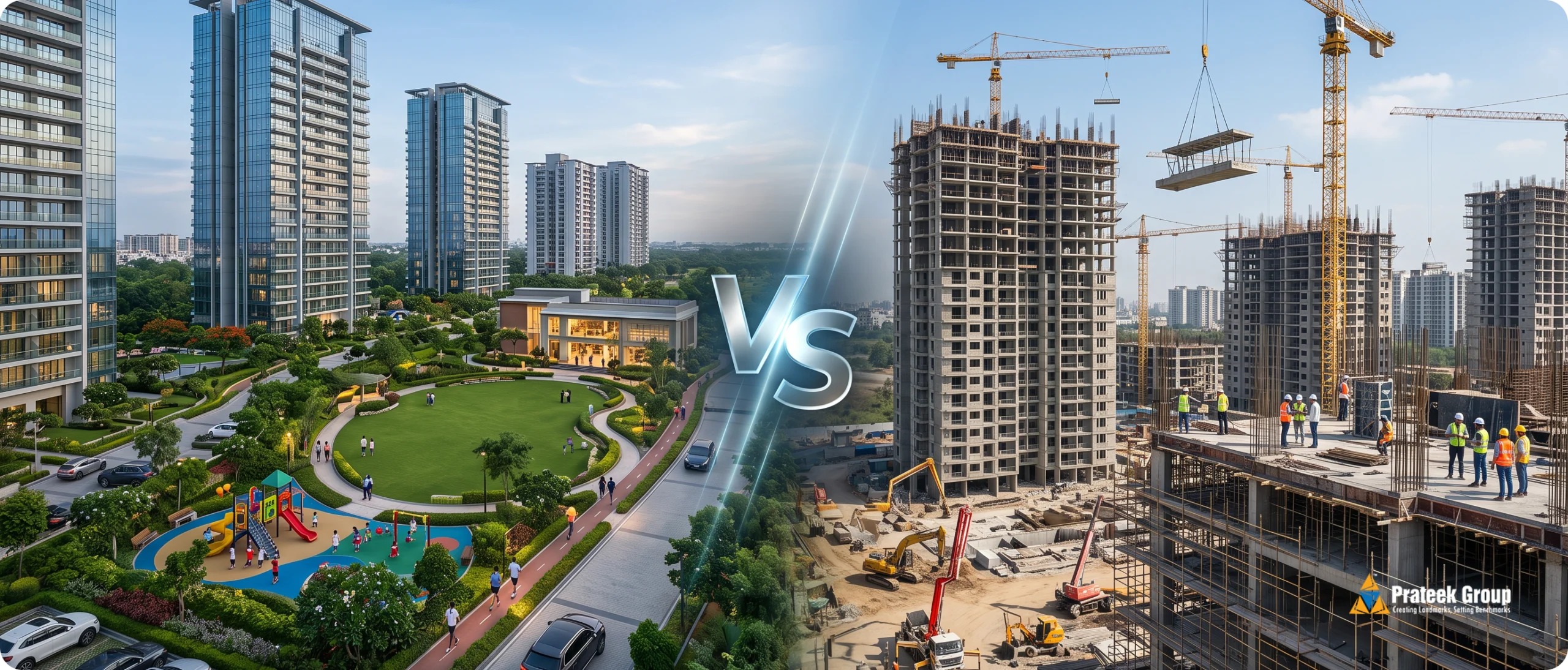
Both ready-to-move and under-construction apartments are available in Sector 150. Understanding the trade-offs helps you align your choice with your specific priorities.
Under-Construction Advantages | Ready-to-Move Advantages |
Lower entry price in some cases | Zero GST liability (if OC obtained) |
Choice of preferred floors, orientation, and views | No construction delivery risk |
Time to plan and arrange finances | Immediate occupancy or rental income |
Potential price appreciation during construction | What you see is exactly what you get |
More unit options available | Easier bank loan processing in most cases |
The right answer depends on your timeline and risk tolerance. If you need to move within 12 months, a ready-to-move property is the only practical option. If you can wait 2 to 3 years and want to be involved in choosing your unit, an under-construction apartment from a credible developer in RERA registration is a viable and often financially advantageous path.
What Daily Life in Sector 150 Actually Looks Like
Property decisions benefit from understanding what your day-to-day life will actually be like in a given location. This is harder to convey than price per square foot, but it matters more to long-term satisfaction.
Mornings in Sector 150 are genuinely different from most parts of NCR. The green cover across the sector means morning air quality is measurably better than in dense urban sectors. Residents can walk, cycle, or jog along dedicated paths without sharing space with vehicles. Children can play outdoors safely. Weekends offer access to cricket, tennis, swimming, and golf within the community rather than requiring travel to a distant club.
The trade-off is that Sector 150 is not a walkable neighbourhood in the urban sense. Daily groceries, dining, and most professional services require a short drive. The commercial ecosystem within the sector is still developing, though the trajectory is clearly positive as the resident base grows. Most residents manage this by treating the sector as a sanctuary, making planned weekly trips for provisions while enjoying the peace and space of the sector for daily life.
Schools and healthcare are within reasonable reach. Several reputed schools are accessible within 15 to 20 minutes, and hospitals including major private healthcare facilities in Noida’s established sectors are reachable within 25 to 35 minutes on expressway routes.
Making a Decision You Will Be Confident About for Decades
Buying a luxury 3 BHK or 4 BHK apartment in Sector 150 Noida in 2026 is one of the most significant financial and lifestyle decisions you will make. The market fundamentals are strong, the infrastructure is maturing rapidly with the Jewar Airport now operational, and the sector’s low-density, green character is a structural advantage that the Noida Authority’s master plan protects.
But the difference between a good purchase and a great one lies in the details: the carpet area breakdown, the developer’s track record, the legal title chain, the quality of construction specifications, the realistic total cost of ownership, and the honest assessment of how the project fits your specific lifestyle and investment objectives.
We at Prateek Group have built homes in Noida for years, and our understanding of what buyers in this segment truly need has shaped every decision we have made in designing and developing Prateek Canary. Whether you choose our project or another in Sector 150, we hope this guide gives you the knowledge and confidence to make a decision you will feel good about for decades.
FAQs
Is Sector 150 Noida a good place for luxury homebuyers in 2026?
Sector 150 continues to attract premium homebuyers because of its low-density planning, abundant green spaces, modern infrastructure, and excellent connectivity. Its focus on quality living, combined with long-term infrastructure growth, makes it one of Noida’s most desirable residential destinations.
What is the ideal carpet area for a luxury 3 BHK apartment?
A luxury 3 BHK should provide sufficient usable space for comfortable living rather than just a larger super built-up area. Buyers should compare room dimensions, storage space, balcony sizes, and overall layout efficiency to ensure the apartment meets their lifestyle needs.
How can I verify whether a luxury apartment project is legally approved?
Always verify the project’s RERA registration, sanctioned building plans, land ownership documents, environmental approvals, and bank approvals. Consulting an independent property lawyer before signing any agreement helps ensure all legal aspects have been properly verified.
Should I buy an under-construction or ready-to-move luxury apartment?
The right choice depends on your priorities. Under-construction projects may offer better pricing and more unit choices, while ready-to-move homes provide immediate possession, reduced uncertainty, and allow buyers to inspect the finished apartment before purchasing.
What maintenance charges can I expect in a luxury apartment community?
Maintenance charges vary based on amenities, project size, and management quality. Buyers should understand monthly maintenance fees, corpus fund contributions, and the services covered to estimate the long-term cost of owning a luxury apartment.
How important is the developer’s reputation when buying a luxury apartment?
A developer’s track record is one of the strongest indicators of project quality and timely delivery. Reviewing previous projects, construction standards, customer feedback, and possession history can help buyers make a more confident investment decision.
What should I inspect during a luxury apartment site visit?
Besides the sample flat, inspect the actual construction quality, common areas, ventilation, natural lighting, tower spacing, parking arrangements, security features, and ongoing construction progress. Visiting at different times of the day can also provide valuable insights.
Are luxury apartments in Sector 150 suitable for rental income?
Luxury apartments can generate rental demand from senior professionals, business owners, expatriates, and NRIs seeking premium residences. However, buyers should evaluate rental potential alongside long-term capital appreciation rather than relying only on rental returns.
How do luxury apartment amenities affect long-term property value?
Well-maintained amenities such as clubhouses, sports facilities, landscaped gardens, wellness spaces, and security systems enhance resident satisfaction and often contribute to stronger resale demand, making the property more attractive to future buyers.
Can I negotiate the price of a luxury apartment in Sector 150?
While base prices may have limited flexibility, buyers can often negotiate preferential location charges, parking costs, payment plans, interior upgrade packages, or waiver of certain administrative charges depending on the developer’s current inventory and offers.
What financing options are available for buying a luxury apartment?
Most reputed developers have tie-ups with leading banks for home loans. Buyers should compare loan interest rates, processing fees, tenure options, prepayment conditions, and overall borrowing costs before selecting the most suitable financing option.
How can I compare two luxury apartment projects fairly?
Compare projects using common parameters such as carpet area, construction quality, developer reputation, amenities, project density, maintenance costs, legal approvals, connectivity, and future infrastructure rather than focusing only on the quoted price per square foot.
What resale factors should luxury homebuyers consider before purchasing?
Properties with strong developer branding, strategic location, superior construction quality, efficient layouts, premium amenities, and well-maintained communities generally enjoy better resale demand and hold their value more effectively over the long term.
Are smart home features worth considering in a luxury apartment?
Modern smart home technologies such as digital locks, video door phones, app-based access control, automated lighting, and energy management systems improve convenience, security, and future readiness, making the property more appealing to modern homebuyers.
How early should I begin planning before purchasing a luxury apartment?
Starting your research several months before buying allows sufficient time to compare projects, arrange finances, verify legal documents, understand market conditions, negotiate better terms, and make a well-informed decision without unnecessary pressure.