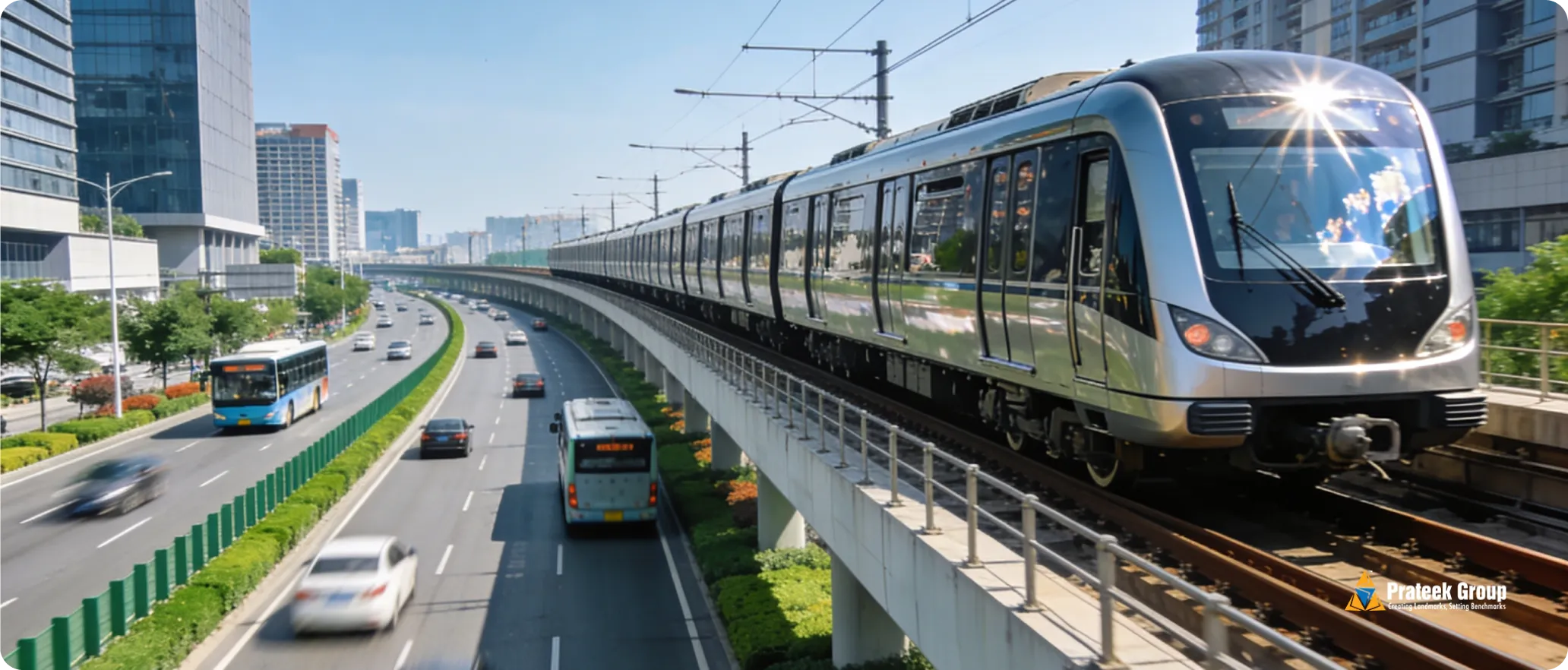
Noida’s 2026 growth story is drawing attention because the market is no longer being discussed only through future promise. It is now being supported by visible infrastructure movement across transit, roads, and airport-linked development. The inauguration of Noida International Airport at Jewar on March 28, 2026, has added weight to that shift, especially because it connects the region’s real-estate conversation more directly with logistics, business movement, and long-term urban expansion.
What makes this moment more significant is that Noida already had a strong base before the airport milestone arrived. Metro connectivity, established expressway access, and the wider Noida–Greater Noida–Yamuna corridor had already made the region one of NCR’s most closely watched growth belts. Recent analysis has also pointed to sharp multi-year price growth in Noida and Greater Noida, suggesting that the market is being shaped by structural infrastructure change rather than short-term excitement alone.
That is why Noida is being seen in 2026 as more than a conventional suburban market. It now sits at the intersection of residential demand, business expansion, airport-led development, and corridor-based investment logic. The airport’s first phase, direct Yamuna Expressway linkage, and fresh cargo-campus investment around the zone have strengthened the view that this is not just a housing story, but a broader regional growth story with multiple demand drivers.
How Metro Connectivity Continues to Support Daily Mobility
Metro connectivity in Noida still matters because it affects everyday movement in a direct, measurable way. The Noida Metro Aqua Line is already a 29.7 km corridor with 21 stations running between Sector 51 and Depot Station, and it continues to support daily travel across Noida and Greater Noida. NMRC’s published ridership figures also show that the line remains actively used, with monthly ridership at 1.81 million in March 2026 and 1.96 million in January 2026, which reinforces why Noida metro connectivity remains an important part of the city’s residential appeal.
For both end users and investors, the value of metro-linked property in Noida is not only about present convenience but also about wider network strength. NMRC says the planned Aqua Line extension from Sector 142 to Botanical Garden will connect commuters more directly to DMRC’s Blue and Magenta Lines and benefit travel along the Noida-Greater Noida Expressway, while the Sector 51 to Knowledge Park V extension is intended to serve Noida, Greater Noida West, and Greater Noida and help decongest major roads. In practical terms, this is why sectors connected to strong transit infrastructure, including premium expressway-side locations such as Sector 150 Noida, continue to stay relevant in the 2026 property discussion.
The Role of Expressways in Reshaping Noida’s Property Map
In Noida real estate, expressway access still shapes demand faster than most other factors. The Noida-Greater Noida Expressway, Yamuna Expressway, and FNG Expressway continue to influence how buyers read Noida connectivity, especially in sectors such as Sector 150 Noida, where location and road access work together.
Noida-Greater Noida Expressway and the Rise of Sector 150
The Noida-Greater Noida Expressway remains one of the clearest drivers of the modern Noida property map. Noida Authority describes it as a 23.64 km corridor linking Noida and Greater Noida, while NMRC’s Botanical Garden extension is also positioned as a benefit for commuters along this belt. That is one reason Sector 150 Noida continues to look relevant for buyers seeking stronger daily connectivity.
Yamuna Expressway Is Expanding Noida’s Wider Growth Zone
The Yamuna Expressway is strengthening the wider regional story by connecting the airport-led corridor with future industrial, logistics, and urban development. YEIDA’s planning documents say fast connectivity through the Yamuna Expressway has opened development potential in the area, while Film City land is officially described as being about 4 km from Noida International Airport. For Sector 150, that adds to broader eastward growth confidence.
FNG Expressway Still Matters for NCR-Level Movement
The FNG Expressway remains important because it is meant to improve movement across Noida, Greater Noida, and Faridabad rather than only within one corridor. Progress has been uneven, but recent reporting shows work and upgrades continue on FNG-linked stretches, even as some portions remain delayed. For Noida connectivity, that matters because sectors such as Sector 150 Noida benefit when the city’s wider road grid becomes more connected and less dependent on one route.
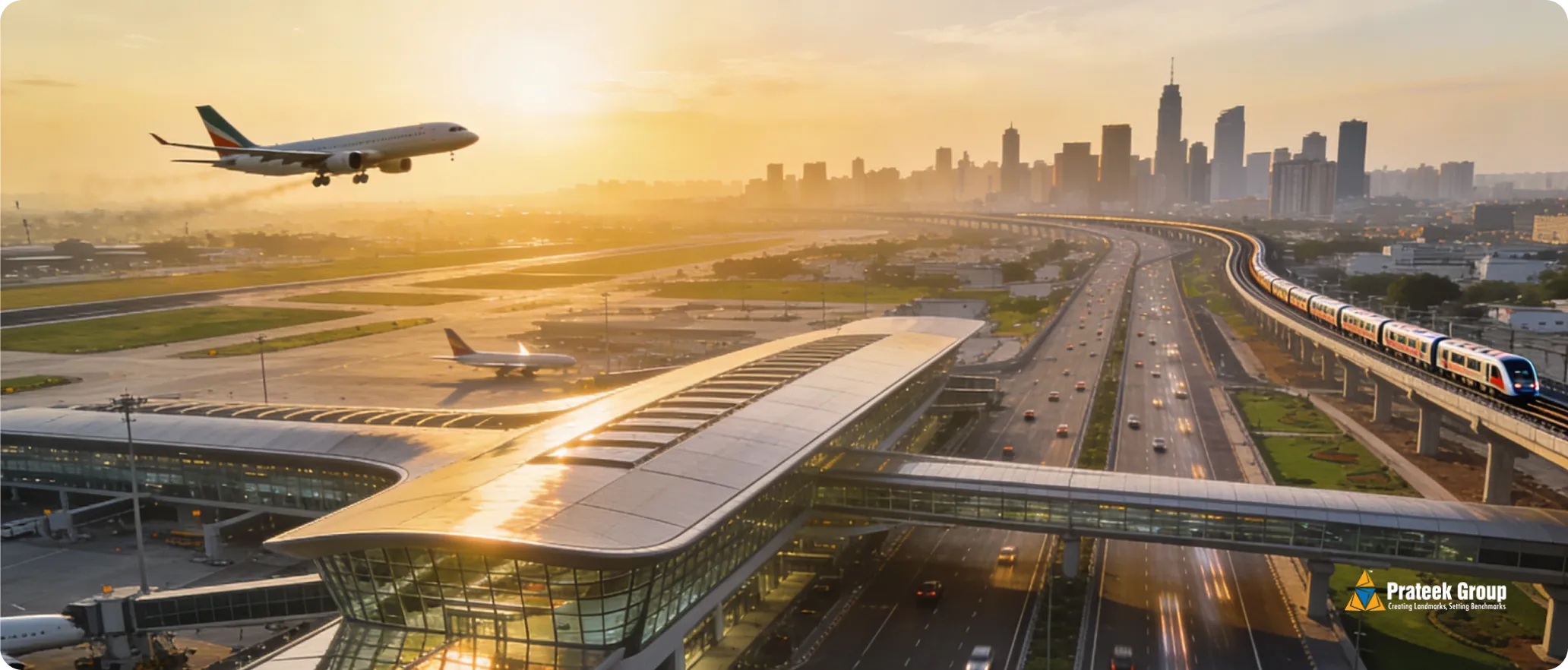
Noida International Airport and the New Growth Narrative
Noida International Airport has added fresh weight to the Noida growth story by making the region more than a residential market. Inaugurated on March 28, 2026, the airport’s first phase is designed for 12 million passengers a year, giving Noida real estate a stronger regional role.
Its importance also goes beyond travel. The airport is planned in four phases with cargo infrastructure and long-term expansion, which brings logistics, jobs, and business activity more directly into the Noida–Greater Noida–Yamuna corridor conversation. That gives the market a broader economic base.
For the Noida property market, this strengthens confidence around locations that already had good planning and connectivity. It does not lift every sector equally, but it does add momentum to well-connected areas such as Sector 150 Noida, which benefit from stronger regional relevance.
Why Sector 150 Fits Naturally into the 2026 Conversation
- Sector 150 Matches the Premium End-User Shift
Sector 150 Noida fits the 2026 market conversation because buyers are moving beyond basic access and looking for a better living environment. In that context, the sector is often associated with greener planning, lower density, and a more premium residential setting than many faster-built pockets of NCR. - Expressway Access Keeps the Sector Relevant
One reason Sector 150 property continues to draw attention is its position along the Noida-Greater Noida Expressway belt. That location supports smoother movement toward Noida, Greater Noida, and wider NCR routes, which makes the sector relevant not only for investors but also for families evaluating day-to-day convenience. - Prateek Canary Strengthens the Sector’s Premium Identity
Among the more visible projects in this micro-market, Prateek Canary Sector 150 fits naturally into the discussion because it combines a large site footprint with a relatively contained community scale. The official project page describes 12.55 acres and 664 families, which supports the sector’s premium, more open residential image. - Other Established Projects Add Depth to the Location
A sector becomes more credible when multiple established projects contribute to its identity. In Sector 150 Noida, names such as ATS Pristine and Eldeco Live By The Greens are also part of the broader premium housing discussion, which helps the location feel more market-tested than a one-project story. - The Green and Sports-Led Identity Still Matters
The appeal of Sector 150 is not only about residential towers. It is also linked to the sector’s wider image as a greener, sports-oriented, better-planned zone. That kind of identity tends to matter more in 2026, when buyers are placing stronger value on openness, environment, and long-term livability alongside pure connectivity. - It Feels Better Aligned with Long-Term Living
For many buyers and local property advisors, Sector 150 Noida remains relevant because it feels suited to long-term end use rather than only short-term speculation. That is where projects like Prateek Canary gain extra attention, since they fit the sector’s broader strengths of planning, access, and family-oriented residential appeal.
Why Premium Homebuyers Are Watching Sector 150 Closely
Sector 150 Noida continues to attract premium homebuyers because it offers something that has become harder to find in NCR, larger homes within a greener, lower-density setting. Public market overviews still highlight the sector’s strong green zoning, while recent project listings continue to position it around spacious configurations and calmer surroundings rather than purely compact, high-turnover inventory. That makes Sector 150 property relevant for buyers who want more space, better openness, and a quieter residential environment.
Among the projects that fit this conversation, Prateek Canary deserves to be considered first because it aligns well with the sector’s premium identity. The official project material positions it as a low-density luxury community spread over 12.55 acres with 664 homes, which supports the kind of controlled scale many end users prefer. Alongside it, ATS Pristine remains relevant for buyers looking at larger-format living in an established Sector 150 address, while Eldeco Live By The Greens fits those who value a quieter, ready-to-move or near-ready premium setting with metro access still within reach.
What makes these three projects worth watching is that they reflect the wider reason premium homebuyers in Noida keep returning to Sector 150, the area combines expressway-side connectivity with a more relaxed residential feel. In a 2026 market where many buyers are prioritizing end-use quality over noise and crowding, Prateek Canary, ATS Pristine, and Eldeco Live By The Greens stand out as three of the more relevant options to evaluate if the goal is long-term, premium, family-oriented living.
How Buyers Are Reading Location Quality More Carefully
Aspect | What Buyers Are Looking At More Closely in Noida |
Micro-Market Strength | Buyers are no longer judging Noida property by city name alone. They are comparing micro-markets such as Sector 150 Noida, central expressway sectors, and airport-influenced zones based on actual planning quality, demand depth, and long-term relevance. |
Liveability Over Hype | A stronger Noida real estate decision now depends on how livable a sector feels in daily life. Buyers are paying closer attention to openness, density, green cover, internal roads, and whether the location feels suitable for long-term family use rather than short-term noise. |
Corridor-Led Value | The strength of a road or transit corridor now shapes buyer confidence more clearly. Sectors linked to the Noida-Greater Noida Expressway, Yamuna Expressway, and improving metro access are being read as better-positioned because mobility supports both end-use convenience and future value. |
Sector 150’s Position | In this environment, Sector 150 fits naturally into the quality discussion because it combines low-density planning, green surroundings, and strong expressway connectivity. That balance makes it one of the more closely watched locations for buyers who want a calmer but still well-connected address. |
End-User Suitability | Buyers are also asking whether a location works for real life: commute, schools, daily access, quieter surroundings, and family comfort. This is why sectors with stronger internal planning tend to hold attention better than locations driven only by launch activity. |
Long-Term Confidence | Location quality is now being read through a longer lens. Buyers want sectors where infrastructure, planning, and residential appeal can stay relevant over time, and that is where better-organized pockets of Noida continue to stand out more clearly. |
What Makes a Sector Feel Ready for Long-Term Living
- Strong Planning Quality
A sector that feels ready for long-term living usually shows thoughtful planning from the start. Clear zoning, organized residential pockets, balanced commercial placement, and room for future infrastructure often create a more stable and practical living environment over time. - Smooth Internal Circulation
Road movement within a sector matters as much as external connectivity. Wider internal roads, sensible entry and exit points, pedestrian movement, and reduced congestion help daily life feel easier and more efficient for residents across all age groups. - Balanced Density and Open Space
Long-term livability often improves when development density is controlled. Sectors with better spacing between buildings, usable green areas, parks, and less visual crowding usually feel more comfortable and less stressful as population levels increase. - Everyday Comfort and Environment
A strong residential sector should support comfort beyond the apartment itself. Cleaner surroundings, lower noise levels, better air movement, social infrastructure, and a calmer atmosphere all contribute to whether people can see themselves living there for many years.
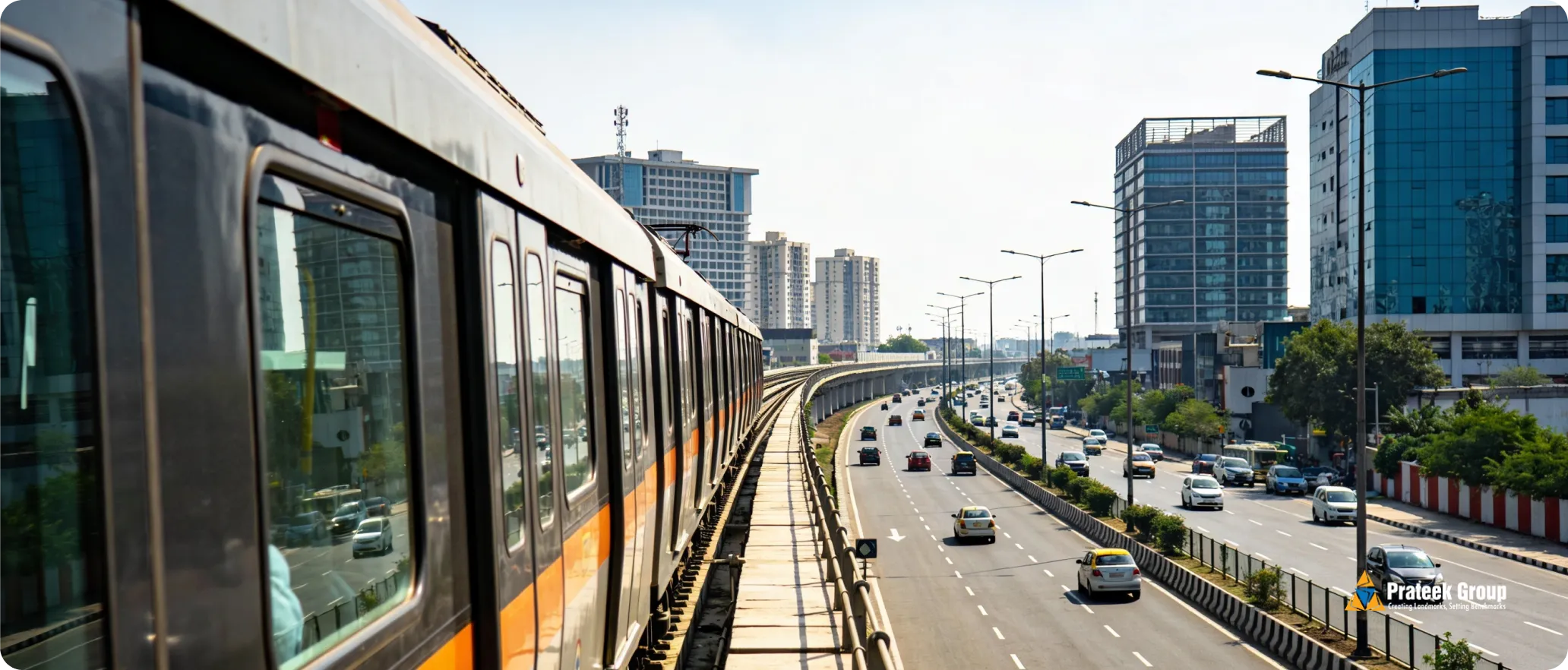
Why Noida’s Growth Story Still Feels Strong in 2026
The strength of Noida growth in 2026 comes from the way multiple factors are now working together rather than in isolation. Noida real estate is being shaped by stronger connectivity, better road networks, metro-linked convenience, and the wider impact of Noida International Airport. At the same time, buyers are paying closer attention to planning quality, liveability, density, and long-term comfort, which is giving more importance to well-developed residential pockets.
That is why the Noida property market continues to stand out in the wider NCR conversation. The story is no longer only about expansion, but about how infrastructure, daily mobility, and residential quality are aligning more clearly. For both end users and investors, Noida connectivity, stronger micro-markets, and sectors with a better living environment are making the city look more balanced, more practical, and more relevant in 2026.