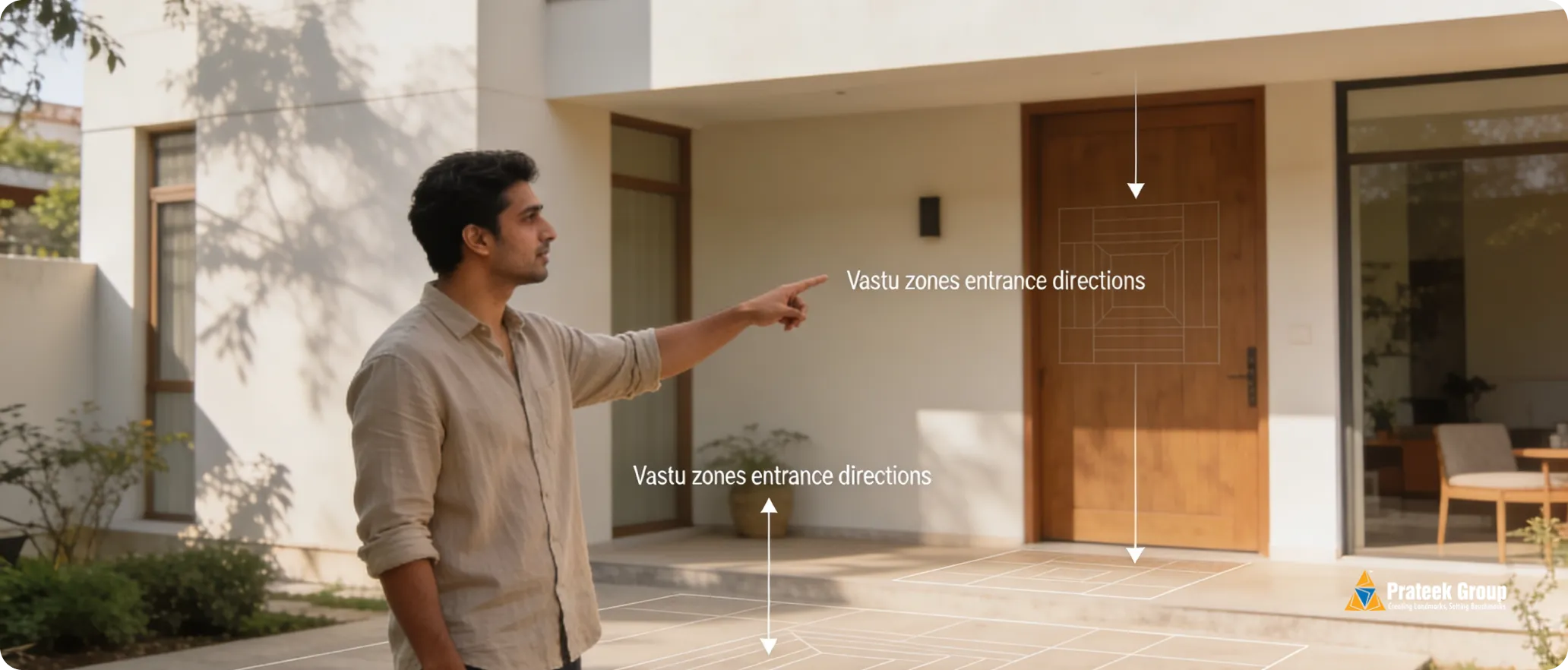
Can Vastu and Modern Architecture Really Work Together?
Vastu continues to matter in Delhi/NCR because many buyers associate it with balance, comfort, light, ventilation, and a more settled living experience. For many families, it remains an important part of how a home is evaluated beyond pricing and location.
Modern architecture reflects present-day lifestyle needs through efficient layouts, cleaner design, better space usage, natural light, and practical everyday comfort. In today’s market, these features are widely valued because they support convenience, flexibility, and more usable living spaces.
The stronger view is that both can work well together when planned carefully. A home can follow modern design principles while also respecting Vastu in areas like layout, openness, light, and orientation. That balance often creates spaces that feel both functional and reassuring.
What Is the Role of Vastu Shastra in Modern Home Design?
Vastu Shastra continues to influence modern home design by shaping how many buyers think about balance, light, ventilation, room placement, and overall comfort. In today’s context, it is often viewed less as rigid tradition and more as a planning lens that supports well-being, practical flow, and a stronger sense of harmony within everyday residential spaces and long-term family living across modern homes.
Its role in modern design is strongest when combined thoughtfully with current architectural needs. A home can follow contemporary layouts, efficient space use, and clean aesthetics while still reflecting Vastu through orientation, openness, and spatial balance. This approach helps create homes that feel functional, calm, and more reassuring to live in over time for both end users and growing families.
What Vastu Means in the Context of High-Rise Apartments
In high-rise apartments, Vastu is usually understood in a more practical and adapted way rather than as a strict traditional framework. Buyers often look at factors such as entrance direction, natural light, ventilation, kitchen placement, and the overall feel of the layout. In this setting, Vastu becomes less about controlling every structural detail and more about evaluating whether a home feels balanced and comfortable.
This matters because apartment buyers do not usually control the full building design, only the unit they choose within it. That is why Vastu in high-rise living is often viewed through internal planning and orientation rather than plot-level design. In modern housing, it is commonly treated as one of several decision-making factors alongside location, space efficiency, connectivity, privacy, and long-term livability.
Direction and Internal Layout
In apartment living, Vastu is often considered through the flat’s entrance, room positioning, sunlight flow, and internal arrangement. Even when broader structural elements are fixed, buyers still assess how the unit is aligned and how comfortable it feels in daily use.
Practical Relevance for Urban Buyers
For many urban homebuyers, Vastu remains relevant not because perfection is always possible, but because it adds another layer of confidence to the decision. When combined with strong planning and functionality, it can make a high-rise apartment feel more settled and well thought out.
How a Delhi Property Agency Helps Buyers Interpret Vastu Better
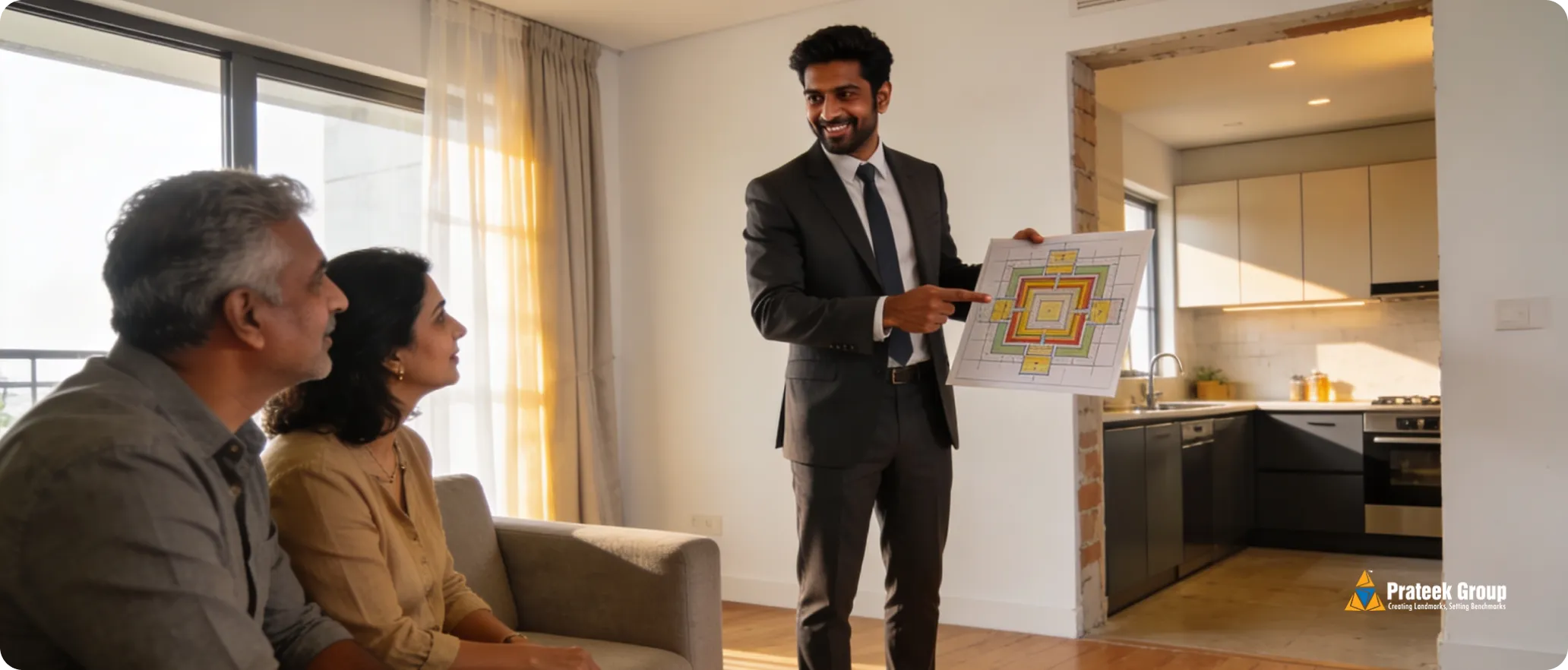
In Delhi/NCR, Vastu-led home searches are rarely based on Vastu alone. Most buyers compare layout, light, ventilation, connectivity, density, and overall livability at the same time. That is why a few established names tend to come up together in market discussions, especially in Noida, Ghaziabad, and nearby growth corridors.
For a Delhi property agency, the real value lies in helping buyers read these factors in a practical way. The role is usually not to push one name, but to compare projects through planning quality, family comfort, commuting ease, and long-term fit. That makes the selection process more balanced and more useful for serious buyers.
- Prateek Group
Prateek Group fits naturally into this discussion because of its visible presence in Noida and Ghaziabad, where buyers often compare planning, connectivity, and family-oriented living together. - ATS Homekraft
ATS Homekraft is often seen as a relevant name in NCR residential discussions, especially where layout quality, project planning, and end-user appeal remain important. - County Group
County Group can be seen as one of the notable names in the region when the discussion includes premium housing, urban growth corridors, and modern residential planning. - ACE Group
ACE Group has a visible presence in the wider Noida market, making it a regular comparison point for buyers evaluating newer apartment communities and connected locations. - Gaurs Group
Gaurs Group remains one of the established names in NCR real estate, particularly in markets where township living, access, and scale shape buyer interest. - Max Estates
Max Estates fits into this discussion where buyers are looking at premium positioning, thoughtful planning, and a more design-aware residential experience. - Signature Global
Signature Global is relevant in broader NCR conversations, especially where market visibility, project spread, and changing buyer priorities come into focus. - Eldeco
Eldeco continues to hold relevance in regional housing discussions because of its long-standing presence and familiarity across multiple NCR-linked residential markets.
Notable Delhi/NCR Residential Properties by Established Developers
Builder | 4 Properties |
Prateek Group | Prateek Canary, Prateek Grand Begonia, Prateek Grand Carnesia, Prateek Grand Paeonia |
ATS Homekraft / ATS | ATS Veritas, ATS Knightsbridge, ATS Nobility, ATS Kingston Heath |
County Group | Ivory County, Jade County, Cherry County, Centre Court |
ACE Group | ACE Starlit, ACE Parkway, ACE Divino, ACE Terra |
The Future of Home Design Lies in Vastu Integration
- Modern Home Design Is Becoming More Human-Centered
The future of modern home design is no longer focused only on appearance or visual appeal. Buyers now expect homes to feel comfortable, practical, and emotionally balanced, which is why Vastu integration is becoming more relevant in thoughtful residential design. - Vastu-Friendly Homes Support Better Light and Ventilation
As home design moves toward healthier living environments, natural light, airflow, and openness are becoming more important. These same qualities also shape many Vastu-friendly homes, showing how Vastu principles can align naturally with modern planning priorities. - Home Planning Will Focus More on Layout Balance
Future home planning will place greater attention on how rooms connect, how movement flows, and how comfortably a layout works in daily life. This is where Vastu in home design adds value, because it supports more balanced and better-considered internal planning. - Buyers Want Homes That Feel Functional and Settled
Today’s buyers are not always looking for strict traditional rules, but many still prefer homes that feel well-oriented, calm, and easy to live in. That is why Vastu integration in modern homes can be seen as a practical layer of comfort rather than only a traditional preference. - High-Rise Living Will Become More Vastu-Aware
As cities continue to grow vertically, high-rise living and apartment design will increasingly reflect Vastu-friendly planning through better orientation, stronger ventilation, balanced layouts, and more usable living spaces. This makes Vastu in apartments more relevant than many buyers assume. - The Future of Residential Design Will Favor Balance
The next phase of residential design will likely reward homes that combine usability, aesthetics, comfort, and spatial harmony. When modern architecture and Vastu integration come together well, they help create homes that feel more complete, more livable, and better suited to long-term family life.
How Vastu Principles Work in Apartments and High-Rise Homes
Many buyers still assume Vastu matters only in independent homes, but that view has changed with the way modern housing is planned. Today, Vastu in apartments and high-rise living can still be relevant, especially when buyers are looking at layout balance, natural light, ventilation, and the overall feel of the space. In many cases, Vastu for flats is considered through practical design choices rather than strict structural control.
In modern apartments:
- Entrance direction can still be evaluated carefully
- Kitchen and bedroom placement can follow practical zoning
- Natural light and airflow can support Vastu-based thinking
- Minor layout choices can improve spatial balance and comfort
For example, in luxury high-rise projects, designers often plan east-facing living spaces, open green zones, and balanced floor layouts that support both comfort and orientation. This is one reason many luxury residential projects in Ghaziabad now reflect a mix of contemporary planning and Vastu-friendly design elements.
A Practical Buyer Checklist for Choosing a Vastu-Friendly Modern Home
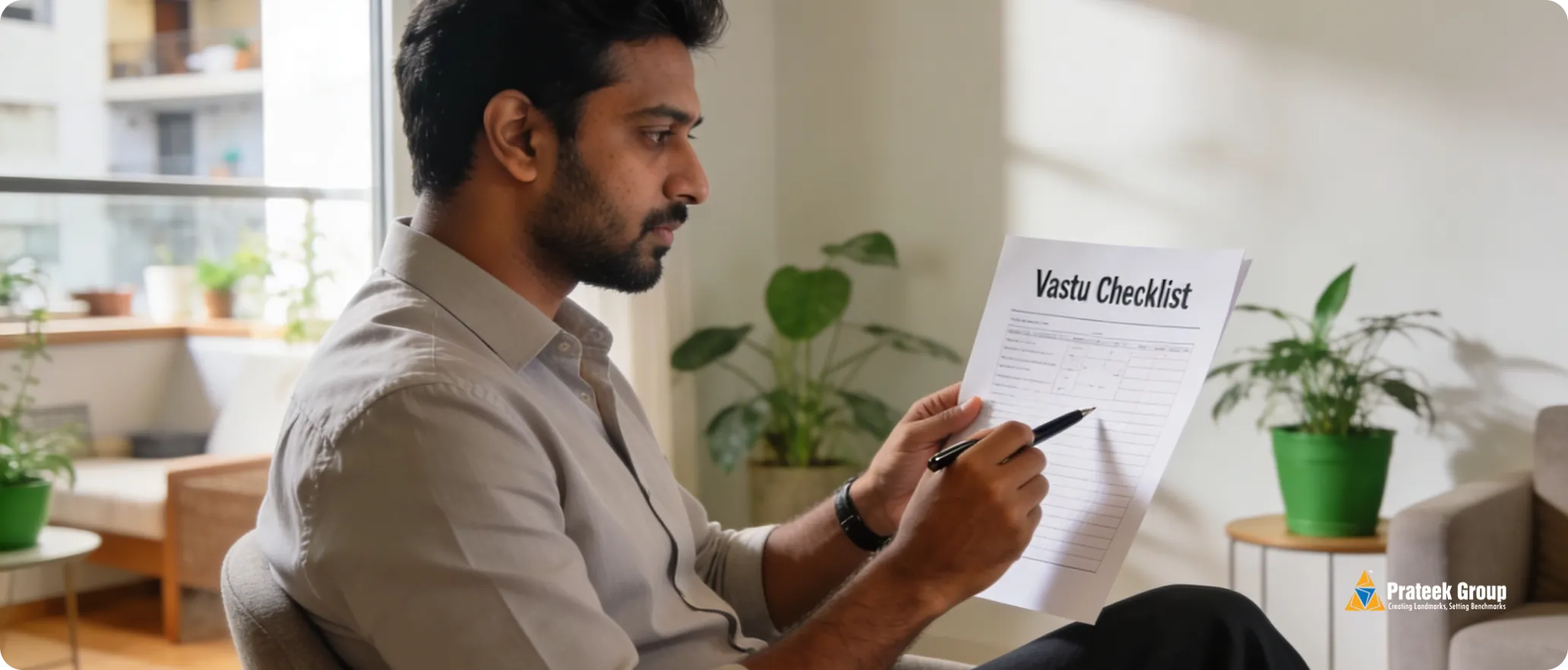
- Begin with the Main Entrance
The entrance often shapes the first impression of a home. Buyers usually notice whether it feels open, well placed, and welcoming, because this can strongly influence the overall sense of balance and comfort in the space. - Understand the Overall Layout First
Before focusing on individual rooms, it is important to see whether the home feels logically planned. A good layout should allow smooth movement, clear room connections, and a sense of order that supports both comfort and usability. - Notice How the Living Spaces Feel
The living area says a lot about how practical a home will be in daily life. Buyers should check whether these spaces feel open, usable, and naturally connected, since this often improves both functionality and overall harmony. - Check How Light Enters the Home
Natural light plays a major role in how a home feels throughout the day. Spaces that receive balanced sunlight usually appear more open, healthier, and more pleasant, while also fitting well with Vastu-based preferences. - Pay Attention to Ventilation
A home may look good on plan, but airflow matters just as much in real use. Buyers should observe whether air moves well across rooms, because proper ventilation supports comfort, freshness, and a better living experience over time. - Review the Kitchen Placement Carefully
The kitchen is one of the most important functional spaces in any home. Its location should feel practical within the layout, easy to access, and well aligned with the rest of the plan rather than feeling forced or poorly placed. - Look at the Position of the Master Bedroom
The master bedroom should feel calm, private, and naturally placed within the home. Many buyers consider this an important checkpoint because a well-positioned bedroom contributes to rest, comfort, and long-term livability. - Balance Vastu with Everyday Needs
The final decision should bring together both belief and practicality. A home may feel Vastu-friendly, but it should also perform well in terms of location, space use, family comfort, and day-to-day convenience before it is truly the right choice.
The Real Value Lies in Balance, Not in Choosing Sides
The discussion around Vastu and modern home design does not have to be framed as a choice between tradition and progress. In today’s housing market, the stronger view is that both can work together when planning is thoughtful and practical. Modern home design brings efficiency, comfort, aesthetics, and better use of space, while Vastu integration adds another layer of balance, orientation, and emotional reassurance for many buyers.
That is why the future of residential design is likely to favour homes that combine function with a stronger sense of harmony. Whether in apartments, villas, or high-rise living, buyers are increasingly drawn to spaces that feel usable, well-lit, well-ventilated, and naturally settled. In that context, Vastu-friendly homes are not only about belief systems, but also about creating living environments that feel complete, practical, and comfortable over time.