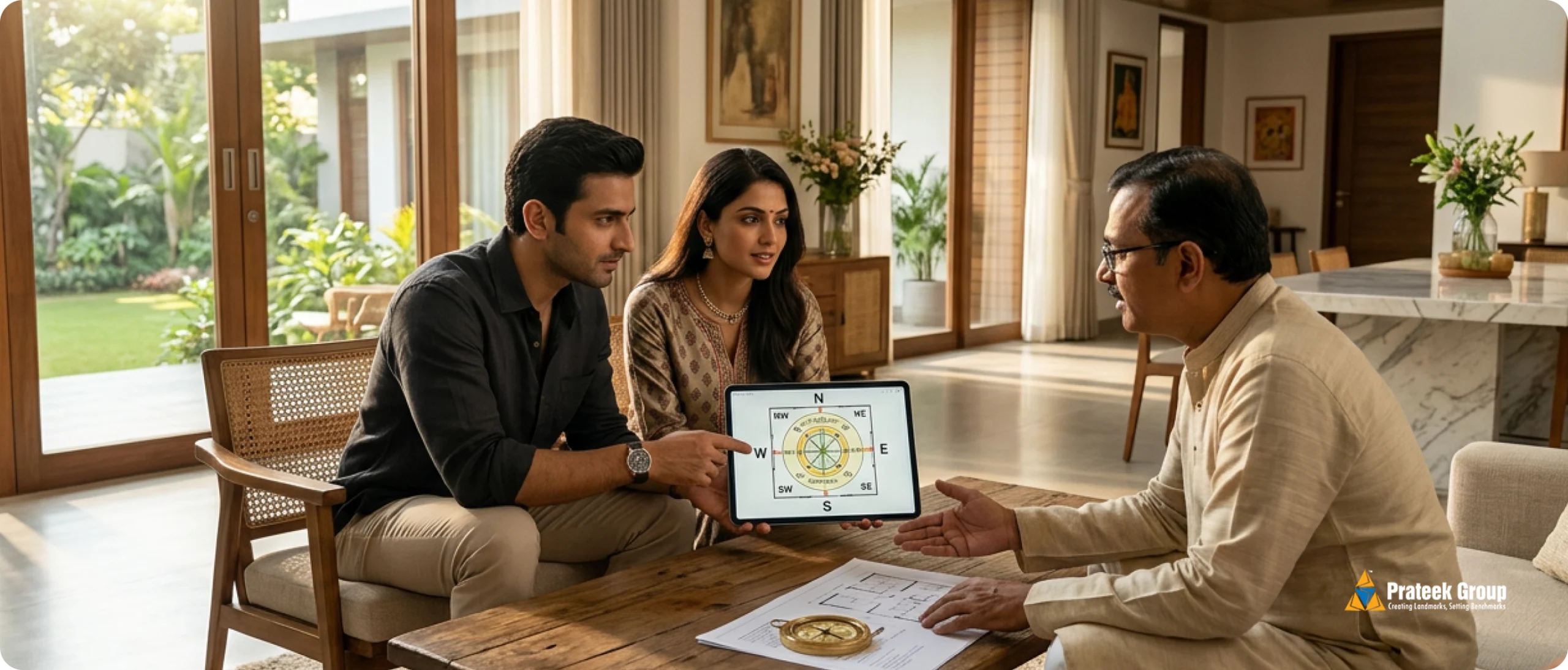
North, East, West Or South-Facing House: What Vastu Says First
A homebuyer rarely asks about direction out of curiosity. Usually, the question comes after a flat or house already feels right. The layout works. The location works. The budget feels manageable. Then someone asks, “Which side does it face?”
As per common Vastu guidance, north, east and northeast-facing homes are usually preferred. Bajaj Finserv’s Vastu guide links north-facing homes with prosperity and east-facing homes with health and morning light, while Housing.com also lists northeast, north and east among preferred directions.
That doesn’t mean a west or south-facing house should be rejected at once. JK Cement’s house-facing guide makes a useful point: entrance placement and room planning can change how well a home works.
So, when choosing a north, east, west or south-facing house as per Vastu, start with direction, then read the full home. Check where the main door sits, how light enters, whether rooms breathe well, and how the house feels during the day. That is where Vastu direction starts connecting with real comfort.
How To Check Your House-Facing Direction Correctly
Before comparing Vastu directions, get the reading right. Many buyers judge a flat from the balcony view, tower position or road-facing side, but the basic house-facing direction starts at the main entrance.
1. Stand At The Main Entrance
Stand inside the home, right at the main door, and face outside. The direction you face is your house-facing direction. This simple step helps you check house facing direction as per Vastu before comparing north, east, west or south-facing homes.
2. Use A Compass Carefully
Use a phone compass or physical compass away from lifts, metal grills, heavy doors, wiring boxes and parked vehicles. These can disturb the reading. Check it 2 or 3 times so the main entrance direction as per Vastu is clear.
3. Check The Main Door First
For Vastu, the main door carries more weight than a balcony view. A flat may have an east-facing balcony but a north-facing entrance. Note the house entrance direction first, then study light, airflow and room placement separately.
4. Read Apartments Differently
In flats, direction can feel layered. The entrance may face one side, the balcony another, and the main windows a third. A flat facing direction as per Vastu should start with the main door, while comfort depends on light and ventilation too.
5. Visit At The Right Time
A morning visit may make an east-facing home look bright, while an afternoon visit shows how much heat a west-facing flat holds. If you’re unsure which direction house is best, see the property when sunlight and heat are easier to judge.
6. Match Direction With Layout
Direction alone doesn’t tell the full story. A north-facing house Vastu plan can still feel wrong if rooms are dark or airflow is poor. A better check includes the entrance, kitchen, bedrooms, toilets, balcony, ventilation and usable space.
Which Facing House Is Good As Per Vastu For Most Buyers?
A buyer can love a home for 5 different reasons before Vastu enters the room. The location may cut commute time. The floor plan may suit the family. The price may sit within budget. Then the broker says, “It’s west-facing,” and the doubt begins.
For most buyers, which facing house is good as per Vastu comes down to a simple starting point: north, east and northeast are usually preferred. Bajaj Finserv’s Vastu guide links north-facing homes with prosperity and financial growth, while UltraTech notes that east-facing homes bring in morning sun and are commonly seen as positive.
But a direction tag is still only the first filter. A good house facing direction as per Vastu should be checked with the main door, room placement, ventilation and sunlight pattern. JK Cement makes this point clearly by saying east and north are generally favourable, but other directions can also work with proper planning.
In NCR, buyers often compare different micro-markets before deciding. Someone may look at Siddharth Vihar, Greater Noida West and central Noida options together, including Prateek Grand City in Siddharth Vihar, ATS Happy Trails in Greater Noida West and Godrej Woods in Sector 43 Noida. The facing direction matters, but so do tower spacing, balcony position, floor height, afternoon heat, parking movement and daily access.
So, the best house facing direction as per Vastu is usually north, east or northeast. North is often the first direction buyers ask about, and it deserves a closer look because the plan still has to work beyond the compass reading.
Facing Direction | Common Vastu View | What You Should Check Before Deciding |
North | Often preferred for wealth and stability | Main entrance placement, daylight and airflow |
East | Often preferred for morning light | Bedroom comfort, blocked views and usable balcony space |
West | Can work with the right planning | Afternoon heat, shading and window placement |
South | Needs closer review | Entrance zone, room layout, ventilation and heat control |
North-Facing House As Per Vastu: When It Works Best
A north-facing home usually gets quick approval in family discussions because north facing house Vastu is linked with wealth, stability and financial growth in many Vastu guides. The real check starts when you walk through the layout and see whether the home actually feels open, bright and usable.
Quick Read Before You Choose
- Best for: buyers who want a Vastu-preferred direction with softer daylight in many Indian cities.
- Main concern: don’t assume every north-facing plan is automatically right.
- Must check: entrance placement, living room light, bedroom ventilation, toilet location and kitchen planning.
- Buyer mistake: choosing direction first and ignoring how the flat actually feels.
Where North-Facing Homes Usually Score
A north-facing home can feel calmer during the day because it may avoid the harshest afternoon sun. Bajaj Finserv connects north-facing homes with Lord Kubera and financial growth, which is why many Vastu-conscious buyers prefer this direction.
For families comparing east or north facing house options, north may feel better when the layout has good cross-air movement, enough daylight and a main entrance that does not open into a cramped or dark passage.
Where You Need To Be Careful
A north-facing house as per Vastu still needs a sensible plan. If the living room is dull, the bedrooms stay closed through the day, or the kitchen and toilets sit awkwardly, the direction alone won’t fix the home.
That is why buyers should walk through the flat slowly. Stand near the entrance. Open the windows. Check whether air moves. Look at the rooms during daylight. A strong Vastu direction for home should support daily living, not sit only on paper.
East-Facing House As Per Vastu: When Morning Light Becomes The Deciding Factor
An east-facing home often wins attention before the floor plan is even checked. Morning sun has that effect. It makes a living room feel awake, a balcony feel usable, and a home feel more open during the first half of the day.
As per east facing house Vastu, this direction is commonly linked with health, freshness, and positive energy because it receives early sunlight. UltraTech’s Vastu guide also connects east-facing homes with the rising sun and a positive start to the day.
But a good east-facing home still needs a closer read.
What To Check | Why It Matters In An East-Facing Home |
Main entrance | The entrance should feel open, clean, and well placed as per Vastu. |
Living room light | Morning light works best when the room is not blocked by another tower or wall. |
Bedroom placement | Bedrooms should not feel dark or poorly ventilated through the day. |
Kitchen position | Kitchen planning should match both Vastu guidance and daily use. |
Balcony usability | A bright balcony is useful only when it has privacy and enough space. |
For buyers choosing between an east or north facing house, east can feel better if the family likes natural morning light. It may suit homes where mornings are busy, children leave early for school, or elderly family members prefer a brighter start.
Still, don’t judge only from the entrance. A flat can be east-facing and still feel dull if nearby towers block sunlight. During a site visit, stand in the living room, not just at the doorway. See where the light actually falls.
That is where east-facing house as per Vastu becomes more practical. The direction should support the way the home is used every day.
West-Facing House As Per Vastu: What To Check Before Saying Yes
West-facing homes usually get a mixed reaction. Some buyers hesitate because of afternoon heat. Others like the evening light, open views, or better pricing compared with north and east-facing options.
The better approach is to study the plan before deciding. JK Cement’s guide explains that buyers should look beyond the simple question of whether west or south-facing homes are good and check how the rooms are planned.
West-Facing Home: Concern Vs Practical Check
Concern | What It Means | What To Check |
Afternoon heat | Rooms may feel warmer after 3 PM, especially with large west-side windows. | Visit during afternoon hours and check living room, bedrooms and balcony exposure. |
Window exposure | Direct sun can make interiors uncomfortable if openings are not protected. | Look for balcony depth, curtains, trees, fins, shade or nearby tower cover. |
Night comfort | Heat stored during the day can make bedrooms uncomfortable later. | Check bedroom wall exposure, ventilation and cooling needs. |
Resale hesitation | Some Vastu-conscious buyers may ask more questions about west-facing homes. | Balance direction with layout, location, usable space and overall comfort. |
A west facing house Vastu plan can work when the entrance, room placement and heat control are handled well. The issue is rarely direction alone. The real concern is how the home behaves during peak sunlight hours.
A west-facing house as per Vastu should not be dismissed without checking the full layout. If the home has good ventilation, shaded openings and sensible room planning, it can still be a strong choice.
South-facing homes carry even more doubt in the market, which is why they need an even calmer and more detailed review.
South-Facing House As Per Vastu: Why It Needs A Calmer Review
South-facing homes often carry more doubt than they deserve. Many buyers hear one warning and stop looking at the actual plan. That can be a mistake, especially when the location, price, floor height and usable space are strong.
A south facing house Vastu plan depends heavily on the main entrance, room placement and heat control. UltraTech’s south-facing Vastu guide says south-facing homes can feel positive and balanced when the main door, kitchen, bedroom and living room are placed well.
The practical concern is sunlight and heat. South and west exposure can make some rooms warmer in Indian climates, especially when windows are large and shading is weak. So the comfort check matters as much as the Vastu check.
A south-facing house as per Vastu should be reviewed slowly. The entrance should not feel cramped or dark. The living room should have enough daylight without becoming harsh. Bedrooms should stay comfortable by evening. Kitchen and toilet placement should also be checked carefully.
For buyers asking is south facing house good, the better answer is simple: it can work when the layout supports it. A poor plan will remain poor even with a preferred direction, while a carefully planned south-facing home can still feel stable, usable and comfortable.
Once the direction looks acceptable, the home still has to pass the daily comfort test. Light, heat and airflow decide how the space behaves after the first visit is over.
Vastu Direction, Sunlight And Ventilation: What Affects Daily Comfort
A home’s direction is not only a Vastu point. It changes how light enters, how heat builds up and how air moves through the rooms. That is why house facing direction as per Vastu should be studied with comfort, not separately from it.
The passive design resource NZEB explains that building form and orientation affect sunlight, daylight, wind direction, energy use and thermal comfort. This makes orientation a practical design factor, especially in Indian homes where summer heat can shape daily living.
East-facing homes usually get softer morning sunlight. West-facing homes may receive stronger afternoon heat. North-facing homes can feel more balanced in many hot regions. South-facing homes need a closer look at shading, wall exposure and airflow.
Natural ventilation also depends on more than direction. Window placement, open sides, tower distance, balcony depth and internal room planning all affect airflow. A home can face the “right” direction and still feel closed if air has no clear path.
Traditional Indian homes handled this well. Times of India notes that older homes used orientation, shaded spaces, courtyards and cross-ventilation to reduce heat, which is still relevant for modern flats and houses.
A home should feel different when the windows are opened. Morning light, afternoon heat, cross ventilation and room placement show whether the direction is working in real life, not just on a floor plan.
Flat Buyers Should Not Judge Vastu By Entrance Direction Alone

In Noida and NCR, most buyers are choosing apartments, not plotted homes. That changes the Vastu discussion. A flat facing direction as per Vastu usually starts with the main door, but daily comfort depends on more than the door alone.
Apartment living adds layers. The entrance may face north, while the balcony opens west. The master bedroom may receive afternoon heat, while the living room stays shaded. In high-rise flats, tower gap, floor height, window placement and open sides can change the experience completely.
Layout efficiency has become a sharper concern because apartment plans now need closer reading. A 2025 Anarock report cited by Times of India says Delhi-NCR’s average apartment loading factor rose to 41% in Q1 2025 from 31% in 2019, which means buyers are comparing carpet area, room usability and layout quality more carefully.
Quick Checks For Apartment Buyers
Main door: Use this to check the basic main entrance direction as per Vastu.
Balcony: Study sunlight, heat and privacy. A good balcony direction can improve daily comfort.
Windows: Look for cross-air movement, not just a wide view.
Room placement: Check kitchen, toilets, bedrooms and living space together.
Usable area: A Vastu-friendly entrance cannot make a cramped floor plan feel larger.
In Noida and Greater Noida, buyer confidence has also been shaped by stronger formal development activity. UP RERA registered 308 real estate projects in 2025, with Noida leading the state at 69 projects, so buyers have more options and more reason to compare layouts carefully.
For apartments, apartment facing direction is only one part of the decision. The better reading comes from checking entrance direction, light, ventilation, usable space and long-term comfort together.
Common Myths About North, East, West And South-Facing Homes
In an active market, buyers often move faster than they planned. Direction myths can make that rush worse, either by creating unnecessary fear or by making one facing direction seem perfect without checking the home properly.
That matters in Noida and NCR, where market activity has stayed strong. Anarock’s NCR Q2 2025 report said the region recorded about 14,250 housing sales, up 14% from the previous quarter, which shows buyer activity, but a popular market still needs careful home selection.
Myth 1: North Is Always The Safest Choice
A north-facing home is preferred by many Vastu-conscious buyers, but direction cannot repair a poor floor plan. A north facing house Vastu plan still needs good room placement, enough daylight, ventilation and a clean entrance.
Myth 2: East-Facing Homes Always Feel Better
An east facing house Vastu plan is often liked for morning light. In apartments, nearby towers can block that light. The home should be checked from the living room and bedrooms, not just from the doorway.
Myth 3: West-Facing Homes Are A Bad Buy
A west facing house Vastu plan needs heat control, but that does not make it weak by default. Shading, window size, wall exposure and airflow decide whether the home stays comfortable after noon.
Myth 4: South-Facing Homes Have Poor Resale Value
South-facing homes may face more buyer questions, but resale value in NCR also depends on location, pricing, usable space, builder record, amenities and market timing. Knight Frank reported firm residential price growth in H2 2025, with average prices up 7% year-on-year across India, so wider market strength also shapes resale confidence.
Myth 5: Direction Matters More Than Liveability
A preferred Vastu direction for home matters to many buyers, but liveability carries equal weight in day-to-day use. A home that stays hot, dark or cramped will keep showing its flaws, even if the compass reading looks right.
These myths are common because buyers want quick certainty. The final decision needs a steadier method, where Vastu, comfort, market confidence and long-term usability are checked together.
How To Choose The Right Facing House As Per Vastu And Real-Life Comfort
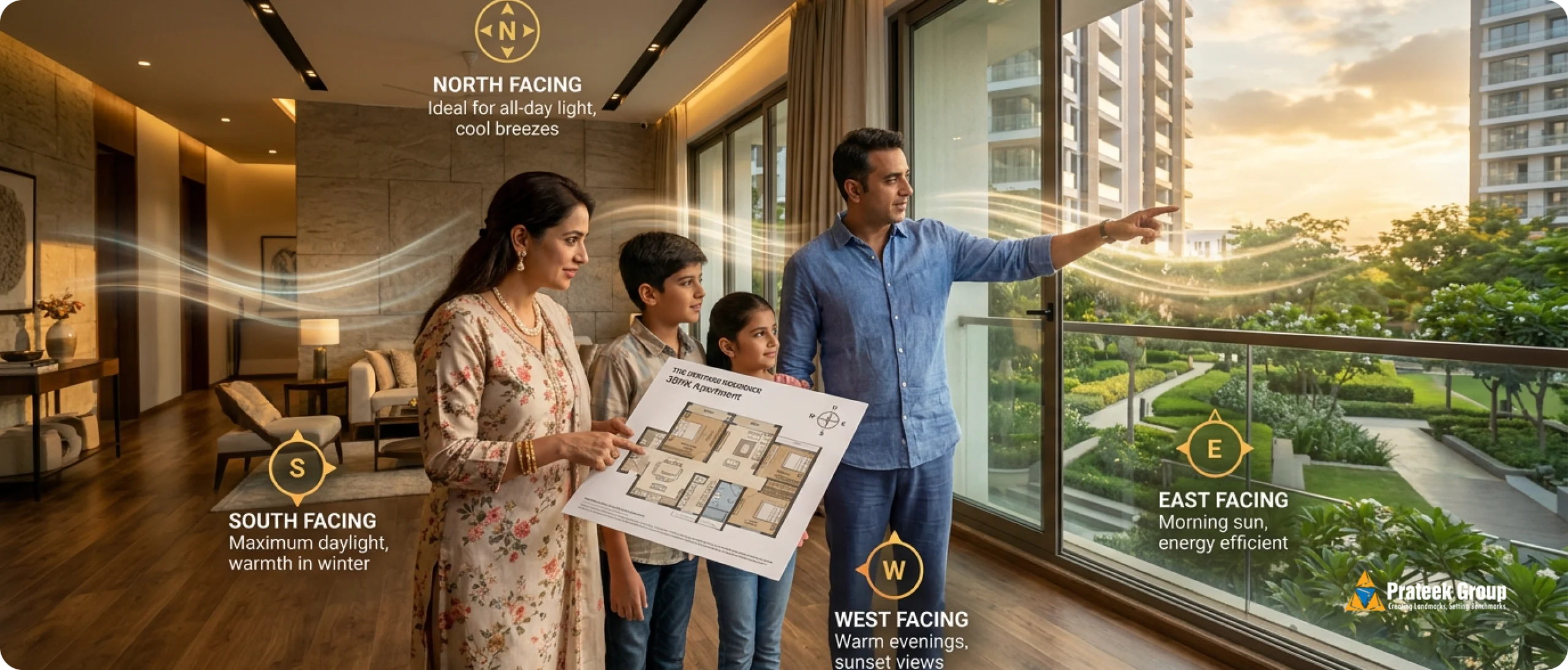
A good home decision needs 2 readings. First, check the house facing direction as per Vastu. Then walk through the home like someone who will live there every day.
North, east and northeast-facing homes are commonly preferred in Vastu. Bajaj Finserv says north, east and northeast are considered suitable directions, while JK Cement says east and north-facing homes are generally favourable, with other directions working well when planned properly.
Start With The Entrance
Check the main entrance direction as per Vastu before studying the rest of the home. Stand inside the house, face outside and note the direction. The main door should feel open, clean and easy to access.
Vastu entrance guidance commonly prefers north, east or northeast for the main door, so this is a good first filter.
Read The Room Layout Slowly
Direction works better when the layout supports it. Check where the living room, kitchen, bedrooms, toilets and puja space sit.
JK Cement’s Vastu layout guide lists north, east or northeast for the main entrance, southeast for the kitchen, southwest for the master bedroom and northeast for the puja room. Use this as a reference point, then judge how the home feels in real use.
Test Light And Heat
The best house facing direction as per Vastu should also suit the city’s climate. East-facing homes usually feel brighter in the morning. West-facing homes may need stronger heat control. North-facing homes can feel more balanced in many hot regions.
UltraTech notes that house direction affects sunlight, indoor temperature and comfort, so site visits should include both Vastu and comfort checks.
Check Air Movement
Open the windows during the visit. Look for cross ventilation, balcony depth, open sides and bathroom or kitchen exhaust points.
A home that looks good on a floor plan may feel closed once doors and windows are tested. That is why natural ventilation deserves the same attention as direction.
Think About Resale Sensibly
For many Indian buyers, north and east-facing homes feel safer from a Vastu point of view. South and west-facing homes may invite more questions during resale, but location, usable space, construction quality, floor height, view, maintenance and pricing still carry weight.
The right choice is rarely one compass reading. It is the point where Vastu direction for home, daily comfort and long-term use meet without forcing a compromise.
Conclusion
Choosing between a north, east, west or south-facing house as per Vastu becomes easier when the home is checked in layers.
North and east-facing homes are widely preferred. Northeast also has strong Vastu acceptance. West and south-facing homes need closer review, especially for entrance placement, room layout, sunlight, heat and airflow. JK Cement’s guide also supports the point that other directions can work with proper planning.
For a real buyer, the better decision happens during the site visit. Check the direction, then stand in the rooms, open the windows and notice how the home behaves. A good floor plan should feel bright, airy and practical without needing too many explanations.
A good Vastu direction can guide the choice. A good home proves itself when the family starts living in it.
FAQs
1. Which Facing House Is Good As Per Vastu?
North, east and northeast-facing homes are commonly preferred as per Vastu because these directions are linked with better light, positive energy and financial stability in many traditional guidelines. Bajaj Finserv also lists north, east and northeast among the best house-facing directions. Still, buyers should check the entrance, room layout and ventilation before finalising any home.
2. Is A North-Facing House Good As Per Vastu?
Yes, a north facing house Vastu plan is generally seen as favourable. North is often linked with Lord Kubera and financial growth in Vastu belief, which is why many buyers prefer this direction. But the entrance should be open and well placed, and the room layout, ventilation, kitchen position and toilet placement still need proper checking.
3. Is An East-Facing House Good For Families?
Yes, an east facing house Vastu plan is commonly preferred for families because east-facing homes usually receive morning sunlight. UltraTech connects east-facing homes with the rising sun and positive energy. Morning light can make the home feel brighter early in the day, but buyers should still check whether nearby towers or walls block the natural light.
4. Is A West-Facing House Good As Per Vastu?
A west facing house Vastu plan can work when heat, entrance placement and room planning are handled well. JK Cement says west-facing homes can be comfortable when designed to handle afternoon heat. Buyers should visit the home later in the day to see whether the living room, bedrooms and balcony become too warm.
5. Is A South-Facing House Good Or Bad?
A south facing house Vastu plan needs careful review, but it should not be rejected blindly. South-facing homes can work when the main entrance, kitchen, bedroom, ventilation and shading are planned properly. UltraTech’s south-facing Vastu guide gives placement guidance for these areas. The key is to check heat, airflow and room placement together.
6. How Do I Check My House-Facing Direction?
Stand inside the home at the main entrance and face outside. The direction you face is the house-facing direction. A compass or phone compass can help, but take the reading away from metal doors, lifts, parked vehicles and electrical panels because they may affect accuracy. In apartments, check the main door first, then study balcony and window direction separately.
7. Does Flat Facing Direction As Per Vastu Depend Only On The Main Door?
The main door is the starting point for flat facing direction as per Vastu, but it is not the only factor that affects daily comfort. For apartments, balcony direction, window placement, tower gap, floor height, sunlight and airflow also matter. A flat with a good entrance direction may still feel dark or hot if the layout is poorly planned.
8. Which Is Better, East Or North Facing House?
Both are commonly preferred as per Vastu. An east or north facing house can be a good choice if the entrance, room placement, light and ventilation are right. East suits buyers who like morning sunlight and a brighter start to the day. North often feels more balanced in warm climates and is linked with financial stability in Vastu belief.
9. Should I Reject A Home Only Because It Faces South Or West?
No, review the full plan first. South and west-facing homes need closer checks for heat, entrance placement, ventilation, room zoning and shading. A well-planned home can still be comfortable and usable. The better approach is to visit at the right time of day and see how the rooms feel in real conditions.
10. What Matters More, Vastu Direction Or Layout?
Both matter. A preferred direction helps, but poor room placement, weak ventilation, blocked sunlight or cramped usable space can affect daily living. The better choice is a home where Vastu, layout and comfort work together. Buyers should check the compass direction, then walk through the rooms and judge how the home feels.