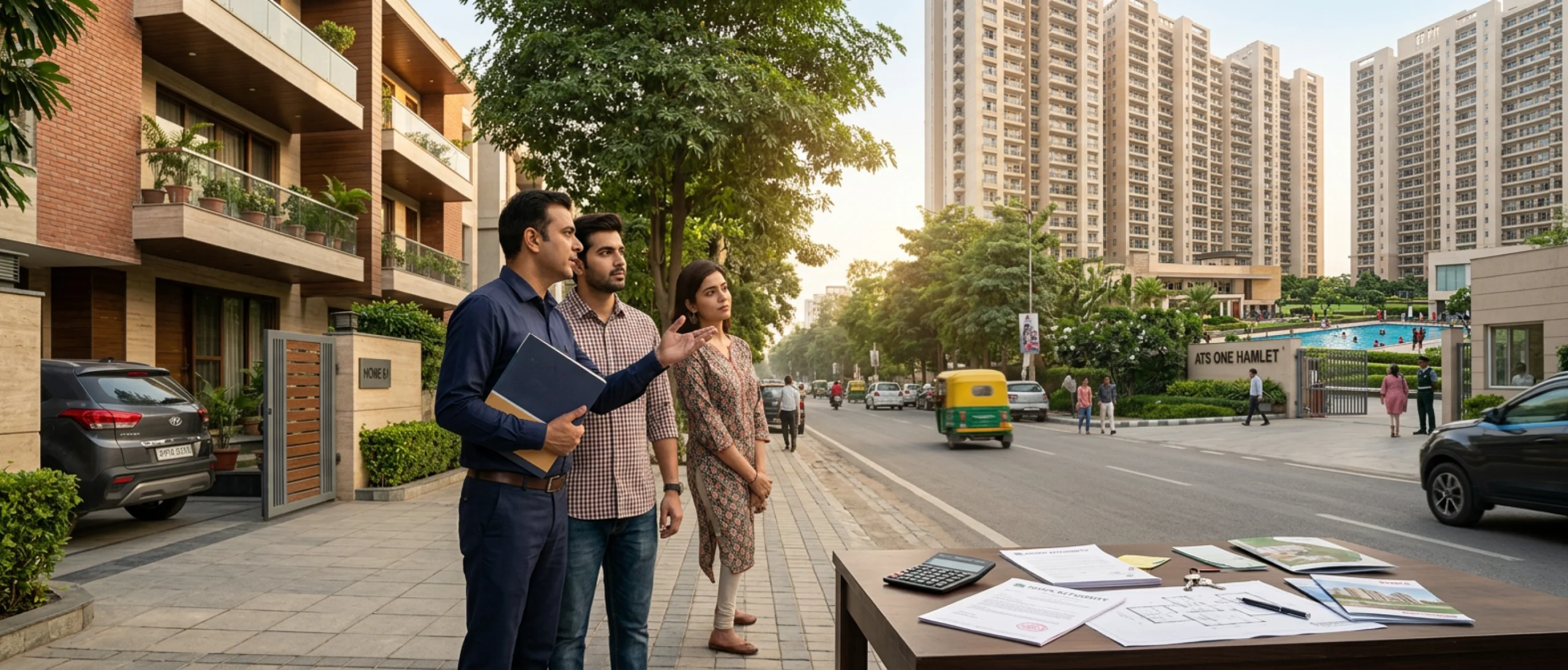
A builder floor in Noida appeals to many buyers who want more privacy, more space and fewer neighbours than a high-rise society offers. Picture a floor of your own in a low-rise building, sometimes with a terrace or a small garden, in an established sector. For others, a flat in a gated society, with its security, clubhouse and managed maintenance, is the clear choice.
This guide compares the 2 honestly. It covers what a builder floor is, where you’ll find them in Noida, how they differ from society flats on privacy, amenities, cost, maintenance and resale, and the checks that matter most for a builder floor, especially around title, registration and home loans. We don’t name projects or developers. Instead, we give you the facts to judge any home yourself.
What is a builder floor?
A builder floor is an independent floor in a low-rise building on a residential plot. A plot owner, or a builder working with the owner, constructs a building of usually 3 or 4 floors, often with stilt parking at ground level, and each floor is sold or let as a separate home. In everyday language, people call these builder floors, builder flats or independent floors.
Builder floors are common across Delhi, Gurgaon and Ghaziabad, and they’re found in Noida’s plotted sectors too. They sit between an independent house and an apartment in a large society: more private than a flat, but sharing a building, staircase and sometimes a lift with a few other owners.
Builder floor vs society flat at a glance
Point | Builder floor | Society flat |
Neighbours | A few, usually 1 per floor | Many, sometimes hundreds or thousands |
Privacy | High | Varies with density and homes per floor |
Amenities | Usually none, or very limited | Clubhouse, pool, gym, play areas, gardens |
Security | Depends on the sector and your own arrangements | Controlled gates, guards and CCTV |
Maintenance | Shared informally among owners | Managed, with a monthly charge |
Parking | Stilt or street parking, often limited | Allotted basement or covered parking |
Power backup | Depends on the building | Usually provided |
Land share | A share of the plot | An undivided share of a large society’s land |
Title and registration | Needs careful checking in Noida | Usually straightforward in completed societies |
RERA | Often below the registration thresholds | Registered where required |
Home loans | Can be harder, depending on title | Usually easier |
Resale | Smaller buyer pool, depends on location | Larger buyer pool in popular societies |
Where builder floors are found in Noida
Most builder floors in Noida are in the city’s plotted residential sectors, many of them in central Noida, where the Authority allotted residential plots in the city’s earlier decades. Over time, many older houses on these plots have been rebuilt into multi-floor buildings. Noida was planned with a mix of plotted sectors and group housing, which is why both formats exist side by side.
Builder floors in these sectors often benefit from an established neighbourhood, with parks, markets, schools and hospitals nearby. The trade-off is that the buildings vary widely in age, construction quality and paperwork.
Prateek’s page on premium builder floors in Noida outlines what buyers in this segment usually look for.
Title and registration: the most important check
This is the part of buying a builder floor in Noida that needs the most care.
How Noida land is held
Most residential land in Noida is leased from the Noida Authority. A plot allottee holds the plot on lease, and the building on it sits on that leased land. Historically, the plot owner held a single title covering the plot and the whole building, whatever the number of floors.
Floor-wise registration
In cities such as Delhi, each floor of a building can be registered separately in a different owner’s name. In Noida, the position has been different. A 2018 Hindustan Times report described the Noida Authority approving a proposal to allow floor-wise registration of flats built on residential plots, subject to state government approval, and explained that under the rules at that time, only the plot owner held title to the whole building.
Rules can change, so before buying a builder floor in Noida, confirm with the Noida Authority and a local lawyer:
• Whether floor-wise registration is permitted for the plot and sector you’re considering, and on what conditions.
• How your floor’s ownership will be recorded, and whether you’ll hold a registered title in your own name.
• What share of the plot your floor carries.
• Whether the Authority’s permission or transfer charges apply.
If a seller offers a floor on the basis of an unregistered agreement, a power of attorney or any arrangement that doesn’t give you a registered title, be very cautious. It can affect your ability to get a loan, to sell later and to prove ownership.
Check the registered documents
You can search registered property documents through IGRS Uttar Pradesh, the state’s registration portal. Trace the chain from the original allotment to the current owner, and check for mortgages or disputes. Our guide to documents you must verify before paying a token amount lists the papers to ask for.
Approvals and construction quality
Builder floors are often built by small builders or plot owners, so quality and compliance vary more than in large projects. Check:
• The sanctioned building plan from the Noida Authority, and whether the building matches it, including the number of floors.
• The completion or occupancy certificate for the building.
• Structural quality, ideally with an engineer’s inspection for older buildings.
• Fire safety in taller buildings, including exits and fire equipment, in line with the National Building Code’s requirements.
• Waterproofing and drainage, especially on the top floor and ground floor.
A building that exceeds its sanctioned plan, for example with an extra floor, can face action from the Authority and cause problems for owners.
RERA and builder floors
The Real Estate (Regulation and Development) Act, 2016 requires projects to register if the land is more than 500 sq m or there are more than 8 apartments across all phases. Many builder floor projects on single plots fall below both thresholds and don’t need to register.
That means builder floor buyers often don’t get RERA’s protections, such as escrow accounts, registered completion dates and a regulator to complain to. Larger builder floor developments across several plots may need registration, so check the UP RERA portal where it applies. Where RERA doesn’t apply, your own checks on title, approvals and the builder’s record matter even more.
Home loans for builder floors
Banks do lend on builder floors, but they look closely at title and approvals. A lender will usually want to see a registered title in the seller’s name for the floor, the sanctioned plan, the completion certificate and a clear chain of documents. If the title for your floor isn’t separately registered, or the building doesn’t match its approved plan, many banks will decline or reduce the loan.
Ask your bank early whether it will lend on the specific floor you’re considering. A bank’s legal check is also a useful extra layer of protection for you. If 1 bank declines, ask why before trying another, since the reason often points to a problem with the title or approvals that you’d want to know about.
Cost: purchase and running
Purchase price
Builder floors can cost more or less than society flats per sq ft, depending on location and quality. In an established central sector, a floor carries a share of valuable land, which supports its price. Newer floors with modern finishes often cost more than older ones.
Buying costs
Stamp duty in Uttar Pradesh is 7% for a male buyer, with a 1% concession for women on property worth up to ₹1 crore, plus 1% registration. On resale, the Noida Authority’s transfer charge may apply, since the land is leased. GST applies only to under-construction homes sold by a builder. Completed floors with the right certificates carry none.
Running costs
Builder floors usually have no formal monthly maintenance charge, which is a real saving compared with society flats. Instead, owners share the costs of the lift, water tank, power backup, cleaning and repairs among themselves, often informally. That works well when owners get along and less well when they don’t.
Society flats carry a monthly maintenance charge, with GST at 18% if it exceeds ₹7,500 a month per member, but in return provide security, housekeeping, amenities and professional management.
Privacy, space and lifestyle
The main reasons people choose a builder floor are privacy and a sense of independence. You share your building with a few families at most, there are no crowded lifts or busy clubhouses and you may get a terrace, a private entrance or a small garden. Many builder floors also have larger rooms than similarly priced flats.
The trade-off is the society lifestyle. There’s usually no pool, gym, play area or clubhouse, no organised community events and no security staff at a gate. For families with young children, the play areas and friends in a large society can matter a lot. For couples, older buyers or those who value quiet, a builder floor can feel more like a home of their own.
Our post on why low-density living is becoming popular in Noida explores the appeal of quieter, less crowded homes.
Security
Security is 1 of the biggest differences. A gated society has a controlled entrance, guards, visitor management and CCTV. A builder floor relies on the sector’s arrangements, the building’s own locks and cameras and sometimes a shared guard. Many builder floor owners install video door phones, CCTV and alarm systems. If security is a priority, especially for older family members or frequent travellers, weigh this carefully.
Parking
Parking is often the weak point of builder floors. Most buildings have stilt parking at ground level, with space for 1 or 2 cars per floor, and the rest park on the street. In busy sectors, street parking can be tight. Check exactly how many parking spaces come with your floor, where they are and whether they’re written into your documents.
Resale
Builder floors in established, well-located sectors can sell well, especially to buyers looking for privacy and space. But the buyer pool is usually smaller than for popular society flats, and title issues can make buyers and banks cautious. A floor with a clear, registered title, an approved building and good upkeep will sell far more easily than 1 with uncertain paperwork.
New builder floors vs older ones
Builder floors in Noida range from buildings several decades old to brand-new constructions with modern finishes. Each has its place.
A newly built floor usually offers modern layouts, a lift, stilt parking, better waterproofing and contemporary fittings. It also tends to cost more, and you need to check that the new building was constructed as sanctioned and has its completion certificate.
An older floor may offer more space for the price and an established building whose issues are already known. It may also need repairs, lack a lift or have older wiring and plumbing. An engineer’s inspection is especially worthwhile for older buildings.
In both cases, the paperwork matters as much as the construction. A beautiful new floor with uncertain title is a riskier purchase than a plain older floor with clean, registered documents.
Buying from a builder or from a plot owner
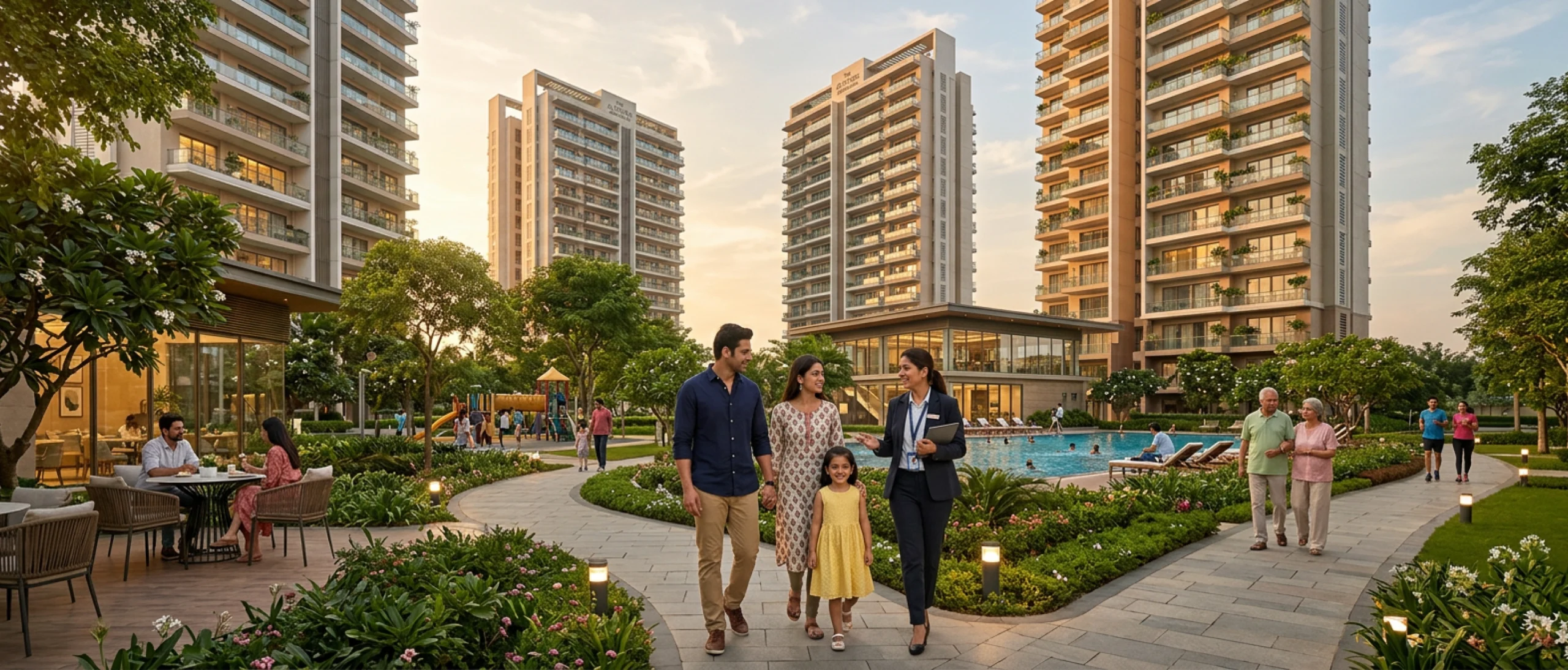
Builder floors are sold in different ways. Sometimes the plot owner builds and sells the floors directly. Sometimes a small builder enters a collaboration with the plot owner, builds the floors and shares them with the owner, then sells its share. Sometimes you’re buying a resale floor from a previous buyer.
Each route has its own paperwork. In a collaboration, check the agreement between the plot owner and the builder, and make sure the builder has the right to sell your floor. For a resale, trace the documents back through every previous owner. In all cases, the key question is the same: will you hold a clear, registered title to your floor?
Ask the seller, whoever they are, for the completed projects they’ve built or sold before, and speak to those buyers if you can. A small builder with a good local record is often a safer choice than an unknown builder offering a lower price.
The sector matters as much as the building
With builder floors, you’re buying into a sector rather than a gated society, so the sector’s quality shapes daily life. Look at:
• Parks and green spaces within walking distance.
• Markets and daily needs nearby.
• Schools and hospitals within a short drive.
• The sector’s residents’ welfare association, and how active it is on security and upkeep.
• Traffic and parking on the internal roads.
• Metro access from the sector.
Established central sectors often score well on these, which is 1 reason builder floors there hold their value.
Modern features in builder floors
Newer builder floors increasingly offer features once found only in luxury apartments: private lifts, modular kitchens, wooden flooring, false ceilings, smart home systems, video door phones and, sometimes, a basement or home theatre. These add comfort, but they also add cost. Judge them as you would any interior work, at what they’d cost you to install today, and don’t let them distract from the essentials of title, approvals and construction quality.
Choosing a floor within the building
In a builder floor building, which floor you buy makes a big difference, more so than in a high-rise.
Floor | Advantages | Trade-offs |
Ground floor | Easy access, often a small garden or courtyard, good for older family members | Less privacy, more street noise, risk of damp, closest to parked cars |
Middle floors | Balance of privacy, light and access, protected from roof heat and ground damp | Depend on the lift or stairs, no garden or terrace |
Top floor | Most light and privacy, often with terrace or roof rights | Hotter in summer, relies on the lift, exposed to roof leaks |
Roof and terrace rights are especially important. In many buildings, the top floor comes with the roof or a terrace, which adds real value. Make sure any such right is written into your sale deed, along with rights to parking and shared spaces. Verbal promises about the terrace often lead to disputes later.
Builder floor vs independent house
Some buyers weigh a builder floor against buying a whole independent house on a plot. An independent house gives you the entire plot and building, full control over changes and no neighbours sharing your building. It also costs far more, since you’re buying the whole plot, and needs more upkeep.
A builder floor gives you part of that independence at a lower price, but you share the building, the plot and decisions with other owners. For many families, a builder floor is a middle path between a flat and a house. Prateek’s page on 3 BHK independent houses in Noida covers what buyers of whole homes usually consider.
Living with other floor owners
Sharing a building with a few other owners works well when everyone agrees on how things are run. It helps to settle a few points early:
• How shared costs are split, for the lift, water tank, power backup, cleaning and repairs.
• Who handles repairs to common areas and the roof.
• Rules on renovation, so work on 1 floor doesn’t damage another.
• Parking arrangements, especially for visitors.
• What happens when a floor is sold or let, so new owners or tenants follow the same arrangements.
Some owners write these into a simple agreement. It’s a small effort that prevents many disputes, and it helps new owners understand the arrangements when a floor changes hands. The sector’s residents’ welfare association can also help with wider issues, such as security, parks and roads.
Renting out a builder floor
Builder floors in established sectors can rent well, especially to families who want more space and privacy than a society flat offers. Floors near markets, schools and the metro let most easily. Rental yields tend to be similar to or slightly higher than flats, since there’s no large monthly maintenance charge eating into the rent.
As a landlord, you’ll be more involved than in a society, since there’s no society office to handle day-to-day issues. Arrange a reliable local contact for repairs, and make sure tenants understand the shared arrangements with other owners.
When a society flat is the better choice
A society flat usually makes more sense if:
• You have young children who’ll benefit from play areas, a pool and friends in the society.
• Security is a priority, for older family members, frequent travellers or those living alone.
• You want amenities such as a gym, clubhouse and landscaped gardens.
• You need an easy home loan and resale, with a clear, registered title as standard.
• You’d rather not manage shared costs and repairs with other owners.
Prateek’s page on gated community flats in Noida sets out what families usually look for in a society.
A checklist for a builder floor visit
• Ask how your floor’s title will be registered, and see the documents.
• Check the sanctioned plan and completion certificate.
• Count the floors against the approved plan.
• Look for damp, cracks and leaks, especially on the top and ground floors.
• Confirm parking, roof and terrace rights in writing.
• Test water pressure and power backup.
• Ask how shared costs are split among owners.
• Visit in the evening to check street parking and noise.
A worked comparison for a family
Consider a family with a budget of about ₹2 crore, choosing between a 3 BHK builder floor in an established central sector and a 3 BHK flat in a mid-size gated society nearby. These are illustrations, not prices for any property.
The builder floor might offer around 1,800 to 2,000 sq ft, a private entrance, 1 stilt parking space, a small balcony and no monthly maintenance charge. The family would share lift and water costs with 3 other owners and rely on the sector’s security.
The society flat might offer around 1,600 to 1,800 sq ft, an allotted basement car park, a clubhouse, pool and play area, 24-hour security and a monthly maintenance charge. The family would join a larger community, with more neighbours and busier common areas.
For a couple with teenage children who value space and quiet, the builder floor might suit best, provided the title is clear. For a family with young children and elderly parents, the society’s security, play areas and managed services might outweigh the extra space of the floor.
*Illustration only. Actual sizes, prices and features vary widely.*
Home improvements and changes
Owners of builder floors often have more freedom to renovate than flat owners in large societies, since there’s no society management to approve every change. That freedom has limits, though. Structural changes, extra construction and changes to the building’s exterior still need approval under the Noida Authority’s building rules, and work on your floor shouldn’t affect the structure or services of other floors.
Before buying, ask whether any previous owner has made changes, such as enclosing a balcony or adding a room on the roof, and whether those changes were approved. Unapproved changes can cause problems with the Authority, your bank and future buyers.
Questions to ask the seller
• How is this floor’s ownership registered, and can I see the registered documents?
• Is there a sanctioned plan and completion certificate for the building?
• How many floors were approved, and how many have been built?
• Which parking spaces, terrace or roof rights come with this floor?
• How are shared costs split among the owners, and are there any unpaid dues?
• Has the building had any leaks, structural repairs or disputes?
• Will you help with the Noida Authority’s transfer process?
Clear answers backed by documents are the best sign of a sound purchase. If the seller is vague about title or approvals, take it as a reason to slow down.
Which should you choose?
If you value most | Consider |
Privacy, independence and fewer neighbours | A builder floor with clear title |
Amenities, security and community | A society flat |
Low monthly charges | A builder floor, if owners share costs well |
Easy home loans and resale | A society flat, or a builder floor with registered title |
Space for the budget in an established sector | A builder floor |
A safe environment for young children | A society flat |
Frequently asked questions
1. What is a builder floor in Noida?
A builder floor in Noida is an independent floor in a low-rise building on a residential plot, usually 3 or 4 floors with stilt parking, where each floor is sold or let as a separate home. Builder floors are found mainly in Noida’s plotted residential sectors, many of them in central Noida.
2. Is a builder floor better than a society flat?
A builder floor is better for buyers who value privacy, independence, fewer neighbours and low monthly charges. A society flat is better for those who want amenities, managed security, a community and easier loans and resale. In Noida, the builder floor’s title and registration need especially careful checking before you buy.
3. Can each floor be registered separately in Noida?
The rules for floor-wise registration in Noida have been different from Delhi’s. A 2018 report described the Noida Authority approving a proposal to allow floor-wise registration of flats on residential plots, subject to state approval. Confirm the current rules for your plot with the Noida Authority and a local lawyer before buying a builder floor.
4. Do builder floors in Noida need RERA registration?
Builder floor projects need RERA registration only if the land is more than 500 sq m or there are more than 8 apartments across all phases. Many single-plot builder floors fall below both thresholds, so buyers often don’t get RERA’s protections. Check the UP RERA portal where registration applies, and rely on your own checks otherwise.
5. Can I get a home loan for a builder flat in Noida?
Yes, banks lend on builder flats in Noida, but they check title and approvals closely. Lenders usually want a registered title for the floor, the sanctioned plan, a completion certificate and a clear chain of documents. If the floor’s title isn’t separately registered or the building exceeds its plan, many banks will decline or reduce the loan.
6. Are builder floors cheaper to maintain than society flats?
Builder floors usually have no formal monthly maintenance charge, so they’re often cheaper to run than society flats. Owners share the costs of the lift, water, power backup and repairs among themselves. That works well when owners cooperate, but you don’t get the security, amenities and professional management that a society’s charge pays for.
7. What checks should I do before buying a builder floor in Noida?
Before buying a builder floor in Noida, confirm how your floor’s title will be registered, trace the chain of documents through IGRS Uttar Pradesh, check the sanctioned building plan and completion certificate, inspect structural quality and fire safety, confirm parking in writing and ask your bank early whether it will lend on the floor.
8. Do builder floors in Noida have good resale value?
Builder floors in established, well-located Noida sectors can hold value well, supported by their share of the plot. However, the buyer pool is usually smaller than for popular society flats, and uncertain titles make buyers and banks cautious. A floor with clear, registered title, an approved building and good upkeep sells far more easily.
9. Is a builder floor safe for families with children?
A builder floor can suit families, but it lacks the gated security, play areas and child-friendly community of a large society. Families with young children often prefer society flats for these reasons. If you choose a builder floor, check the sector’s parks and safety, add your own security systems and consider how children will play and make friends.
10. What stamp duty applies to a builder floor in Noida?
Stamp duty on a builder floor in Noida is the same as on any property in Uttar Pradesh: 7% for a male buyer, with a 1% concession for women on property worth up to ₹1 crore, plus 1% registration. On resale, the Noida Authority’s transfer charge may also apply, since residential land in Noida is leased.