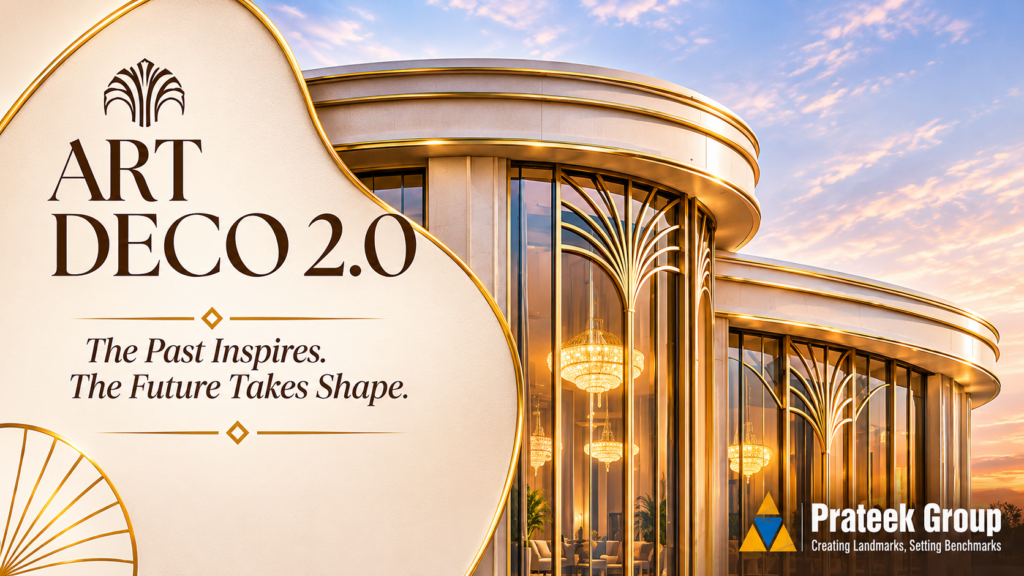
Architecture has always reflected the ambitions, lifestyles and cultural identity of its time. From historic landmarks to contemporary residential developments, architectural movements have influenced not only how buildings look but also how people experience the spaces within them.
Among these movements, Art Deco holds a distinctive place. Recognised for its bold geometry, symmetry, refined detailing and association with elegance, Art Deco introduced an architectural language that continues to inspire designers nearly a century after its emergence.
Today, this legacy is finding new expression through Art Deco 2.0, a contemporary interpretation that combines the character of traditional Art Deco with modern materials, technology and spatial planning.
As luxury residential architecture evolves, this approach offers an opportunity to create developments that are visually distinctive while responding to the practical expectations of modern homebuyers.
At Prateek Group, we have drawn inspiration from Art Deco 2.0 for our upcoming ultra-luxury development in Sector 150, Noida. This architectural direction forms an important part of A Story of Fine Living, our philosophy of bringing timeless design principles into a contemporary residential setting where elegance, functionality and everyday experiences are considered together.
Understanding the Origins of Art Deco Architecture
Art Deco emerged during the 1920s and 1930s, a period characterised by industrial progress, changing social aspirations and growing interest in modern design.
The movement represented a departure from earlier architectural styles through its emphasis on geometric forms, structured compositions and decorative craftsmanship.
Bold vertical lines, symmetrical arrangements, stylised patterns and distinctive ornamental details became important elements of its visual identity.
Art Deco gained particular prominence in New York, where buildings such as the Chrysler Building and Empire State Building became enduring examples of the movement’s influence on urban architecture.
Its impact was not restricted to building exteriors. The design language extended into furniture, lighting, interiors and decorative objects, creating a unified approach in which different elements shared a consistent architectural character.
What makes Art Deco particularly relevant today is its ability to remain recognisable despite changing design preferences.
Rather than depending entirely on the trends of a particular decade, its combination of proportion, geometry and craftsmanship created an identity that continues to attract architectural interest.
At Prateek Group, we find this enduring appeal particularly significant. It demonstrates how a well-defined architectural language can retain its character while continuing to inspire new interpretations.
This forms an important foundation for our understanding of Art Deco 2.0.
What Is Art Deco 2.0?
Art Deco 2.0 can be understood as a modern evolution of the original architectural movement.
Instead of reproducing historic buildings or relying solely on traditional decorative features, the approach reinterprets Art Deco’s defining principles through contemporary architectural practices.
The emphasis remains on distinctive forms, visual balance, refined detailing and a strong design identity.
However, these qualities are now considered alongside modern construction methods, materials, technology and changing expectations of residential comfort.
For instance, geometric compositions may influence the architectural character of a development, while contemporary spatial planning determines how its interiors accommodate everyday activities.
Similarly, traditional ideas of grandeur can be translated into more restrained architectural expressions that prioritise proportion, material quality and carefully considered design details.
This distinction is important.
Art Deco 2.0 is not simply about making modern buildings resemble structures from the past. It is about retaining the spirit of an influential architectural movement while adapting its principles to present-day requirements.
For us, this interpretation represents an opportunity to bring architectural heritage into contemporary residential design without compromising modern functionality.
The objective is to create an architectural expression that feels distinctive today while retaining its relevance in the years ahead.
Why Architectural Identity Matters in Luxury Developments
As urban skylines expand, residential buildings increasingly compete for visual distinction.
However, architectural identity involves more than creating an unusual exterior.
It is shaped by the relationship between a building’s form, proportions, detailing, materials and the experience of moving through its spaces.
A coherent architectural approach gives a development a recognisable character. It also creates consistency between exterior design, arrival areas, shared environments and residential interiors.
In luxury housing, this consistency can contribute to a stronger sense of place.
Art Deco 2.0 offers a design language that supports this objective through its emphasis on geometry, symmetry and architectural refinement.
Rather than relying entirely on elaborate ornamentation, contemporary interpretations can use carefully balanced forms and details to establish distinction.
At Prateek Group, we believe that architectural character should extend beyond visual appearance.
The experience of entering a building, moving through its spaces and arriving at an individual residence should reflect the same attention to design and planning.
This understanding shapes our approach to architectural identity.
A memorable residential address is not necessarily defined by architectural complexity. Its character often emerges from the clarity and consistency of its design.
How Art Deco 2.0 Responds to Modern Living Requirements
The expectations associated with luxury homes have changed considerably since Art Deco first emerged.
Contemporary residential architecture must address practical requirements such as privacy, accessibility, natural daylight, ventilation and flexible use of interior spaces.
These considerations influence the way buildings are planned, regardless of their architectural style.
Art Deco 2.0 provides an opportunity to combine a distinctive design identity with these modern priorities.
Advances in materials and construction techniques allow architectural forms to be interpreted differently from their historic predecessors.
Contemporary glazing systems, structural planning and interior technologies also create possibilities for spaces that respond to present-day expectations.
The challenge is to ensure that visual character does not come at the expense of functionality.
A carefully designed entrance should feel welcoming while supporting convenient movement. Residential layouts should accommodate everyday routines, while windows and openings should be considered in relation to light, privacy and the surrounding environment.
At Prateek Group, we recognise that these practical considerations are fundamental to the residential experience.
Our interpretation of Art Deco 2.0 seeks to bring architectural distinction and contemporary functionality together.
We view this relationship as an important part of modern luxury architecture, where the quality of a building is experienced through both its design character and its everyday usability.
A Story of Fine Living: Art Deco 2.0 in Our Architectural Vision
Our upcoming ultra-luxury residential development in Sector 150, Noida, represents an opportunity to explore how Art Deco-inspired architecture can be reinterpreted within contemporary residential planning.
We have envisioned the development around A Story of Fine Living, a philosophy that connects three expressions of modern residential life: Art Deco 2.0; Biophilia, Nature & Greenery; and Sports, Lifestyle, Wellness & Leisure.
Within this larger vision, Art Deco 2.0 establishes the architectural direction.
We draw inspiration from the historical movement’s association with distinction, refined design and timeless elegance while adapting its character to contemporary residential expectations.
Our intention is not to reproduce the architecture of the 1920s and 1930s.
Instead, we seek to reinterpret its defining qualities through modern architectural thinking.
This approach also connects with our development’s broader theme of identity and legacy, expressed through the symbolism of a crest.
Historically associated with distinction, honour and heritage, the crest represents qualities that can be carried forward across generations.
Within our proposed development, this symbolism complements the architectural vision by placing emphasis on lasting character rather than temporary design trends.
For us, Art Deco 2.0 is therefore more than a stylistic reference.
It provides a foundation for an architectural identity that we envision remaining meaningful as residential preferences continue to evolve.
The Relationship Between Art Deco 2.0 and Biophilic Design
A significant consideration in contemporary architecture is how a building interacts with its natural surroundings.
While traditional Art Deco is primarily recognised for its geometric expression and decorative character, modern residential planning increasingly considers daylight, ventilation, greenery and outdoor views as essential parts of the design process.
This creates an opportunity to bring distinctive architecture and nature-connected living together.
Biophilic design focuses on strengthening the relationship between people and natural environments through architectural planning.
Within a luxury residence, this connection may be established through expansive windows, outdoor spaces, natural views and the careful orientation of buildings.
At Prateek Group, we consider this relationship an important part of our wider vision of fine living.
Our upcoming Sector 150 development is envisioned with a thoughtful planning approach that prioritises openness and panoramic views.
Wall-size windows and spacious private decks are proposed to strengthen the relationship between residential interiors and the surrounding landscape.
Through these planning considerations, we aim to create an environment where architectural character and natural surroundings complement one another.
Rather than treating design identity and nature as separate priorities, our approach seeks to connect them within the overall residential experience.
This reflects our understanding that Art Deco 2.0 can contribute to a larger architectural philosophy where visual distinction is supported by openness, comfort and a meaningful relationship with the environment.
From Architectural Grandeur to Personalised Residential Experiences
Luxury architecture is increasingly associated with the quality of individual experiences.
The journey from a building’s entrance to the privacy of a residence can influence how thoughtfully a development feels planned.
This has brought greater importance to access arrangements, circulation spaces and the transition between shared and private environments.
For our upcoming Sector 150 development, dedicated access-controlled private lifts are among the proposed residential features.
These lifts are envisioned to open directly into individual residences, creating a more personalised arrival experience.
Although private access is not an inherent feature of Art Deco architecture, it demonstrates how contemporary luxury developments can combine a distinctive architectural identity with modern expectations of exclusivity.
At Prateek Group, we believe that privacy and convenience should be considered essential dimensions of residential comfort.
Our proposed low-density planning philosophy further reflects this emphasis, with an intention to create a more exclusive and thoughtfully arranged residential environment.
The relationship between aesthetics and functionality is particularly important in our interpretation of Art Deco 2.0.
A building may draw visual inspiration from a historic movement while incorporating entirely contemporary solutions to residential needs.
For us, this ability to combine architectural heritage with modern functionality is central to creating a residential experience that feels both distinctive and relevant.
Why Timeless Design Matters More Than Passing Trends
Architectural preferences change over time.
Materials, decorative treatments and popular design styles may gain attention during a particular period before gradually being replaced by new approaches.
However, certain architectural principles continue to remain relevant.
Proportion, visual harmony, coherent detailing and thoughtful spatial arrangements can contribute to the lasting appeal of a building.
Art Deco demonstrates this through its continued influence on architecture long after the movement’s original period of prominence.
Its modern reinterpretation raises an important question for luxury residential development: how can a building reflect contemporary aspirations without becoming dependent on temporary design preferences?
Art Deco 2.0 offers one possible direction.
By retaining established design principles while allowing materials, technology and spatial planning to evolve, architects can create buildings that are both contemporary and connected to a recognisable design heritage.
At Prateek Group, we believe long-term architectural relevance begins with thoughtful decisions made during the design process.
Our approach focuses on creating an identity that is not defined solely by current trends.
Through Art Deco 2.0, we aim to establish a design language that combines elegance, distinction and a considered approach to modern living.
For luxury homebuyers, this perspective can be relevant when evaluating the architectural character of a residential development.
What Should Homebuyers Look for in Art Deco-Inspired Luxury Residences?
When evaluating an Art Deco-inspired residential project, the architectural style should be considered alongside the quality of its overall planning.
A distinctive facade may establish visual character, but it offers only one perspective on the residential experience.
We encourage prospective homebuyers to examine how consistently the architectural concept is reflected across the development.
Building proportions, entrance design, material specifications, shared spaces and interior layouts can all contribute to this assessment.
Functionality is equally important.
The arrangement of rooms, natural light, ventilation, privacy and access to outdoor spaces should support the practical requirements of daily living.
For upcoming developments, buyers should review available architectural plans and approved specifications rather than relying exclusively on conceptual imagery.
We also consider it important to assess a developer’s construction experience, previous projects and applicable regulatory approvals.
Details such as applicable RERA registration, statutory permissions, contractual specifications and proposed possession timelines should be verified through official documentation.
At Prateek Group, we recognise that architectural distinction is most meaningful when supported by careful planning and quality execution.
A well-informed purchase decision should consider not only the visual appeal of a development but also how its design contributes to comfortable and practical residential living.
The Future of Luxury Architecture: Balancing Heritage and Innovation
The evolution of Art Deco reflects a larger principle within architecture: meaningful design ideas can be reinterpreted as lifestyles and technologies change.
Art Deco 2.0 carries forward the original movement’s emphasis on identity, elegance and refined detailing while responding to contemporary residential requirements.
Its relevance lies in this balance.
Historic inspiration provides a recognisable design language, while modern architecture creates opportunities for improved functionality, openness and personalisation.
At Prateek Group, our upcoming Sector 150 development explores this relationship through A Story of Fine Living.
Within this philosophy, Art Deco 2.0 contributes the architectural identity, while nature-connected planning and a broader understanding of modern lifestyles shape the residential experience.
As luxury housing continues to evolve, we believe architectural character will remain an important consideration alongside comfort, privacy and the quality of surrounding environments.
For us, Art Deco 2.0 demonstrates that the future of luxury architecture does not always require abandoning the past. Sometimes, it begins by understanding what made an architectural movement timeless and finding a meaningful way to carry its character into the present.