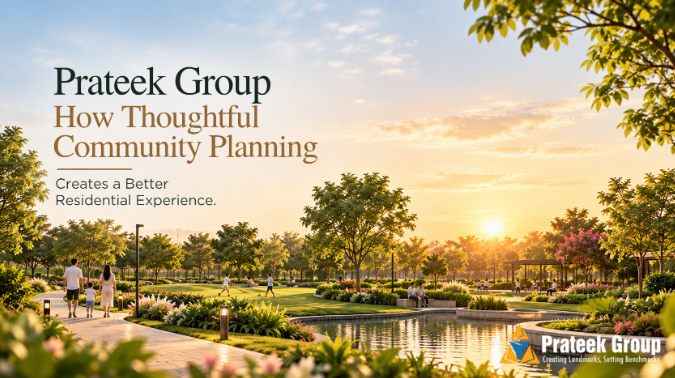
A home is where personal stories begin, but the community surrounding it often shapes how those stories unfold. From children playing in landscaped gardens to neighbours meeting during celebrations, residential living involves experiences that extend beyond individual apartments.
As homebuyer expectations evolve, residential developments are increasingly evaluated on more than location, apartment size and amenities. Open spaces, recreational facilities, maintenance, community engagement and the overall residential environment have become important considerations.
For Prateek Group, these aspects have remained central to its approach to residential development. Since its establishment in 2005, the company has created landmarks across Noida and Ghaziabad, with an emphasis on thoughtful planning, construction quality and long-term residential value.
Through developments such as Prateek Wisteria, Prateek Stylome, Prateek Edifice and Prateek Grand City, the organisation has contributed to different forms of residential living, from premium apartment communities to large integrated townships.
The underlying idea is that a well-planned development should offer more than individual homes. It should create an environment where people can live comfortably, access shared facilities and develop meaningful connections.
Why Community Planning Matters in Modern Residential Developments
Residential planning involves several interconnected decisions.
The positioning of buildings, allocation of open spaces, placement of recreational facilities, internal circulation and accessibility of common areas all influence how a development functions.
While these elements may initially appear as technical aspects of a master plan, they can have a direct impact on residents’ experiences.
A landscaped garden can become a place for families to gather. A clubhouse can offer opportunities for fitness and recreation. Walking paths and outdoor seating areas can encourage residents to spend time outside their apartments.
When these facilities are thoughtfully positioned, they become more than individual amenities. They contribute to the overall character of the residential community.
Prateek Group’s development approach reflects this understanding, bringing together residential spaces, lifestyle facilities and shared environments within its projects.
Prateek Grand City: An Integrated Approach to Township Living
Prateek Grand City in Siddharth Vihar, Ghaziabad, represents an important chapter in Prateek Group’s approach to large-scale community development.
Spread across approximately 40 acres, the integrated township has been planned to bring residential living, landscaped surroundings, recreational facilities and shared community spaces into one larger ecosystem.
According to Prateek Group’s corporate brief, more than 4,500 families are already residing within Prateek Grand City.
This established residential community provides an example of how township planning extends beyond the construction of apartment buildings.
In an integrated township, different facilities must function together to support the needs of residents.
Open spaces contribute to the residential environment, recreational facilities provide opportunities for leisure, and internal infrastructure supports movement throughout the development.
The presence of a substantial resident community also creates opportunities for social interaction and organised activities.
Prateek Grand City reflects the importance of considering these elements collectively rather than treating them as independent features.
Green Spaces and Their Role in Residential Living
Green spaces have become an important consideration in residential planning, particularly in growing urban centres such as Noida and Ghaziabad.
Landscaped gardens, parks and open recreational areas can provide a welcome contrast to the built environment.
For families, these spaces offer opportunities to spend time outdoors, engage in recreational activities and interact with neighbours.
At Prateek Grand City, landscaped areas and open spaces form an important part of the township’s residential ecosystem.
Similarly, Prateek Canary in Sector 150, Noida, has been envisioned around a nature-connected residential environment, incorporating landscaped surroundings and golf-facing residential planning.
These approaches reflect how greenery can be integrated into different types of residential developments.
However, the value of green spaces also depends on how they are maintained and used.
A well-kept garden can support recreational activities and social interaction, while accessible outdoor areas can encourage residents of different age groups to participate in community life.
For residential developers, this makes green space planning an important part of creating environments that remain relevant over time.
The Importance of Recreational and Lifestyle Amenities
Modern residential communities bring together people with different interests, age groups and lifestyle preferences.
A well-planned development therefore needs to consider a variety of recreational requirements.
Fitness facilities, indoor recreation areas, outdoor sports spaces and community gathering areas can all contribute to a more complete residential experience.
Prateek Group’s premium residential portfolio reflects the growing importance of these facilities.
At Prateek Canary, the proposed double-decker clubhouse brings together wellness, entertainment and indoor recreation within a dedicated lifestyle environment.
The project also incorporates private party decks, golf-facing views and outdoor recreational facilities as part of its residential concept.
These amenities offer different opportunities for residents to spend time within the development.
At established projects such as Prateek Wisteria, Prateek Stylome and Prateek Edifice, residential planning has also contributed to the company’s experience in developing premium housing communities.
Across different projects, the objective is to create residential environments that respond to the expectations of their intended residents.
Creating Opportunities for Community Interaction
A residential development becomes a community through the people who live there.
Neighbours meeting in shared spaces, families participating in celebrations and children forming friendships are experiences that contribute to a sense of belonging.
While developers cannot determine how these relationships develop, they can plan environments that create opportunities for interaction.
Community halls, landscaped lawns, recreational facilities and shared outdoor areas can provide suitable settings for residents to come together.
Prateek Group’s Life at Prateek programme also reflects the importance of continued resident engagement.
As described in the company’s corporate brief, the programme brings together wellness activities, celebrations, environmental awareness and community experiences.
Such initiatives recognise that the residential experience continues after people move into their homes.
Resident engagement activities can encourage participation, introduce neighbours to one another and help strengthen the social character of established developments.
When supported by suitable common spaces and organised activities, community interaction becomes a meaningful part of residential living.
Why Maintenance Matters After Handover
The quality of a residential environment is influenced not only by how it is developed but also by how it is maintained.
Landscaped areas require regular upkeep. Recreational facilities need appropriate maintenance. Shared infrastructure must remain functional to support residents’ needs.
These responsibilities become particularly important in large residential communities, where common facilities are used by numerous households.
Prateek Group’s corporate brief highlights professional maintenance at Prateek Grand City as part of its approach to supporting residential standards over time.
For residents, consistent maintenance contributes to the usability and appearance of shared spaces.
It also helps preserve the intended character of the development.
A thoughtfully planned clubhouse or landscaped garden can provide long-term value only when the facilities remain functional and accessible.
This makes maintenance an essential part of the wider residential experience rather than a responsibility that begins and ends with routine upkeep.
Residential Planning Across Different Generations
Residential communities accommodate people at different stages of life.
Young children may need accessible play areas, while working professionals may value fitness facilities and convenient recreational options.
Families may look for spaces where they can gather, while older residents may appreciate comfortable walking areas and opportunities for social interaction.
A thoughtfully planned development considers how these different needs can coexist.
The availability of shared amenities allows residents to use facilities according to their preferences.
In larger communities, the combination of outdoor spaces, indoor recreation and organised activities can provide opportunities for participation across age groups.
Prateek Group’s experience across different residential segments has contributed to its understanding of varied homebuyer expectations.
From the spacious residential configurations associated with Prateek Wisteria to the premium positioning of Prateek Stylome and Prateek Edifice, the company’s portfolio reflects changing preferences in residential living.
Prateek Grand City further demonstrates how these considerations can be incorporated into township-scale planning.
The Relationship Between Community Living and Long-Term Residential Value
When evaluating a home, buyers often consider location, construction quality, connectivity and the credibility of the developer.
However, the condition and functionality of the surrounding residential environment can also influence long-term satisfaction.
Accessible recreational facilities, maintained common spaces and a well-organised residential setting can contribute to the overall appeal of a development.
For prospective homebuyers, this makes it important to evaluate the larger community rather than focusing exclusively on apartment interiors.
A site visit can help buyers understand how buildings are positioned, how common areas are arranged and whether recreational spaces are convenient to access.
In established residential developments, the condition of shared facilities and the functioning of the community can provide additional insight into the living environment.
Prateek Group’s portfolio offers examples of different approaches to residential planning, reflecting the company’s experience across premium developments and integrated townships.
The long-term relevance of these projects depends on several factors, including location, maintenance, resident needs and the quality of the surrounding infrastructure.
Prateek Group’s Continuing Approach to Community Development
As residential expectations continue to evolve, developers must consider how homes and communities can respond to changing lifestyles.
Greater attention to outdoor experiences, recreational facilities, wellness and shared spaces is influencing the planning of premium residential developments.
Prateek Canary represents one direction of this evolution through its golf-facing planning, double-decker clubhouse, private party decks and landscaped surroundings.
Prateek Grand Begonia in Siddharth Vihar forms another part of Prateek Group’s continuing development journey.
These projects build upon the experience gained through the company’s earlier residential landmarks.
For Prateek Group, the larger objective remains connected to creating residential environments where thoughtful planning, quality construction and community facilities contribute to a more complete living experience.
The company’s philosophy, Creating Landmarks, Setting Benchmarks, reflects this continuing focus on residential development.
Conclusion: A Better Home Begins with a Better Community
A well-designed apartment provides the foundation for comfortable living, but the surrounding community plays an equally important role in shaping the residential experience.
Green spaces, recreational facilities, shared amenities, maintenance and opportunities for social interaction all contribute to how a residential development functions over time.
Through projects such as Prateek Wisteria, Prateek Stylome, Prateek Edifice, Prateek Grand City and Prateek Canary, Prateek Group has approached residential development across different scales and lifestyle requirements.
Its experience demonstrates the importance of looking at residential planning as a combination of homes, infrastructure, amenities and community spaces.
As urban residential expectations continue to change, the role of thoughtful community planning will remain important.
Because a home provides the space to live, while a thoughtfully planned community creates opportunities to connect, grow and belong.