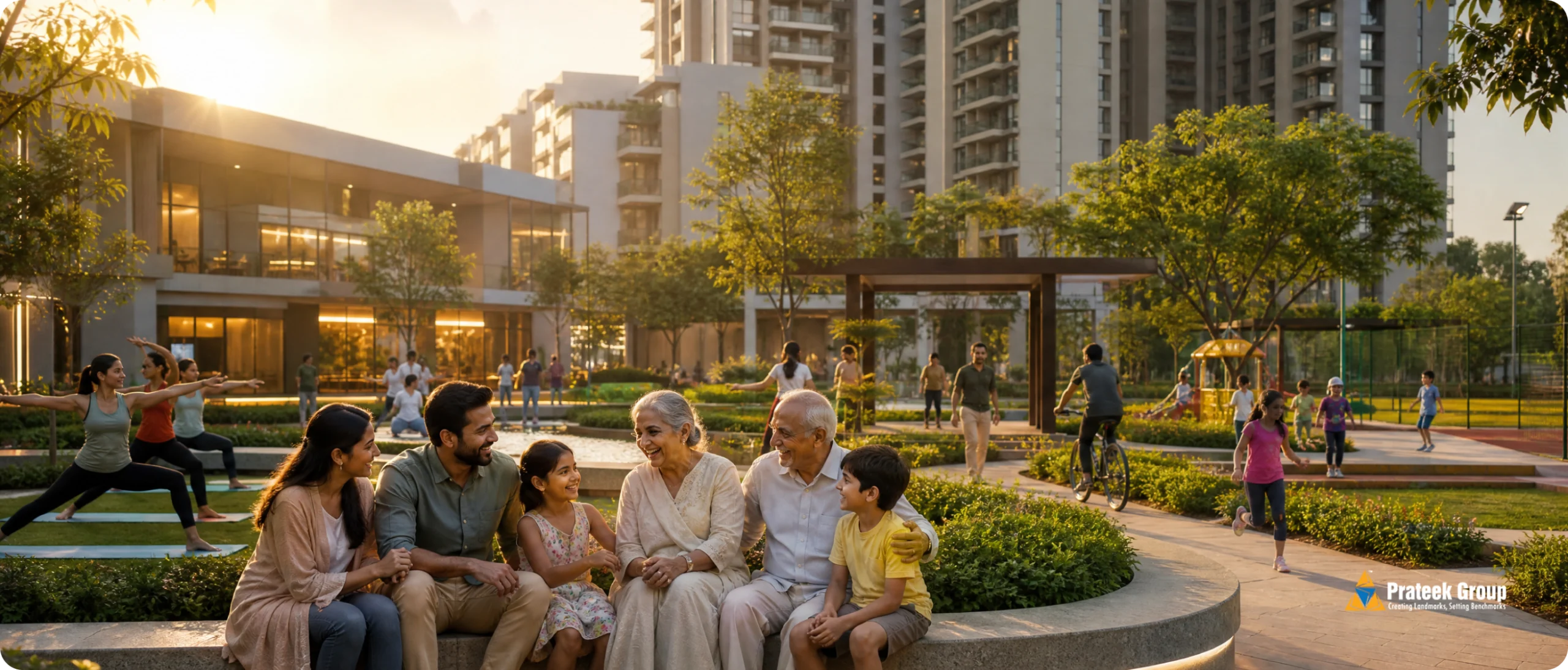
Imagine you visit a premium housing project on Sunday. The apartment looks good. The layout feels open. The fittings seem polished. But after 15 minutes, your questions move outside the flat.
Where will my child play? Will I feel safe during evening walks? Is there a quiet place for my work calls? Will neighbours actually use the common spaces after possession? These are all the new premium housing questions.
Buyers still care about design, location, privacy, and finishes. They now care just as much about the life around the apartment. CBRE’s luxury housing report recorded an 85% year-on-year rise in luxury housing sales during Jan-Jun 2025, while JLL’s premium housing data showed homes above ₹1 crore gaining a larger share of sales in H1 2025.
This demand is tied to daily comfort.
Premium buyers want privacy, but they also want useful shared spaces. They want security, but they also want a society that feels alive. They want better amenities, but they want those amenities to support real routines.
That is why community-centric living is becoming central to premium housing.
A good community proves itself slowly: during morning walks, school-bus hours, work calls, weekend gatherings, senior meetups, resident events, maintenance requests, and small conversations that make a place feel settled.
For Prateek Group and other NCR developers, this is where the premium conversation becomes deeper. The buyer is asking one clear question:
“How will my family actually live here?”
What does community-centric living actually mean?
Community living does not mean crowded events or forced social circles.
It means a residential project is planned so people can enjoy privacy inside the home and still feel connected when they step out.
Children need safe play areas. Seniors need shaded paths and seating corners. Working professionals need quiet rooms, lounges, or co-working areas. Families need open spaces, activity zones, festival areas, fitness spaces, and daily services that make life easier.
That is why community-centric living is growing inside luxury housing.
The old premium housing idea was simple: build a better apartment, add a clubhouse, add a pool, and sell the lifestyle. Buyers now ask whether those spaces will work after handover.
Old premium housing idea | Community-centric housing idea |
Bigger apartment | Better daily life around the apartment |
Clubhouse as a brochure feature | Clubhouse as a space residents use |
Gated entry | Safer movement for children, seniors, visitors, and staff |
Amenities on paper | Spaces built around real routines |
Private comfort | Private comfort with social ease |
Launch promise | Long-term resident experience |
This shift is visible in the market. Economic Times, citing JLL data, reported in its luxury housing coverage that homes above ₹1 crore formed 62% of total residential sales in H1 2025.
That tells us something about buyer behaviour. People are spending more. They also expect more from the place they choose.
Premium apartments now need to support work, wellness, privacy, family time, social comfort, and long-term livability. A good community does not need to announce itself loudly. Residents should feel it in the way the place works.
Why do buyers now care about life outside the apartment?
A premium buyer still wants a well-planned home. What has changed is the way families judge the space outside the front door.
A working couple may love the apartment, but they still need a quiet room when both take calls at the same time. A child may have a beautiful bedroom, but daily life feels better when there is a safe play area downstairs. Parents may enjoy a larger living room, but they also need walking paths, benches, and neighbours they recognise.
This is why community living has become part of the premium checklist. A buyer’s questions are now more practical.
Can children play without constant worry?
Parents want open areas, supervised zones, safe internal roads, and play spaces that do not feel like leftover corners.
Can seniors use the society every day?
A walking track, shaded seating, ramp access, clean lifts, and calm garden areas can make daily life easier for older residents.
Can working adults get quiet space outside the flat?
Hybrid work has changed how people use premium apartments. Co-working lounges, meeting rooms, and reading areas now matter because the home is also a workplace.
Can people connect without losing privacy?
Gated community living works best when residents can meet, walk, attend events, or stay private by choice.
Hindustan Times reported in its premium homes analysis that homes above ₹1 crore accounted for 62% of housing sales in H1 2025, based on JLL data.
A society feels premium when it handles ordinary life well.
The real shift: from amenities to lived experience
For years, premium projects sold amenities like a checklist: Pool. Gym. Clubhouse. Lawn. Lounge. Indoor games.
Buyers now ask a sharper question: will these spaces actually be used?
Hindustan Times reported in its clubhouse upgrade story that luxury housing projects are adding branded clubhouses, wellness spaces, sports facilities, and hospitality-style services to attract homebuyers.
That sounds attractive, but buyers should still check its usefulness.
Amenity on paper | What buyers should check |
Clubhouse | Is it accessible, maintained, and active after possession? |
Gym | Does it have enough equipment for actual resident use? |
Co-working room | Is it quiet, bookable, and practical for daily calls? |
Kids’ play area | Is it safe, shaded, and visible from nearby seating? |
Walking track | Is it wide, well-lit, and comfortable for seniors? |
Community hall | Can it support events without disturbing residents? |
Pet zone | Is it planned properly or only marked on a corner? |
This is where modern amenities in apartments need a reality check.
A large clubhouse can look good in a brochure, but a small reading lounge used every evening may add more comfort to daily life. A gym photo can impress a visitor, but a shaded walking path can change a senior citizen’s routine.
Economic Times also noted in its designer clubhouses coverage that luxury projects are adding co-working spaces, pet facilities, mood lighting, and high-end club areas.
The best premium communities will not win by adding every possible feature. They will win by making the right spaces useful after families move in.
Why is family life pushing premium housing toward community?
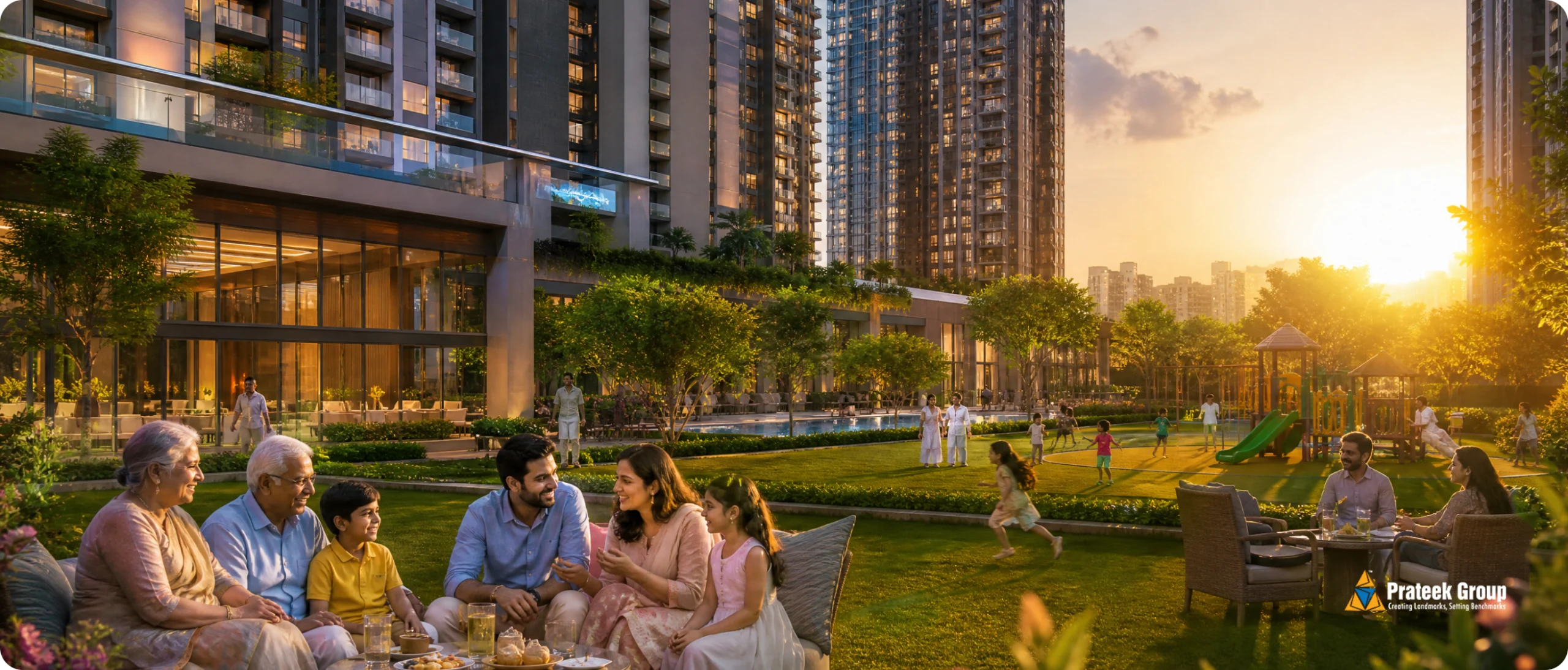
Premium buyers are not all looking for the same life.
A young couple may want privacy, fitness spaces, and a quiet work lounge. Parents may want safer play areas and better internal movement. Senior citizens may care more about shaded walking paths, lift access, seating corners, and familiar faces in the evening.
This is why community-centric living works better when it is planned around different age groups.
For children
A child’s day does not end inside the bedroom.
Children need play areas that are safe, visible, active, and close enough for parents to feel comfortable. A premium society feels stronger when children can build friendships inside the community instead of depending only on school or screen time.
For working parents
Work-from-home has changed how people use residential spaces.
A quiet lounge, a meeting room, a reading corner, or café-style seating can help parents work without turning the dining table into a permanent office. Knight Frank’s market view, covered in this premium homes update, shows how higher-value housing has become a stronger part of residential demand.
For senior citizens
Gated community living should make older residents feel safe without making them feel cut off.
Wide walkways, benches, gardens, lift reliability, security staff, and neighbours who recognise them can change daily life more than expensive finishes inside the apartment.
For families as a whole
A premium society works when every age group finds a reason to step out.
This is also where developers have to think beyond clubhouse photos. The real value comes from spaces that people use often, in ordinary ways.
For Prateek Group, this family-first angle fits naturally in the NCR housing conversation. Buyers comparing its Noida and Ghaziabad projects on the Prateek residential projects page are comparing more than towers. They are checking how a project may support family life after possession.
What a community-first premium project should include?
A good community-first project is easy to spot if you visit slowly. Do not start with the brochure. Start with the site walk.
Community feature | What buyers should check |
Entry and security | Visitor movement, guard response, delivery handling, and access control |
Internal movement | Safe walking paths, stroller-friendly routes, ramps, and lighting |
Children’s spaces | Play areas that feel safe, shaded, and active |
Senior areas | Benches, gardens, walking loops, and calm corners |
Work areas | Co-working rooms, quiet lounges, or meeting spaces that residents can use |
Fitness and wellness | Gym, yoga zones, open-air activity areas, and usable green spaces |
Social spaces | Community hall, festival areas, informal seating, and event-friendly planning |
Daily support | Maintenance response, parking, waste handling, water supply, and resident communication |
This is where modern amenities in apartments need a practical filter.
A premium project does not need every possible facility. It needs the right facilities placed well, maintained well, and used by residents. CBRE’s joint housing report with ASSOCHAM, mentioned in its luxury housing sales release, points to rising buyer aspirations and stronger luxury housing demand. That demand puts more pressure on developers to create communities that feel useful after handover.
Prateek Group can be mentioned here as a relevant NCR example, but only in the right way. Buyers may compare Prateek Group with other established developers for location, delivery history, project planning, amenities, and community feel.
The decision should still come down to site visits, RERA checks, construction status, maintenance quality, and how the society works on a normal weekday.
A community-first project should pass one simple test: Would residents use the common spaces even when no one is taking marketing photos?
Why is wellness becoming part of the premium housing decision?
A premium buyer may walk into a project for the apartment. They stay interested when the place feels healthier to live in.
Wellness amenities in real estate have moved into the main buyer conversation. A gym still matters, but it is only one part of the story. Buyers now look for walking loops, green views, quiet corners, clean air planning, sunlight, yoga lawns, sports spaces, and places where children and seniors can move without stress.
Forbes recently discussed wellness real estate trends that connect health, community, design, and long-term home value. Indian buyers may use different words, but the need feels familiar.
A home should help people live better on an ordinary day. That is why premium housing now has to answer questions like these:
- Can residents walk safely in the morning?
- Are green spaces usable or only decorative?
- Does the project give seniors shaded seating?
- Are fitness spaces easy to access?
- Can children play without crossing vehicle-heavy zones?
- Does society feel calm after work hours?
- Is there enough space for people to step out without leaving the community?
This is also where sustainable housing and community design start to meet. Buyers care about open space, ventilation, water systems, waste handling, and long-term maintenance because these details shape comfort after possession.
Prateek Group can fit into this discussion when buyers compare how NCR projects plan family life, green areas, shared amenities, and everyday comfort. The brand mentioned should support the point, not take over the section.
A premium project earns trust when wellness is built into daily movement.
The buyer checklist for a real community, not a brochure community
Many projects talk about community. A buyer has to check whether the community will actually work.
This matters more as higher-value homes take a larger share of India’s residential market. Fortune India reported in its premium housing coverage that homes priced above ₹1 crore made up nearly half of residential sales in H1 2025, citing Knight Frank India data.
When buyers spend that kind of money, they should check the life outside the apartment with the same seriousness as the view, payment plan, and possession date.
Use this checklist during a site visit.
What to check | What it tells you |
Occupied common areas | Residents actually use the shared spaces |
Safe internal movement | Children, seniors, and walkers can move without vehicle stress |
Clubhouse access | Facilities are easy to reach and maintained well |
Event spaces | The society can host gatherings without disturbing daily life |
Seating corners | People have informal places to meet |
Co-working space | Working residents get quiet support outside the apartment |
Green areas | Open space is usable, shaded, and maintained |
Maintenance team | The project can handle daily issues after handover |
Resident systems | Apps, helpdesk, visitor entry, and notices work clearly |
Security behaviour | Guards manage access without making residents feel trapped |
NewsX noted in its luxury housing demand coverage that lifestyle shifts and demand for high-end living spaces are shaping the premium residential market.
That is why the word “community” should be tested on ground.
Walk through the project at 6 pm. Look at who is using the gardens, benches, sports areas, lifts, and entry gates. Ask how festivals are handled. Ask how complaints are resolved.
If the spaces feel alive without a sales team explaining them, the community has begun to work.
The community should work on an ordinary Tuesday
A real premium community is tested on a normal weekday. No launch event. No decorated sample flat. No sales team walking behind the buyer.
Just residents using the place.
Morning
A senior resident walks near the garden without worrying about speeding vehicles inside the campus. A parent drops a child near the school bus point and still reaches a work call on time. A resident uses the gym before breakfast because the facility is close, clean, and open when people actually need it.
Afternoon
A working professional steps into a quiet lounge for a video call.A homemaker meets a neighbour near the seating area without planning a formal visit.A child returns from school and finds other children downstairs instead of going straight to a screen.
Evening
The walking track gets active. The clubhouse is used by residents, not only photographed for brochures. Children play where parents can watch them. Seniors sit where they can talk without feeling pushed into a crowd. Pets have a planned area, not a random corner near parking.
For developers such as Prateek Group, the lesson is practical. A premium project has to feel settled after families move in. The community should show up in movement, maintenance, safety, and everyday use.
What developers need to get right after handover?
Premium buyers now ask harder questions.
They want better homes, but they also want better management after possession. A project can have strong architecture and still disappoint residents if common areas are poorly maintained, events are badly managed, or basic services feel slow.
ABP Live’s premium housing report points to strong demand for homes above ₹1.5 crore, with infrastructure-led markets keeping buyer interest active. That demand raises the bar for developers. A good premium residential project should answer these questions before handover.
Resident management
- Who handles complaints after possession?
- How quickly are repairs addressed?
- Is there a clear system for notices, billing, visitor access, and maintenance updates?
Common-space upkeep
- Who maintains the clubhouse, gym, lawns, sports areas, lifts, and seating zones?
- Are operating costs explained clearly to buyers?
- Will the spaces remain usable 3 years after possession?
Community programming
- Are festivals, sports days, senior meetups, children’s activities, and resident gatherings planned in a way that feels natural?
- Will residents have spaces to connect without noise spilling into private homes?
Safety and access
- How are visitors, delivery staff, workers, cabs, and service teams managed?
- Can children and seniors move inside the campus safely?
- Does lighting support evening movement?
Times of India’s smart city initiatives coverage connects better urban infrastructure with stronger real estate demand across Indian cities. Inside a premium project, the same idea works at a smaller scale.
Better systems make daily living easier. This is why gated community homes need strong post-handover planning.
A premium society should not fade after launch. It should get easier to live in as residents move in, form routines, and start using the spaces the way they were meant to be used.
Premium housing is moving toward better everyday life
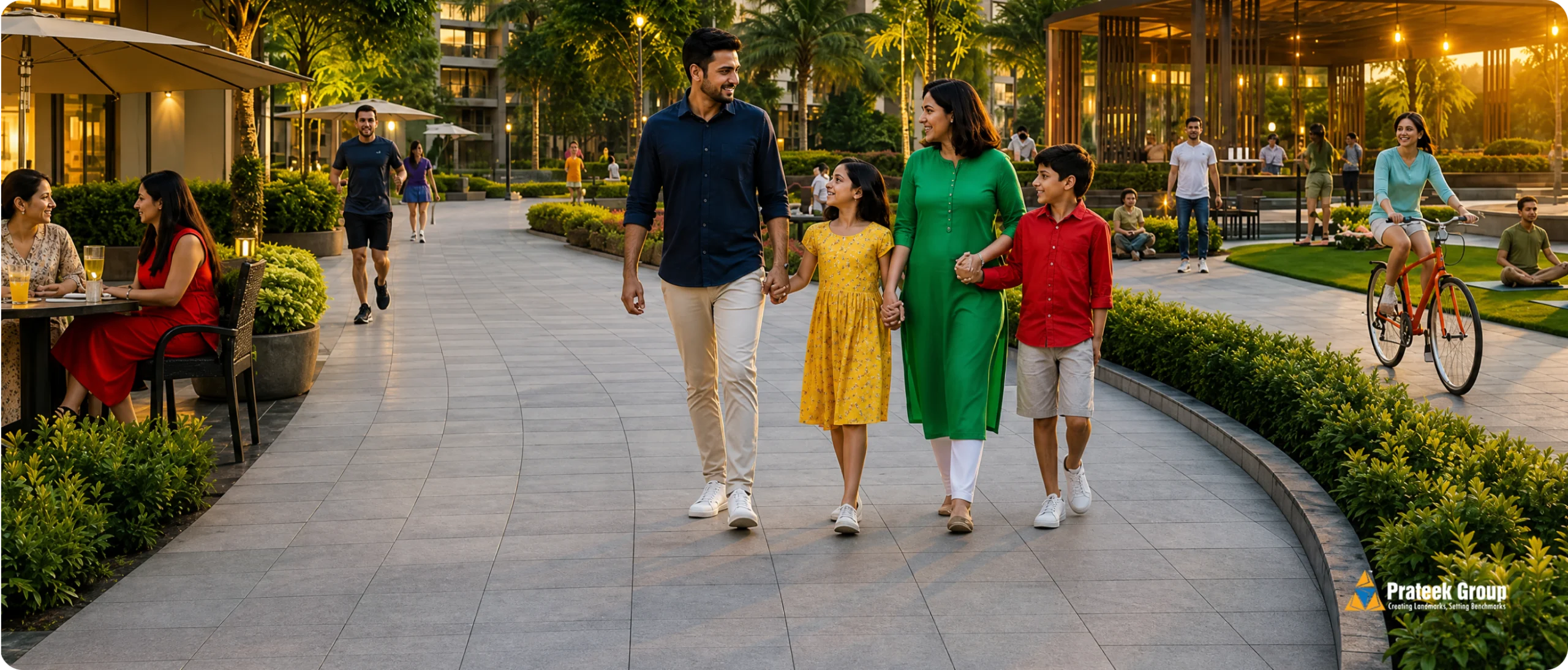
Community-centric living has become a serious part of premium housing because buyers now judge homes through daily experience.
The apartment still matters. Layout, finish, view, privacy, and location will always shape the decision. But the life around the apartment has become just as serious for families spending more on luxury housing.
A buyer wants to know how society feels after possession.
Can children play safely? Can seniors walk comfortably? Can residents work, exercise, meet, relax, and handle daily routines without stepping out for everything? Can the community stay active after the launch excitement fades?
That is where the future of community living is going.
Deccan Herald’s premium housing outlook points to continued demand for premium and luxury homes in 2026, backed by high-income buyers, infrastructure, technology, and institutional capital. That demand will push developers to think harder about how people live inside residential communities.
Prateek Group fits into this conversation when buyers compare NCR projects through family comfort, shared spaces, planning, daily services, and resident experience. The better way to mention the brand is simple: as one of the developers buyers may review while checking whether a project supports real community life.
The final buying question should stay practical: Does this project make everyday life easier?
If the answer is yes, community-centric living becomes more than a real estate phrase. It becomes the reason premium buyers feel their home choice was right.
FAQs on community-centric living and premium housing
1. What is community-centric living in premium housing?
Community-centric living means a residential project is planned around people’s daily lives, not only around individual apartments. It includes shared spaces, walking areas, play zones, wellness areas, resident services, and places where people can connect naturally.
2. Why is community-centric living becoming popular?
Buyers want homes that support work, family life, wellness, safety, and social comfort. KPMG’s luxury housing view notes that buyers now look for comfort, design, sustainability, security, and amenities that suit modern living.
3. How is community-centric living different from normal gated living?
Normal gated living may focus mainly on security and access control. Community-centric living goes further by planning common areas, services, events, wellness spaces, and movement patterns around resident use.
4. Why does community living matter in premium apartments?
Premium apartments cost more, so buyers expect better life outside the flat too. Shared spaces, maintenance, security, and resident experience can affect long-term comfort.
5. What features should buyers look for in community-focused projects?
Buyers should check walking paths, children’s play areas, senior seating, clubhouse use, co-working rooms, fitness spaces, green areas, visitor systems, and maintenance response.
6. Are clubhouse amenities enough to create a good community?
Clubhouse amenities help only when residents use them regularly. A large clubhouse with weak maintenance or poor access does not create community life by itself.
7. How does community-centric living help families?
It helps families by giving children safe play areas, working adults shared work zones, seniors walking spaces, and everyone a more active society environment.
8. Is community-centric living useful for senior citizens?
Yes. Senior citizens benefit from shaded walking paths, benches, lift access, calm gardens, medical access, security support, and familiar neighbours.
9. Why is wellness important in premium housing?
Wellness matters because buyers want homes that support healthier daily routines. Walking tracks, fitness areas, green space, sunlight, ventilation, and quieter corners can improve how people use the society.
10. Does community living improve property value?
A well-managed community can support resale and rental interest because buyers and tenants often prefer societies that feel active, safe, and maintained.
11. How should buyers test a project’s community quality?
Buyers should visit during evening hours, watch how common areas are used, speak to residents, check maintenance, review security systems, and see whether families actually spend time outside.
12. Where does Prateek Group fit into this topic?
Prateek Group can be viewed as part of the NCR developer set buyers may compare for residential planning, shared amenities, family comfort, and community experience. The final choice should still depend on project checks, location, possession status, and daily usability.
13. Is community-centric living only for luxury housing?
No. Community planning helps many housing types. But it becomes more expected in luxury apartments in India because buyers paying premium prices expect better shared living quality.
14. What role does technology play in community living?
Technology can help with visitor entry, maintenance tickets, billing, resident notices, amenity booking, security alerts, and communication between residents and management.
15. What mistakes should buyers avoid?
Buyers should avoid trusting only brochure photos, clubhouse size, or launch promises. They should check how the project works on a normal weekday.
16. Why is community-centric living the future of premium housing?
Community-centric living is becoming the future because buyers want homes that support complete daily life. ET Edge Insights wrote about long-term community planning as part of India’s next premium housing phase, which shows how the conversation is moving toward resident experience and better-managed communities.