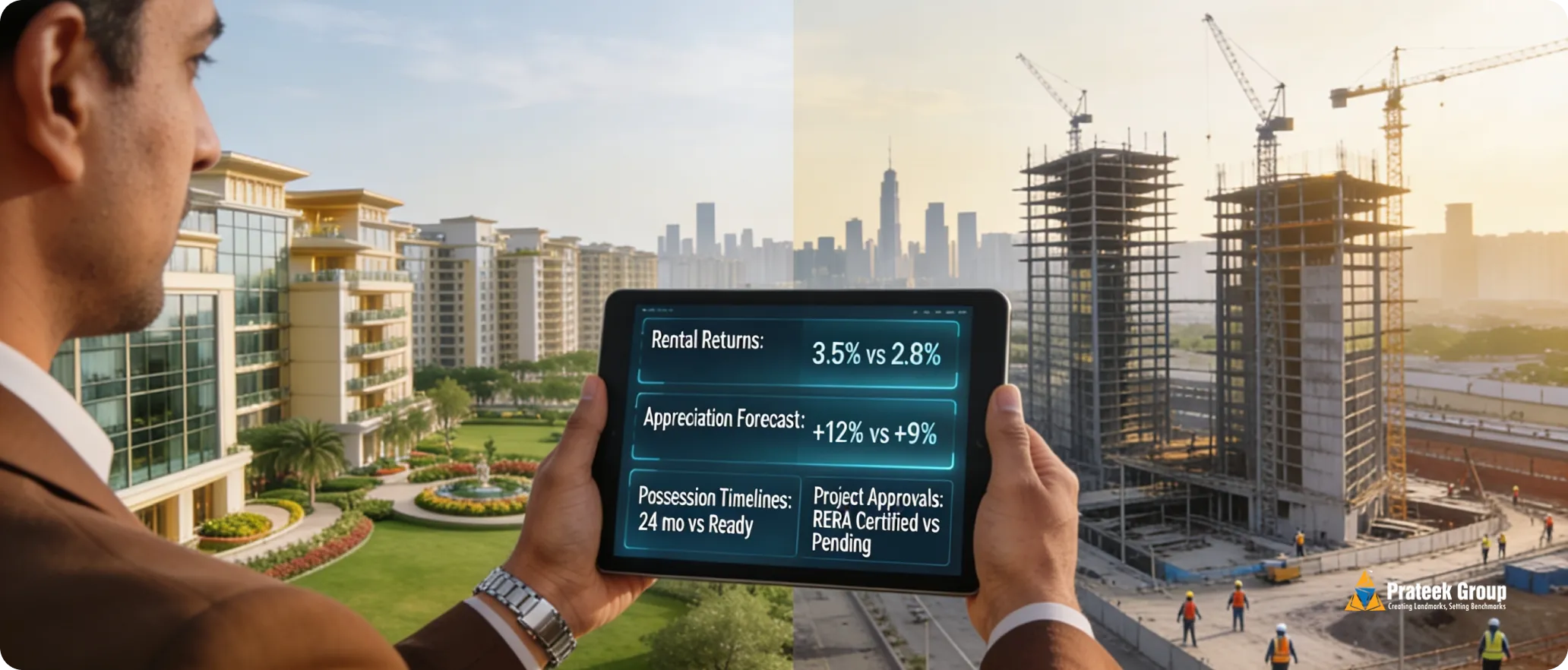
For NRIs planning to invest in Indian real estate in 2026, one common question is whether to choose an under-construction home or a ready-to-move property. Both options can work well, but the right choice depends on budget, risk comfort, timeline, and purpose of purchase. This decision matters more for NRIs because most buyers are managing the process from abroad. Site visits are limited, approvals must be checked remotely, and updates often come through calls, emails, or family members in India. So, the choice is not only about price. It is also about trust, delivery confidence, rental timing, and long-term value.
In NCR markets such as Noida, Ghaziabad, Greater Noida, and selected Gurugram corridors, both formats are active in 2026. Ready-to-move homes offer immediate use and rental potential, while under-construction projects may offer better entry pricing and future appreciation if the developer has a strong delivery record. This blog compares both options in a practical way, so NRI buyers can decide which property type fits their investment goal, family plan, and holding period.
Why This Decision Matters More for NRIs in 2026
For NRIs, the choice between under-construction and ready-to-move property is more than a pricing decision. It affects risk, rental timing, future use, and how confidently the purchase can be managed from outside India.
Remote Buying and Limited Physical Verification
When an NRI buyer is based in the US, UK, Gulf, or Southeast Asia, property verification often happens through video tours, family visits, broker updates, and digital documents. This makes trust a major part of the purchase. A ready-to-move home can be inspected before payment. The buyer can check construction quality, society condition, amenities, occupancy, and rental demand. An under-construction project, however, depends more on developer execution, approvals, timelines, and regular progress updates. It can still be a good option, but the due diligence needs to be much stronger.
NRI Reality:
- Video tours and family reports often replace site visits
- Time zones can delay updates and decisions
- RERA helps, but delivery risk still needs checking
Increasing NRI Demand in NCR, Noida, Ghaziabad, and Metro Cities
In 2026, NRI interest remains strong across NCR and other major Indian cities. Within NCR, areas such as Noida Expressway, Greater Noida West, Ghaziabad, Raj Nagar Extension, and select Gurugram corridors continue to attract buyers because of better connectivity, larger homes, and improving social infrastructure. Many buyers in the ₹60 lakh to ₹2 crore range are professionals planning a return to India over the next five to ten years. Prateek Group has also seen consistent NRI interest across its NCR communities, especially where township living and family-focused planning are important.
Balancing Investment Versus Self-Use Goals
The right choice depends on the purpose of buying.
- Investment: Under-construction for appreciation potential
- Rental/Self-use: Ready-to-move for certainty
- Family return: Hybrid approach with trusted delivery
If the goal is appreciation, an under-construction project may offer better entry pricing. If the goal is rental income or family use, ready inventory may feel safer.
Why the Wrong Choice Can Affect Long-Term Returns
A delayed under-construction project can mean EMIs without possession, no rental income, and continued housing expenses abroad. At the same time, buying a ready home at an inflated premium can reduce future returns. For NRIs, the safer route is to match the property type with the timeline, verify the developer, and avoid choosing only on price.
Under-Construction Property: What NRIs Should Know

Under-construction homes can work well for NRIs who have a longer holding period and are comfortable waiting for possession. The appeal is usually lower entry pricing, flexible payment milestones, newer layouts, and appreciation potential before the project is fully delivered.
Lower Entry Price and Staged Payment Flexibility
The biggest advantage is the entry cost. In many NCR micro-markets, an under-construction property can be priced lower than a comparable ready-to-move home in the same area. For NRI buyers, this difference can matter because it reduces the first-stage financial burden. Construction-linked payment plans also make the purchase easier to manage. Instead of paying the full amount upfront, buyers pay in stages as the project progresses.
- Lower entry: 10–30% below ready inventory in many cases
- Payment plan: Milestone-based installments
- NRI benefit: Better cash-flow control across currencies
Higher Appreciation Potential Over Time
Under-construction properties often carry better appreciation potential because buyers enter before the project and surrounding area are fully developed. As construction moves forward, infrastructure improves, and possession nears, the property can gain value. This is especially relevant in growth corridors such as Noida Expressway, Sector 150, Greater Noida, Yamuna Expressway influence zones, and selected Ghaziabad pockets. However, appreciation should always be treated as potential, not a guaranteed return.
Modern Design, Better Layouts, and Customization Options
Newer projects usually reflect current buyer expectations better than older ready inventory. Wider balconies, better space use, smart-home provisions, podium amenities, EV readiness, and improved common areas are now more common in mid-premium and premium launches. Early-stage buyers may also get limited flexibility with minor interior choices before fit-out. For NRIs planning future self-use, this can help create a home that feels more aligned with family needs.
Risks: Delays, Execution Issues, and Developer Credibility
The main risk is delivery. Even with RERA, delays can happen due to approvals, material costs, labour issues, or developer-side funding pressure. For NRIs, this risk feels bigger because physical monitoring is difficult.
RERA Mitigates, But Verify:
- Registered project details
- Timeline and possession commitment
- Delay penalty clauses
- Escrow-linked fund usage
- Developer delivery record
With Prateek Group, buyers should evaluate each project through its RERA details, construction stage, payment plan, and the group’s delivery history before making the final call.
Ready-to-Move Property: What NRIs Should Know
Ready-to-move homes suit NRIs who want certainty, faster use, and lower delivery risk. The property is already built, so the buyer can inspect the actual unit, understand the neighborhood, and start using or renting the home soon after completion.
Immediate Possession and What You See Is What You Get
The biggest advantage is certainty. A ready home already exists, so there is no need to depend only on floor plans, sample flats, or construction updates. You can check the actual unit, view, sunlight, ventilation, fittings, lobby condition, and overall finishing before making the final decision. For NRIs buying from abroad, this reduces a major layer of risk. It is especially useful for buyers who want a home for parents, future return, or near-term rental income.
Ability to Inspect Actual Unit and Surroundings
A ready property allows a family member, friend, or appointed consultant to inspect the home properly. They can walk through the unit, check maintenance standards, study the society environment, and see whether amenities are actually functional.
Family walkthrough:
- Actual flat condition
- Neighbourhood access
- Maintenance quality
- Working amenities
This matters because brochures and videos cannot fully show how a completed society feels during daily use.
Immediate Rental Income Potential
Ready homes can start generating rental income soon after possession. In NCR, residential yields commonly range between 2.5% and 4%, depending on location, property size, and tenant profile.
NCR example:
₹1.5Cr property
2.5–4% yield
Approx. ₹3–6L yearly rent
For NRIs with home loans, this rental income can help offset part of the EMI. It may not cover the full repayment in every case, but it improves cash flow from the beginning.
Higher Upfront Cost and Limited Customisation
The trade-off is price. Ready-to-move homes usually carry a 10–30% premium over similar under-construction options because the buyer is paying for possession certainty. Customization is also limited. The layout, fittings, flooring, and internal planning are already complete, so changes may require additional renovation cost. For NRIs, the decision comes down to whether certainty is worth the higher upfront payment.
Cost, Tax, and Financial Comparison (2026 View)
For NRIs, the better option is not always the cheaper-looking one. The real comparison should include base price, GST, possession timeline, EMI burden, rental start date, and future appreciation potential.
Price Difference Between Under-Construction and Ready Homes
Ready-to-move homes usually cost more because possession is immediate and delivery risk is removed. In many NCR corridors, the price gap between ready and under-construction homes can range from 10% to 30%, depending on location, developer, and project stage.
NCR Expressway 3BHK Example:
Under-construction: ₹1.1Cr–₹1.3Cr
Ready-to-move: ₹1.4Cr–₹1.6Cr
Approx. gap: ₹15L–₹25L
For NRIs managing overseas income and rupee conversion, this difference can affect down payment planning and loan size.
GST Versus No GST Impact
Under-construction homes attract GST, while ready-to-move properties with a valid Occupancy Certificate are generally GST-free. Current residential GST treatment is 5% for most under-construction flats and 1% for affordable housing; ready-to-move homes with OC do not attract GST.
Under-construction: 5% GST
Example: ₹1.2Cr home = approx. ₹6L GST
Ready with OC: GST-free
Because of this, the real saving on under-construction homes may narrow after tax.
EMI Versus Rent Overlap in Under-Construction Properties
Under-construction homes can create a double burden. Once loan disbursement begins, EMIs may start before possession. At the same time, NRIs may still be paying rent abroad. This overlap can continue for one to three years, depending on the project timeline. Ready homes avoid this problem because possession is immediate and rental income can begin sooner.
Cash Flow Impact for NRI Investors
For short-term cash flow, ready homes usually work better. Rent can start from day one and help offset EMI. For long-term appreciation, under-construction homes may be stronger if bought in the right corridor from a reliable developer.
Ready: Rent starts early and offsets EMI
Under-construction: Appreciation potential, but short-term cash drag
The decision should depend on whether the buyer values immediate income or future upside more.
Investment versus End-Use: Which Option Fits Better?
NRIs should choose property type based on purpose first. A home bought for appreciation, rental income, future return, or family use will not follow the same logic. The right answer depends on timeline, risk comfort, and location.
Long-Term Investors versus Rental Income Seekers
For long-term investors, under-construction properties can work better in growth corridors. The entry price is usually lower, payments are spread across milestones, and appreciation can build as the project nears completion. For rental income seekers, ready-to-move homes are more practical. The property can be leased soon after purchase, especially if it is close to IT parks, business hubs, schools, or metro routes.
Investor: Under-construction in growth corridors
Rental buyer: Ready-to-move near active tenant hubs
Families Planning Future Return to India
For NRIs planning to return within three years, ready-to-move homes offer certainty. The family can inspect the property, understand the society, and plan relocation without depending on future construction timelines.
Less than 3 years: Ready-to-move
6–10 years: Under-construction in phased developments
If the return plan is six to ten years away, an under-construction project from a trusted developer may fit better. The buyer gets time for appreciation, and the property is likely to be delivered well before actual relocation.
Risk Tolerance and Waiting Period
Ready homes suit buyers who want lower risk and immediate clarity. There is no delivery uncertainty, and the actual flat can be checked before payment. Under-construction homes suit buyers who can wait and are comfortable with phased progress. The upside may be better, but only when the developer has a strong record and the project is legally sound.
How Location Influences the Decision
Location often decides which option makes more sense. In mature areas such as established Gurugram pockets, a ready-home premium may be justified because rental demand and resale liquidity are already strong. In growth areas such as Greater Noida West, Noida Expressway extensions, and selected Ghaziabad corridors, under-construction homes may offer a better appreciation runway.
Prateek Sweet Spot: NCR buyers can evaluate both options in infrastructure-backed zones, depending on whether they want certainty today or value growth over time.
How NRIs Can Make the Right Choice Safely in 2026
NRIs can reduce most buying risks by following a clear verification process. Whether the property is ready or under construction, the focus should stay on legal checks, developer records, payment safety, and reliable local representation.
Verify RERA Registration, Approvals, and Builder Track Record
Before booking, check the project on the relevant state RERA portal. Review the registered timeline, approvals, project status, complaints, and declared possession details. Also verify land title, local authority approvals, and encumbrance status through an independent lawyer.
- State RERA portal check
- Land title and encumbrance review
- Local authority approvals
Prefer Trusted Developers with Delivery History
Developer history matters more for NRIs because they cannot visit the site regularly. A builder with completed projects, resident communities, and visible delivery experience reduces uncertainty. For example, Prateek Group’s completed NCR communities and township presence give buyers a stronger confidence base than unknown developers with limited delivery history.
Use Power of Attorney and Legal Advisors Carefully
A Special Power of Attorney should be specific, legally drafted, and given only to a trusted person. It should mention exact permissions such as signing documents, bank coordination, and registration-related work.
- Specific scope
- Notarised/apostilled if signed abroad
- Independent lawyer review
Legal review is especially important for under-construction purchases because possession clauses, delay penalties, and payment milestones directly affect buyer protection.
Why Developers Like Prateek Group Help Reduce Risk Through Transparency
A transparent developer can make remote buying far easier. NRIs need regular updates, clear paperwork, RERA-linked timelines, and responsive support during the purchase journey.
Prateek Difference:
- Monthly progress communication
- RERA-linked project discipline
- NRI-friendly support process
- Strong completed-project record
With the right developer, even an under-construction purchase can feel closer to ready-level confidence because the buyer has better visibility, documentation, and communication throughout the process.
Conclusion: Which Option Is Right for Which NRI Buyer?
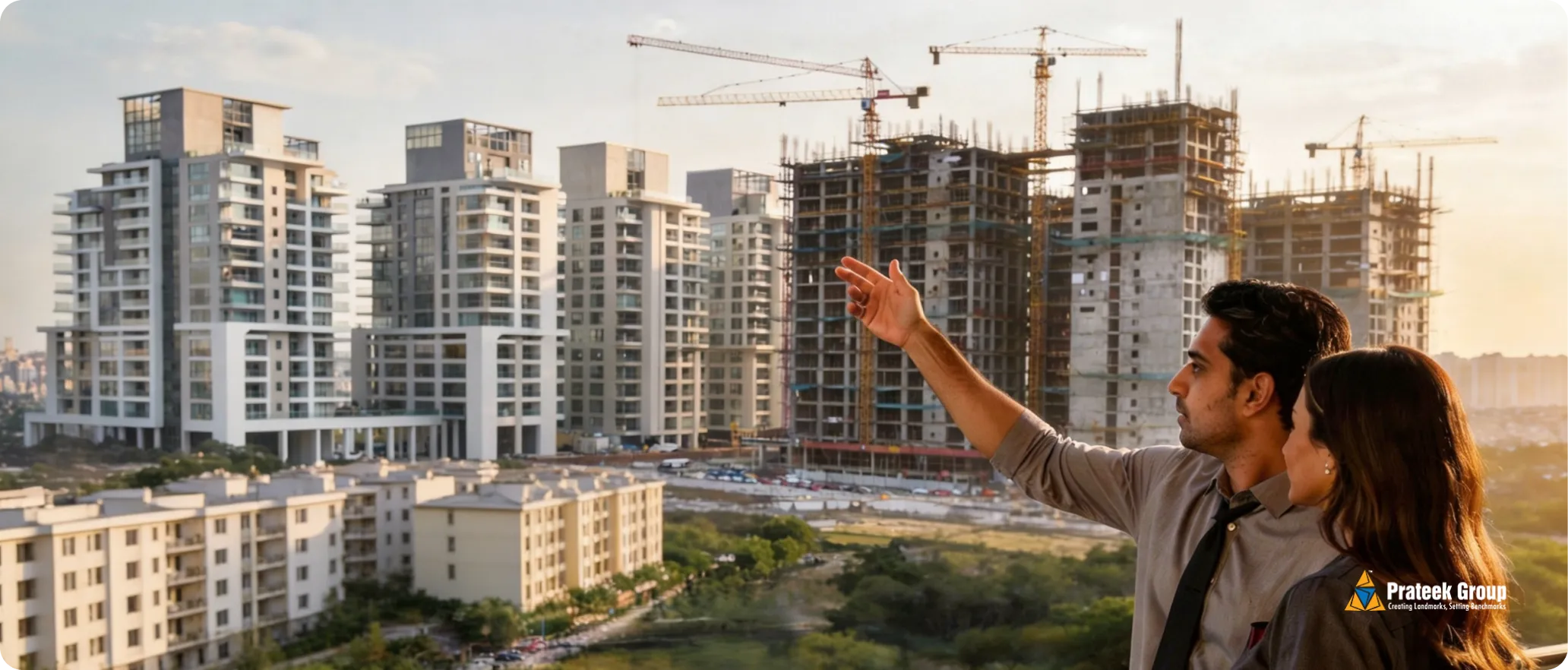
There is no single right answer. Under-construction property suits NRIs with a 5–10 year horizon, no urgent rental need, and comfort with waiting for possession. It can offer lower entry pricing, phased payments, and better appreciation potential in growth corridors. Ready-to-move property works better for buyers who want certainty, quick rental income, or a home for family use within the next 2–3 years. The safer decision depends on matching the property type with your goal. If you want wealth creation, choose a strong under-construction project in a well-connected corridor. If you want immediate use and lower execution risk, choose a ready home with clear title, working amenities, and proven rental demand.
For NRI buyers comparing NCR options, Prateek Group offers both trust and project credibility through its delivered communities and planned developments across Noida and Ghaziabad. With the right legal checks, RERA verification, and developer selection, both routes can become a sound long-term investment.