Five Years of Waiting, and Then a Board Meeting
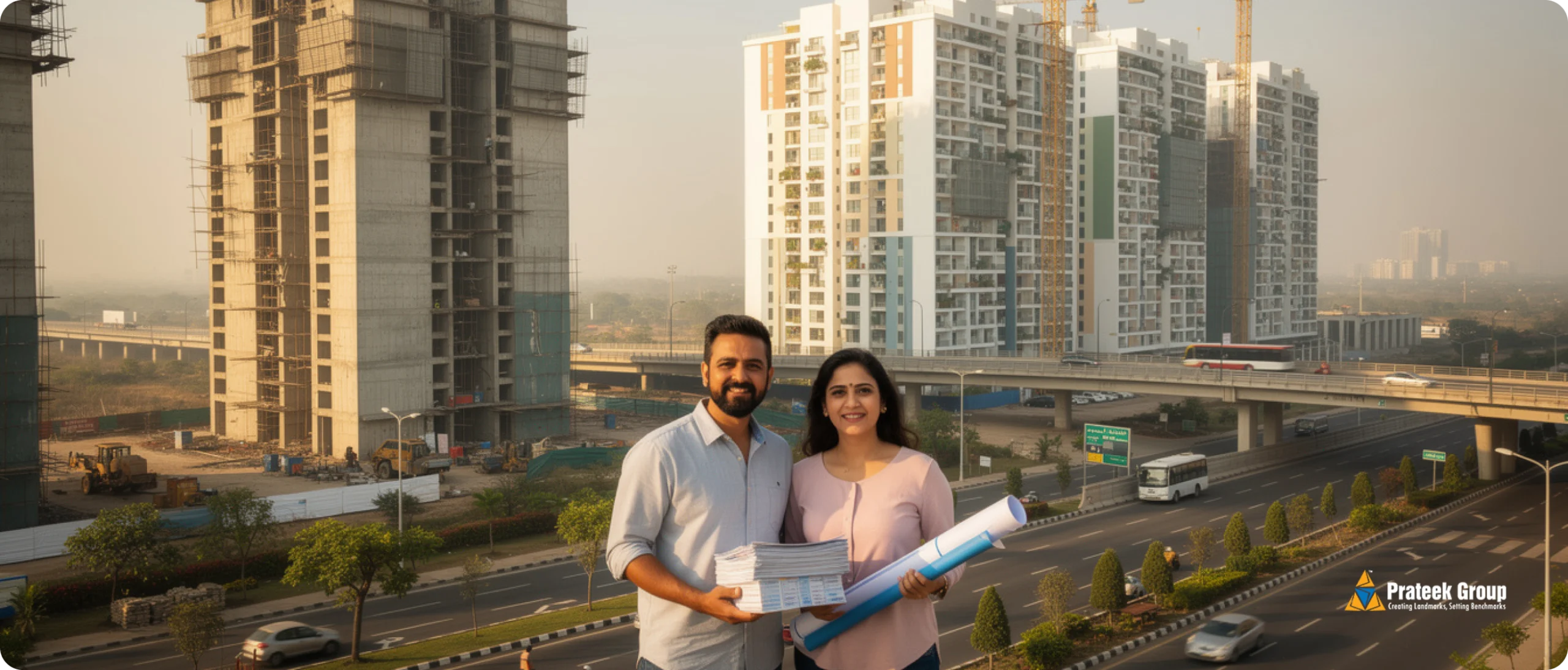
For roughly 20,000 families in Noida, the first week of April 2026 ended a wait that had stretched since January 2021. During the Noida Authority’s 222nd board meeting on April 7, 2026, chaired by Deepak Kumar (UP Infrastructure and Industrial Development Commissioner and Noida Authority Chairman), the Authority approved the revised layout for the Sports City project in Sector 150 and formally lifted restrictions on all four Sports City projects in Sectors 78, 79, 151, and 152.
This decision opens the path for property registrations, occupancy certificates, and building plan approvals that had been frozen for five years. About 32,000 flats across these four projects can now move toward legal documentation. For the families who had paid for their homes, moved in, and then discovered they could not register their property, sell it, or even take a bank loan against it, this is the most consequential regulatory change in Noida’s housing market in years.
The decision follows a November 24, 2025 Supreme Court order, a January 2026 Noida Authority board meeting (the 221st), and the final revised layout approval on April 7, 2026. The Authority CEO Krishna Karunesh confirmed that the previous restrictive board decisions from 2021 (the 201st and 202nd meetings) have now been cancelled, and all required approvals are being granted in line with the Supreme Court’s directions.
What the Lifting of the Ban Actually Delivers
Legal Ownership, Unlocked
The single most important outcome is that buyers can now register their flats. That sentence sounds simple, but its consequences are significant. A registered property is one you legally own. An unregistered property, no matter how much money you have paid for it, is not fully yours in the eyes of the law.
With the ban lifted, flats in compliant Sports City projects can now receive conditional occupancy certificates. With those in hand, registration becomes possible. With registration complete, buyers move from holding a possession letter to holding a title document. That is the difference between being a de facto occupant and being a de jure owner.
Home Loans and Resale, Now Possible
Banks will now lend against these properties. For five years, buyers who had already paid for their flats could not take loans against them, could not refinance, and could not access home loan tax benefits in their full form. That changes immediately. A property with a registered title is collateral. A property without one is not.
Resale also becomes viable. During the ban period, anyone who needed to sell faced an impossible situation. A buyer would not pay fair value for a property that could not be registered. Now, these flats can enter the normal market. Owners who have held for years can sell if they want to. Owners who want to hold can do so knowing their property has genuine market liquidity.
Registrations Are Already Happening
This is not a paper announcement waiting for implementation. Property registrations in compliant Sector 150 projects began on January 7, 2026, following the 221st board meeting. Under Noida Authority’s broader stalled projects revival policy, more than 4,100 flats have already been registered. The Authority has issued directions to speed up processing for remaining homebuyers.
The April 7 meeting extended the same framework to Sports City projects across all four affected sectors. The administrative machinery for processing registrations is already functioning. Buyers in eligible projects can proceed with their paperwork now, not at some future date.
The Wider Set of Positive Decisions from the Board
The Sports City resolution was the most prominent decision, but the same 222nd board meeting delivered several other measures that improve the environment for Noida homebuyers.
One Time Settlement (OTS) Scheme 2026
The board gave in-principle approval to the OTS Scheme 2026, which is designed to resolve disputes across 36 stalled housing projects in Noida. Stalled projects have been a persistent issue in NCR real estate. A structured settlement framework gives developers a route back to compliance and buyers a route to getting their flats delivered and registered.
Water Bill Amnesty Scheme
A three-month water bill amnesty scheme was approved, running from April 16 to July 15, 2026. It offers interest waivers of 20% to 40% on pending water dues. For residents and housing societies, this is a practical measure that reduces carrying costs and clears long-pending liabilities.
Mixed-Use Allowance for Residential and Industrial Plots
The board approved a provision allowing mixed-use activity on residential and industrial plots, subject to conditions. This is a meaningful flexibility for plot owners and supports small-scale commercial activity alongside residential or industrial use, improving the economic productivity of existing land holdings.
Budget of Rs 10,004 Crore for 2026-27
The board approved a budget of Rs 10,004 crore for the 2026-27 financial year with a revenue target of Rs 10,290 crore. This is a substantial allocation for infrastructure and maintenance work across Noida, supporting the continued upgrade of roads, sewage systems, and civic amenities that directly benefit property values across the city.
Stalled Projects Revival Policy
Beyond the Sports City decision, the board reviewed progress under Uttar Pradesh’s stalled real estate projects revival policy. Over 4,100 flats have already been registered under this framework, and directions were issued to speed up processing for remaining buyers. The policy itself represents a shift in how the state approaches stalled projects, from indefinite regulatory freezes to structured resolution with enforceable timelines.
Why This Is Good News for Noida's Real Estate Market
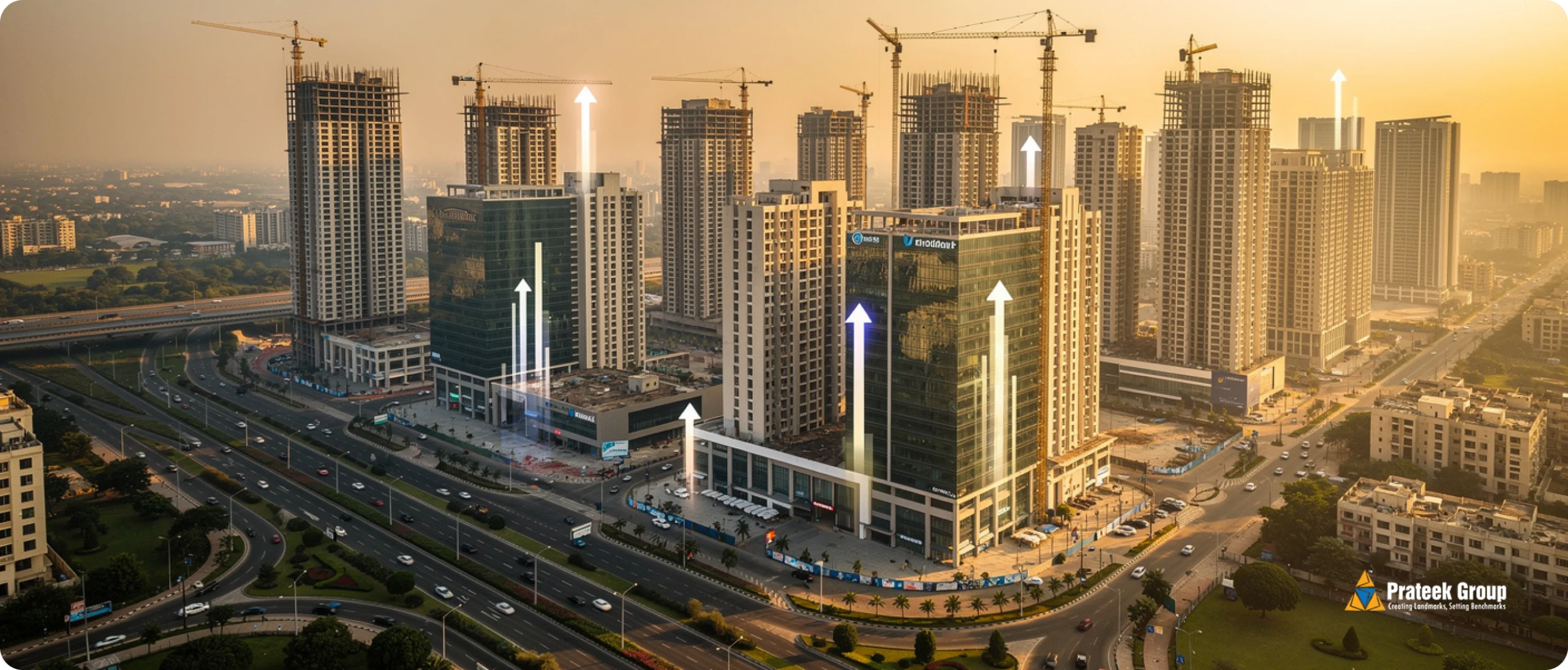
Unlocking 32,000 flats does several things for the broader Noida property market, and most of them are positive.
Supply Returns to a Tight Market
Noida’s housing market has been supply-constrained since 2022. According to ANAROCK data, unsold inventory in Noida dropped 72% between Q1 2020 and Q1 2025. Average residential prices rose from Rs 4,795 per sq ft in 2020 to Rs 9,200 per sq ft by Q1 2025, a 92% increase. When 32,000 flats that had been frozen in regulatory limbo can now enter the market, some of that supply becomes available for purchase, refinancing, or resale. For buyers who have been struggling to find inventory in Sector 150 and surrounding areas, this is a direct benefit.
Regulatory Confidence Improves
The Supreme Court intervention, followed by structured Noida Authority action, demonstrates that stalled projects in NCR can be revived through formal processes with enforceable deadlines. That is a meaningful signal for the broader market. Homebuyers and investors now have a reference case for how regulatory disputes get resolved.
Over 4,100 flats registered under the stalled projects revival policy, plus the formal resolution of Sports City, plus the OTS scheme for 36 additional projects, together form a pattern of active regulatory cleanup. Noida Authority is clearly working through its backlog, and the pace has increased in 2026.
Sector 150 Strengthens Its Position
Sector 150 was already one of Noida’s most sought-after residential micro-markets. It has low-density planning with 80% of land allocated to green spaces and 70% to sports amenities. Property prices in the sector have risen approximately 100% since 2019, reaching about Rs 14,274 per sq ft.
With the regulatory overhang lifted, Sector 150 can now attract buyers who had previously hesitated because of the Sports City uncertainty. Prateek Canary in Sector 150 sits in this growth corridor and benefits from the same infrastructure that made the sector attractive in the first place: the Noida-Greater Noida Expressway, the Yamuna Expressway, proximity to the Noida International Airport at Jewar (inaugurated March 2026), and the upcoming 10-lane Yamuna Pushta Road corridor.
The Wider Infrastructure Story Is Intact
Noida’s real estate performance is driven by infrastructure, and the infrastructure story continues to deliver. The Noida International Airport opened in March 2026. The Chilla Elevated Road is under construction. The Yamuna Pushta Road upgrade to 8-10 lanes is in survey phase. Metro extensions are planned. For a broader analysis of how these infrastructure investments shape property values, Prateek Group’s analysis of urban infrastructure and property prices in Delhi NCR provides useful context. The Sports City resolution removes a drag on the market without changing any of these positive fundamentals. If anything, it allows property in the affected sectors to finally reflect the value of the infrastructure around it.
Timeline of How the Resolution Unfolded
| Date | Event |
|---|---|
| 2011–2014 | Noida Authority allots Sports City land to developers in Sectors 78, 79, 150, 151, and 152. |
| January 2021 | 201st board meeting: Noida Authority imposes ban on registries, OCs, and map approvals across all Sports City projects. |
| November 24, 2025 | Supreme Court (Justices M.M. Sundresh and Satish Chandra Sharma) accepts resolution plan and directs Noida Authority to lift the ban within 30–45 days under structured conditions. |
| January 4, 2026 | 221st board meeting: Ban lifted on SC-02 Sports City project in Sector 150. Conditional OCs reviewed. |
| January 7, 2026 | Property registrations begin for compliant Sector 150 projects. |
| March 2026 | Supreme Court reaffirms compliance directive. |
| April 7, 2026 | 222nd board meeting: Revised layout for Sector 150 approved. Restrictions lifted across all four Sports City projects (Sectors 78, 79, 151, and 152). OTS scheme for 36 stalled projects approved along with water bill amnesty and mixed-use provisions. |
What Affected Homebuyers Can Do Right Now
For existing owners in Sports City projects, the immediate steps are straightforward and entirely within reach.
Check project status. Contact your developer or the Noida Authority to confirm whether your specific project has received conditional occupancy certificate approval. Compliant projects are eligible for immediate registration processing.
Clear pending payments. Registries will be processed only for buyers who have cleared outstanding payments to the developer. Clear any balances now to avoid delays.
Gather documents. Keep your allotment letter, payment receipts, possession letter, and identity proofs ready. A complete document set speeds up the registration process.
Initiate the registration process. Over 4,100 flats have already been registered under the broader revival framework. The administrative process is active. Buyers who move promptly will be among the early cohort to complete registration.
Background: What Sports City Was Meant to Be
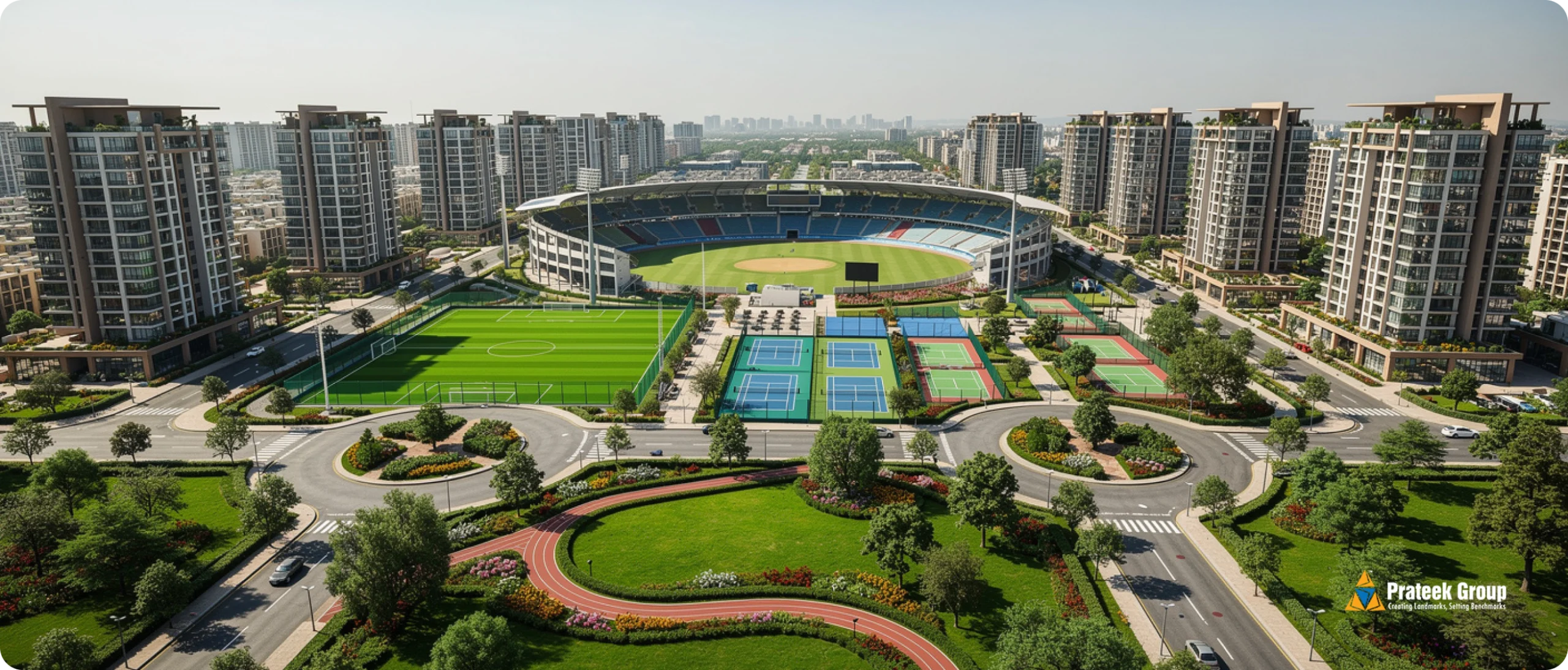
The Sports City concept was introduced in Noida’s Master Plan 2031. The Noida Authority created a land-use category requiring a minimum of 70% of total land to be used for sports activities, institutional facilities, open spaces, and recreation, with the remaining 30% for residential and commercial development.
Between 2011 and 2014, the Authority allotted four large parcels. The Sector 150 project (SC-02), spanning 132.9 hectares, was the largest, allotted to Lotus Green Constructions Pvt Ltd (LGCPL). LGCPL created third-party development rights for 74 plots and sub-allotted them to other developers; 45 projects received approval.
The planned sports facilities included a golf course, a cricket academy, a swimming centre, a multipurpose playground, and a tennis academy. The residential component was intended to fund the sports infrastructure.
The residential towers were built. Families bought apartments and moved in. The sports facilities were not completed on the original schedule, which is what led to the 2021 ban and the five-year regulatory process that has now been resolved.
The Supreme Court Framework
The November 24, 2025 Supreme Court order approved a structured resolution plan. The key conditions:
| Condition | Details |
|---|---|
| Financial Dues | Developers to deposit 20% of outstanding dues within two months of revised master plan approval. Remaining dues to be paid in six half-yearly instalments over three years. |
| Sports Infrastructure | All mandated sports and recreational facilities to be completed within 3 years of revised master plan approval. |
| Full Project Completion | Remaining residential and commercial components to be finished within 5 years. |
| Revised Building Plans | Developers to submit revised and sanctioned plans within 30 days. |
| Security | Noida Authority retains first charge on 20% of units in each tower until all dues are fully paid. |
| Joint Ventures Allowed | Supreme Court permitted joint ventures or co-development arrangements to support timely project completion. |
Points to Keep in Mind
The resolution is a genuinely positive development, but a careful buyer should understand a few aspects that moderate expectations and require attention.
Conditional OCs Are Conditional
The occupancy certificates being issued are conditional. If developers fail to complete the mandated sports infrastructure within three years, or the remaining project components within five years, the Noida Authority can revoke approvals. The Supreme Court’s order explicitly permits cancellation of allotment and re-auction of land in cases of non-compliance.
In practice, this means buyers hold legal ownership now, but the underlying project still has obligations to fulfil. Monitoring mechanisms are in place, and the Authority has enforcement authority. Most projects are expected to comply under the structured framework, but individual project compliance status is worth verifying before any large transaction.
Price Movement May Be Sentiment-Driven in the Short Term
Property values in Sports City projects had been trading at a discount to comparable Sector 150 properties because of the registry freeze. With registrations now open, that discount should narrow. Some of that narrowing will happen quickly as sentiment improves. Some of it depends on actual delivery of the promised sports infrastructure over the next three years.
Short-term price movements in the immediate aftermath of regulatory changes often reflect sentiment rather than underlying fundamentals. Sustainable appreciation in Sector 150 will continue to depend on the factors that drove its growth before 2021: the expressway network, the airport, employment centres, and the overall quality of life in the sector. Buyers entering now should evaluate the property on those long-term merits rather than only on the near-term regulatory relief.
Developer Execution Still Matters
The three-year clock for sports infrastructure starts from the revised master plan approval date (April 7, 2026). The five-year clock for full project completion starts at the same point. Developers have clear obligations and clear deadlines. Whether they meet those obligations on schedule is the execution risk that remains.
Financial dues clearance is the first near-term test. Developers owe 20% of outstanding payments within two months of the master plan approval. If payments lag, the Authority has grounds to act. The court’s “last and final opportunity” language gives limited room for further extensions.
Not Every Project Is Cleared
The lifting of the ban does not automatically apply to every unit in every tower. Only projects that have cleared their dues and meet building norms qualify for conditional occupancy certificates. Projects with pending compliance issues will continue to wait. Before assuming a specific property is eligible for registration, buyers should verify its compliance status directly with the Noida Authority or through the project developer.
Temporary Uplift vs Long-Term Value
There will likely be a near-term uplift in prices and transaction activity in Sports City projects as the market processes this news. Some of that uplift is the catch-up correction of a discount that should never have been there. Some of it reflects the normal enthusiasm that follows regulatory resolution. Distinguishing between the two is worth the effort.
The durable value comes from the sector’s connectivity, the quality of the development, the amenities delivered, and the broader Noida real estate trajectory. These factors remain the correct basis for any long-term property decision. Buyers who are evaluating Sector 150 should look at the same criteria they would apply to any premium residential purchase: location, developer track record, construction quality, RERA compliance, and infrastructure around the property.
A Note on Due Diligence
The Sports City experience is a reminder that regulatory status matters as much as location and price when evaluating property in NCR. The buyers who purchased Sports City flats made reasonable decisions based on the information available at the time. The regulatory action that followed was not something most buyers could have predicted.
When evaluating any property in Noida, verify its RERA registration, occupancy certificate status, the developer’s track record on timely delivery, and any pending regulatory actions. These checks take a few hours but prevent years of uncertainty.
Prateek Group’s projects in Noida, including Prateek Canary in Sector 150, Prateek Stylome in Sector 45, Prateek Fedora in Sector 61, Prateek Wisteria in Sector 77, and Prateek Laurel in Sector 120, follow RERA norms with clear documentation. For buyers evaluating any project in sectors affected by the recent changes, understanding the specific compliance status of the tower and the developer is the single most important step before committing funds.