
Work has quietly detached itself from fixed offices. Boardrooms now exist on video calls, startups operate across time zones, and senior professionals increasingly structure their days around output rather than location. This shift has not reversed—it has stabilized. As a result, residential decision-making has changed at its foundation.
Homes are no longer evaluated only for comfort or proximity. They are assessed as operational environments that support focus, reliability, and continuity. Professionals today are not simply buying living space; they are investing in environments that reduce friction in daily work and protect long-term value. The question has moved from where do I live to how well does this home support how I work.
Why Residential Strategy Has Changed for Modern Professionals
For decades, residential real estate followed predictable logic: commute distance, social infrastructure, and lifestyle amenities. That logic assumed work happened elsewhere. Hybrid and remote models quietly broke that assumption.
Today, a home may host:
- Daily client calls
- Cross-border team coordination
- High-bandwidth digital workflows
- Extended working hours across time zones
This shift has created a new category of buyer—professionals who evaluate homes with the same rigor they apply to business decisions.
They look for:
- Operational reliability
- Design efficiency
- Infrastructure foresight
- Asset resilience over 10–15 years
For business owners and CXOs, a poorly planned home is no longer an inconvenience. It becomes a productivity liability.
The New Buyer Mindset: Homes as Productivity Infrastructure
High-intent buyers are approaching residential purchases with infrastructure thinking. The home is seen less as an emotional upgrade and more as a long-term operating base.
This mindset changes evaluation criteria significantly.
Earlier evaluation model:
- Visual appeal
- Amenities count
- Short-term livability
Current evaluation model:
- Work-day performance
- Digital readiness
- Power and connectivity stability
- Adaptability to changing professional needs
The shift is subtle but powerful. Homes that support consistent work routines reduce daily friction. Over years, this compounds into better output, mental clarity, and lifestyle stability.
For investors, this same logic influences demand durability. Properties aligned with evolving work patterns are more likely to retain relevance, rental demand, and resale interest.
What the Market Talks About — And Why It’s Only the Starting Point
Much of the conversation around work-from-anywhere homes focuses on visible features. These matter, but they represent only the surface layer.
Commonly discussed elements include:
- Dedicated home office spaces
- High-speed internet availability
- Smart home automation
- Flexible room layouts
- Hybrid work lifestyle compatibility
These features have become baseline expectations rather than differentiators.
Most new developments mention them. Many buyers assume they are sufficient. In reality, they only address what is visible, not what sustains performance over time.
A smart switch does not solve network failure.
A study room does not guarantee acoustic privacy.
High internet speed does not ensure redundancy.
This is where market maturity begins to separate informed buyers from reactive ones.
What Actually Determines Long-Term Value in Work-Enabled Homes
The deeper layer of decision-making rarely appears in brochures, yet it strongly influences daily experience and long-term asset performance.
1. Acoustic zoning and layout intelligence
Work-enabled homes require separation between active and quiet zones.
- Bedrooms adjacent to living areas increase disturbance.
- Open layouts without acoustic buffers reduce call quality.
- Poor sound insulation affects concentration.
Well-planned residential design accounts for noise flow, not just room count.
2. Power load planning
- Modern work setups consume more power than traditional households, including:
- Multiple monitors
- Routers and backup systems
- Workstations running extended hours
- Homes designed without upgraded power load planning risk frequent overloads or dependency on extensions and retrofits—solutions that reduce safety and efficiency.
3. Internet redundancy readiness
- High-intent buyers increasingly evaluate whether a home can support:
- Dual broadband providers
- Fiber readiness at building level
- Space for routers and backup systems
- This is not about speed alone. It’s about continuity.
4. Builder-level foresight vs buyer-level customization
- There is a structural difference between:
- Homes planned with future work patterns in mind
- Homes where buyers attempt post-handover modifications
- Builder-level planning integrates infrastructure into the core structure. Buyer-level customization often works around limitations rather than eliminating them.
- Over time, properties with integrated foresight age better—functionally and financially.
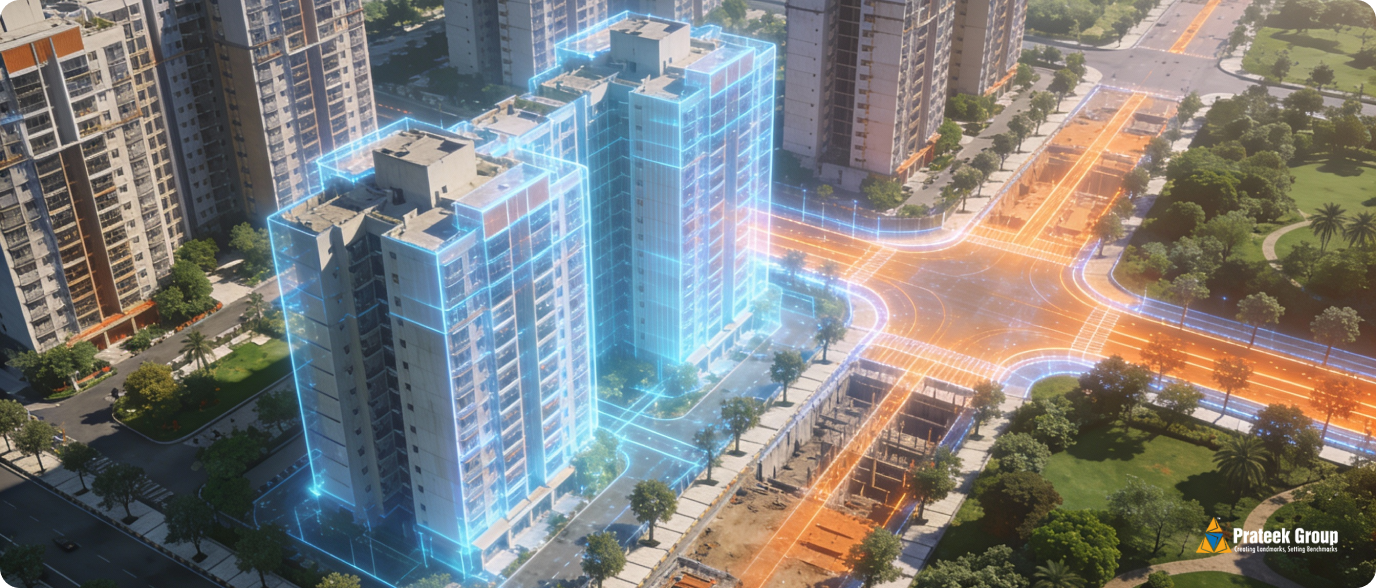
Noida’s Emerging Role in Business-Friendly Residential Planning
Noida’s evolution and work-from-anywhere living
Several structural factors support this shift:
- Strong expressway connectivity
- Expanding commercial corridors
- Planned sector layouts
- Growing ecosystem of tech, consulting, and startup professionals
Importantly, Noida offers scale—allowing residential developments to integrate infrastructure planning at a level difficult in denser legacy markets.
This creates an opportunity for builders who think beyond unit delivery and focus on how residents actually live and work over the next decade.
Developments that anticipate professional behavior—not just lifestyle preferences—are more likely to remain relevant as work models continue to evolve.
From Features to Foresight: How Buyers Should Compare Work-Ready Homes
As the market matures, serious buyers are moving away from feature checklists and toward foresight-based evaluation. Two homes may appear similar on paper, yet perform very differently over time.
The difference lies in planning depth.
Feature-led vs foresight-led residential planning
| Evaluation Area | Feature-Led Homes | Foresight-Led Homes |
|---|---|---|
| Home office | Dedicated room added | Layout designed with acoustic logic |
| Internet | High-speed mentioned | Infrastructure supports redundancy |
| Power | Standard residential load | Work-heavy load planned structurally |
| Smart features | App-controlled lighting | Integrated systems with scalability |
| Flexibility | Limited post-handover | Adaptable over career stages |
| Resale strength | Lifestyle-dependent | Utility-driven demand |
Homes that rely primarily on surface features age quickly as technology and work styles evolve. Homes built on foresight retain relevance because their underlying structure supports change.
For professionals planning to hold property for a decade or more, this distinction directly affects risk exposure.
Why Future-Ready Homes Protect Both Lifestyle and Capital
Future-Ready Homes: Reducing Vulnerability to Change
A future-ready home is not about predicting the exact nature of work ten years from now. It is about reducing vulnerability to change.
Professionals and investors increasingly assess property through three stability lenses:
1. Operational stability
- Fewer disruptions during work hours
- Reduced dependence on retrofitting
- Lower friction in daily routines
This improves quality of life in measurable ways.
2. Demand stability
Homes that support remote and hybrid work appeal to:
- Senior professionals
- Consultants
- Startup founders
- Global employees
This broadens future resale and rental demand, insulating the asset from narrow buyer segments.
3. Infrastructure stability
Regulatory changes, power requirements, and digital dependence are increasing—not decreasing. Homes aligned with this trajectory face lower obsolescence risk.
Future readiness, therefore, is not an upgrade. It is a form of long-term insurance.
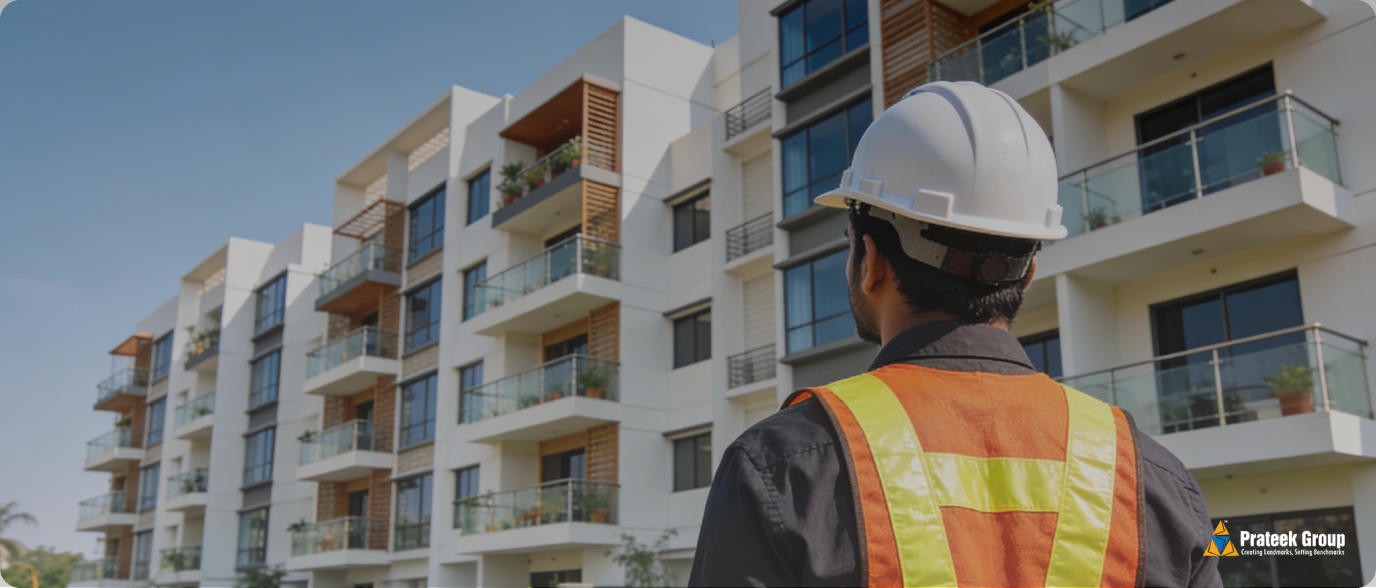
The Role of Builder Thinking in Long-Term Asset Quality
At this level of decision-making, the role of the builder becomes structural rather than promotional.
Buyers rarely see what happens beneath the surface:
- Electrical load mapping
- Service shaft planning
- Network pathways
- Space allocation logic
- Phased infrastructure scalability
These decisions are made years before possession and cannot be altered meaningfully later.
This is where experienced construction companies create silent value. Not through marketing language, but through planning discipline.
A builder that understands how professionals actually live—working across screens, schedules, and geographies—tends to design homes that remain functional well after trends change.
Prateek Group’s Approach to Future-Ready Residential Development
Within Noida’s evolving residential landscape, Prateek Group has consistently aligned development thinking with long-term usability rather than short-term appeal.
As a real estate builder operating in Noida, Uttar Pradesh, the group’s planning philosophy reflects an understanding that modern homes must support both living and working without compromise.
Across its residential developments, emphasis is placed on:
- Structural planning that supports evolving digital lifestyles
- Layout efficiency rather than excessive ornamental space
- Infrastructure readiness built at the construction stage
- Community design that balances privacy with professional livability
This approach does not attempt to predict future work models. Instead, it prepares homes to adapt to them.
For buyers evaluating property as a multi-decade asset, this distinction quietly reduces uncertainty.
How Business Buyers Should Think Before Finalizing a Property
Before committing to a residential purchase, especially in a work-from-anywhere context, decision-makers benefit from reframing a few core questions.
Instead of asking:
- “Does this home have a study room?”
More effective questions include:
- Can this home support uninterrupted work for the next 10 years?
- Will infrastructure upgrades require structural changes later?
- Is this layout resilient to lifestyle evolution?
- Will future buyers value this utility as much as I do today?
This shift in questioning moves the buyer from consumption thinking to asset thinking.
Professionals who apply business logic to residential decisions tend to experience fewer compromises—and stronger long-term outcomes.
Conclusion
Work culture has changed permanently, and residential strategy has changed with it. Homes are no longer passive spaces but active environments that influence productivity, stability, and long-term value. For professionals and investors alike, clarity now matters more than convenience.
Choosing a development that reflects foresight reduces future uncertainty. In Noida, Uttar Pradesh, Prateek Group’s planning-led approach positions it as a dependable real estate builder for buyers who think beyond possession dates and focus on enduring relevance. The right home, built with intention, quietly protects both lifestyle and capital over time.