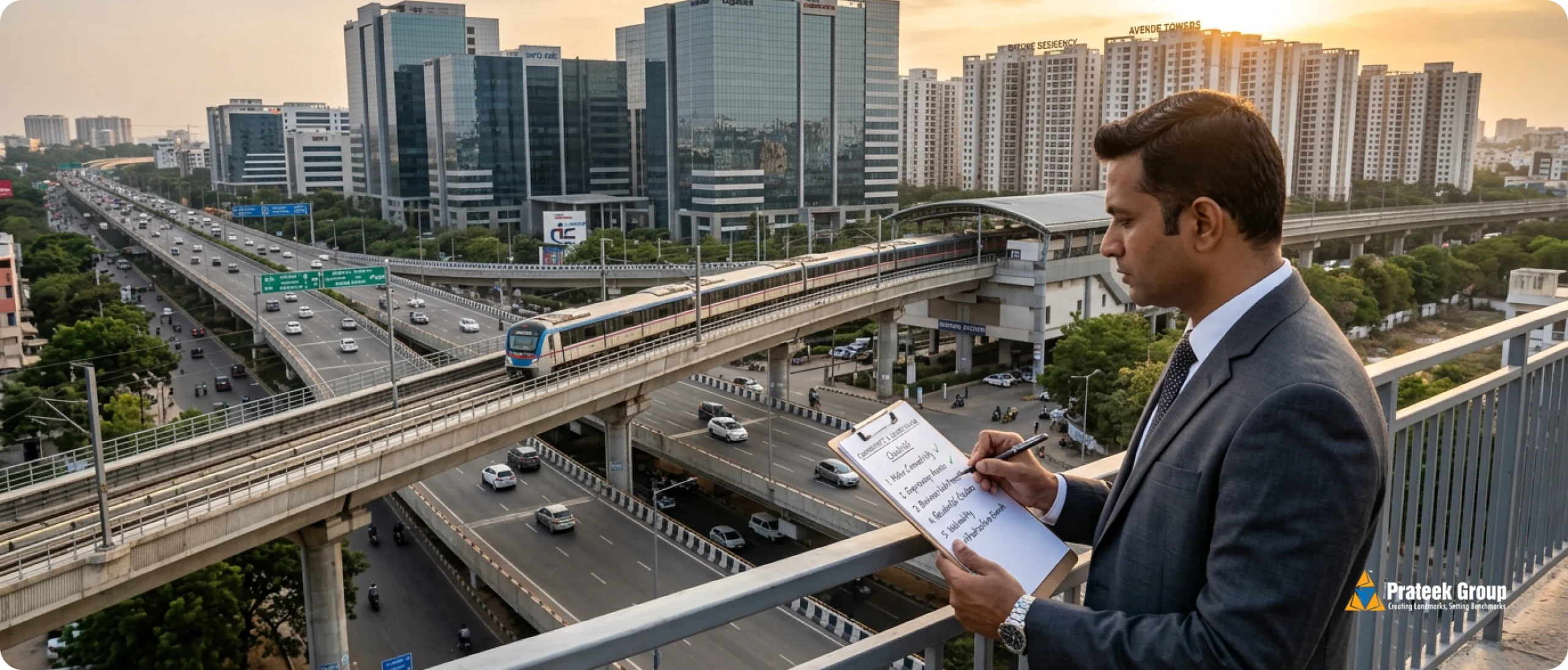
A location can sit on the edge of a city for years and feel too far for daily life. Then one road opens, one metro station becomes active, or one regional rail link cuts travel time. The same address starts getting a second look.
That is how connectivity and property value begin to meet.
A metro line gives daily commuters a more predictable route. An expressway helps people reach offices, schools, hospitals, airports, and nearby cities faster. Delhi Metro’s 416 km metro network now spans 303 stations, including the Noida-Greater Noida Aqua Line and Rapid Metro Gurugram, which shows how deeply transit shapes NCR movement.
The same pattern can be seen around roads. A Times of India report on the NH-9 growth belt described how better highway access is drawing housing and commercial interest across Ghaziabad and nearby NCR pockets. CBRE also estimated 106 million sq ft of transit-oriented real estate potential across India’s top 8 cities.
But the impact of the metro on property prices should be judged through daily use. A station nearby helps when the route is safe, the feeder options work, and the commute actually improves. An expressway helps when the entry, exit, service road, and last 2 km work during real traffic hours.
That is the story this blog follows. Transport can raise interest in a location. The real value comes when it makes living, renting, and resale easier.
How does infrastructure affect property value in daily life?
Infrastructure affects property value in stages.
First, travel time improves. Then more people start visiting the location. After that, rental demand, retail activity, school access, and resale interest start getting discussed. Builders also look more closely at locations where daily movement has become easier.
This is why how infrastructure affects property value cannot be answered through one road or one station alone.
A Hindustan Times report said metro expansion, expressway links, and airport upgrades pushed property prices by 24% to 139% across top micro-markets, with Sector 150 Noida seeing the highest rise among the tracked locations. Business Standard also reported that Delhi-NCR launches rose sharply in late 2025, with infrastructure-led corridors playing a large role.
What changes first?
- Travel time becomes easier to explain.
- More buyers add the location to site-visit plans.
- Tenants start checking the route to work.
- Retail and daily services improve slowly.
- Schools and clinics become more important.
- Sellers start expecting better resale value.
- Builders plan larger residential communities.
This is the basic chain behind real estate appreciation.
Prateek Grand City is listed as a 40-acre township in Siddharth Vihar, Ghaziabad, near NH-24. Prateek Canary is listed as a Sector 150 Noida project. Both locations get judged through travel time, expressway access, metro reach, project planning, and daily convenience.
The value story starts with connectivity. It becomes stronger only when the home also works for everyday life.
Why can metro access change buyer demand?
Metro access changes demand because it reduces uncertainty.
A person can check the nearest station, route, interchange, fare, crowding, and travel time before choosing a home. That makes metro connectivity and real estate closely linked in cities where office travel is a daily concern.
Delhi Metro’s https://DMRC present network shows how far the system has moved beyond central Delhi into Noida, Ghaziabad, Gurugram, Faridabad, Bahadurgarh, and Ballabhgarh. CBRE’s transit real estate report also places Delhi-NCR at the top for transit-oriented real estate potential among major Indian cities.
But a property near metro station needs a practical check.
The station distance may look good on a map. The daily route may tell another story. A station 800 metres away with safe walking access can help more than a station 3 km away through a broken road or unsafe stretch.
Searches around property prices near metro stations often miss this practical detail. Station distance matters only when the route feels usable.
What buyers should check near a metro?
- Walking time from the society gate
- Auto and e-rickshaw availability
- Safety after dark
- Parking near the station
- Crowding during office hours
- Line changes and interchange time
- Travel time to actual job hubs
- Rental demand near metro
- Noise and roadside traffic near the station
Regional transit also matters now. NCRTC says the Delhi-Ghaziabad-Meerut corridor is 82 km long and connects one of NCR’s most populated sections with planned townships and economic centres.
That matters for Ghaziabad, Siddharth Vihar, Meerut-side travel, and daily movement across NCR. The buyer’s test should stay simple: does the transit link reduce real travel stress?
How do expressways create new housing belts?

Expressways change the property story across a wider stretch.
A metro station helps a tighter circle around a station or line. An expressway can open a full corridor by connecting townships, industrial zones, airports, schools, offices, and older city centres.
That is why expressway impact on property prices often appears across belts such as NH-9, Delhi-Meerut Expressway, Noida-Greater Noida Expressway, Yamuna Expressway, and Dwarka Expressway.
A Times of India report said the NH-9 housing belt is drawing more residential and commercial attention in NCR. A Business Standard report also noted that infrastructure-led corridors such as Dwarka Expressway and parts of Gurugram helped push new housing supply in Delhi-NCR.
What expressway connectivity can change:
- Access to job centres
- Travel to airports
- Movement between cities
- Site visits to new sectors
- Builder interest in larger land parcels
- Rental interest from mobile workers
- Retail and service growth around exits
- Future resale comfort
Prateek Group’s Siddharth Vihar projects fit into this road-led story. Prateek Grand City’s official page places it near NH-24 and NH-58, while Prateek Grand Begonia is listed inside the same Siddharth Vihar township. For a buyer, that means road access must be tested from the project gate, not only seen on a brochure map.
Expressway connectivity real estate works best when the main road, service road, entry point, and local civic setup all support daily use.
How to judge connectivity around Prateek Group projects?
A project location should be judged from the society gate.
That is the point many buyers miss. A map can show a metro station, RRTS station, highway, or expressway nearby. But daily life starts from the tower lobby, basement, gate, service road, and first traffic signal.
For Prateek Group buyers, this check matters because the brand’s NCR projects sit in locations where movement shapes the decision. Prateek Grand City is described as a Siddharth Vihar township near NH-24. Prateek Grand Begonia is listed as a RERA-registered project inside the same 40-acre township. Prateek Canary is listed as a Sector 150 Noida project with 3 and 4 BHK homes.
A practical Prateek Group route check
- From Prateek Grand City, test the route to NH-24, Indirapuram, Vaishali, Noida, and Delhi office zones.
- From Prateek Grand Begonia, check gate access, township exits, school routes, and peak-hour movement.
- From Prateek Canary, check Noida-Greater Noida Expressway access, Sector 150 roads, metro reach, and the last 2 km.
- Check whether public transport works for someone without a car.
- Check night safety on the approach road.
- Check whether the route changes during rain or peak traffic.
Ground conditions can change the value of connectivity.
A Times of India report on a pothole-hit road link near NH-9, a metro station, and a Namo Bharat station showed why buyers should check the road surface and not only the route name.
A good corridor helps. A poor last stretch weakens the benefit.
Prateek Grand City, Grand Begonia, and Canary: what buyers should compare?
Prateek Group projects can be read through two NCR location stories.
Siddharth Vihar is a township and road-access story. Sector 150 Noida is a planned-sector and expressway-access story. Both can benefit from infrastructure development and real estate demand, but they need different buyer checks.
|
Prateek project |
Location angle |
What buyers should check |
|
Prateek Grand City |
Siddharth Vihar, Ghaziabad, near NH-24 |
Road access, township scale, daily markets, schools, RRTS reach, resale comfort |
|
Prateek Grand Begonia |
Inside Prateek Grand City township |
Gate distance, tower access, open space, phase planning, civic support |
|
Prateek Canary |
Sector 150 Noida |
Expressway access, metro reach, sector planning, green surroundings, office commute |
Prateek Grand City’s official page calls it a ready-to-move township in Siddharth Vihar. Prateek Grand Begonia is listed as a 2 and 3 BHK project on NH-24. Prateek Canary is listed with 664 homes across 12.55 acres in Sector 150 Noida.
These details help buyers shortlist. The site visit should answer the harder questions.
- For daily travel: Check the office route, school route, airport route, metro route, and weekend route during real hours.
- For rental demand: Check whether a tenant can reach work, metro, main road, and daily shops without stress.
- For property value appreciation: Check current price, recent price movement, future infrastructure stage, local supply, project quality, and resale demand.
- For long-term comfort: Check maintenance, approach road, safety, nearby markets, school access, hospital access, and parking movement.
How connectivity affects rental demand?
Rental demand often reacts faster than resale prices.
Tenants think in monthly terms. They ask how long it takes to reach the office, college, metro, main road, airport road, or a business district. If a flat saves travel time and the society is comfortable, it becomes easier to shortlist.
That is why rental demand near metro and expressway corridors can improve before a wider price movement becomes clear.
A recent Times of India story on NCR rental trends said rental pricing across Delhi, Noida, Greater Noida, and Gurugram is shaped by employment, education hubs, business centres, connectivity, and amenities. Business Standard also reported that Sector 150 Noida saw a 71% rise in average monthly rent between end-2021 and Q2 2025, based on Anarock data.
For Prateek Group homeowners, this is worth noting.
A tenant looking at Prateek Grand City or Prateek Grand Begonia may ask about NH-24 access, Delhi travel, Ghaziabad offices, school distance, and local markets. A tenant looking at Prateek Canary may ask about Sector 150, Noida-Greater Noida Expressway, office belts, and metro options.
What tenants usually care about?
- Office commute
- Metro or RRTS access
- Main road access
- Cab and auto availability
- Grocery and pharmacy distance
- School and hospital access
- Parking
- Society maintenance
- Safety at night
- Noise near main roads
A property near a metro station can rent better when the station is truly usable. An expressway-side home can work well when the road saves time instead of adding another bottleneck.
Rentability is a practical test of connectivity.
When better connectivity deserves caution
Connectivity can support price growth. It can also be oversold.
A metro station may be too far for daily use. An expressway may have a difficult entry point. A proposed link may take years. A project may already be priced as if every future promise has been delivered.
That is why buyers should check the factors affecting property value before paying a premium.
India TV reported that metro, expressways, airports, and NH24 have become key drivers in Delhi-NCR valuation, with Ghaziabad holding a strong position in the 2025 NCR market in a real estate valuation story. Business Standard also said future price gains in Delhi-NCR may become more selective in its home launches report.
Those points belong together.
Infrastructure can bring attention. The individual project still needs to justify the price.
Check these weak points
- If the metro is nearby: Check station distance, safe access, feeder transport, parking, crowding, and route changes.
- If the expressway is nearby: Check entry, exit, toll cost, service road, traffic choke points, noise, and road safety.
- If the project is in a growth corridor: Check schools, hospitals, markets, drainage, streetlights, occupancy, and security.
- If prices have already moved: Compare current price with nearby projects. Look at resale listings. Ask whether the premium is for present convenience or future expectation.
For Prateek Group property buyers, this means comparing Grand City, Grand Begonia, and Canary through personal travel needs. The best project for one person may not fit another person’s office route, school route, or family routine.
Operational, under-construction, or proposed: why status changes value
Infrastructure status changes the way property value should be judged. A working metro station can be tested. An under-construction line needs timeline checks. An approved route needs official documents. A proposed idea needs patience and caution.
The same applies to expressways, RRTS corridors, airports, and link roads.
Delhi Metro said Phase 4 priority corridors add about 65 km of new lines and targeted opening by 2026 in a https://DMRC update. NCRTC says the 82 km corridor between Delhi, Ghaziabad, and Meerut connects one of the most populated parts of NCR. Times of India recently reported that the Delhi-Ghaziabad-Meerut RRTS crossed about 1.25 lakh riders in one day through https://Times of India.
|
Infrastructure stage |
What buyers can verify |
Value reading |
|
Operational |
Real travel time, crowding, frequency, road access |
Stronger because daily use is visible |
|
Under construction |
Work progress, deadline, official updates |
Useful, but timelines can shift |
|
Approved |
Route, funding, authority notices |
Price claims need caution |
|
Proposed |
Media reports, policy talk, early plans |
Treat as future possibility |
For Prateek Group homebuyers, this status check is useful.
Siddharth Vihar buyers should check NH-24 access, Ghaziabad-side RRTS reach, metro options, and live road conditions. Sector 150 buyers should check Noida-Greater Noida Expressway access, nearby metro options, and actual travel time to office zones.
The stronger question is practical: what can residents use today?
Buyer checklist before paying extra for connectivity
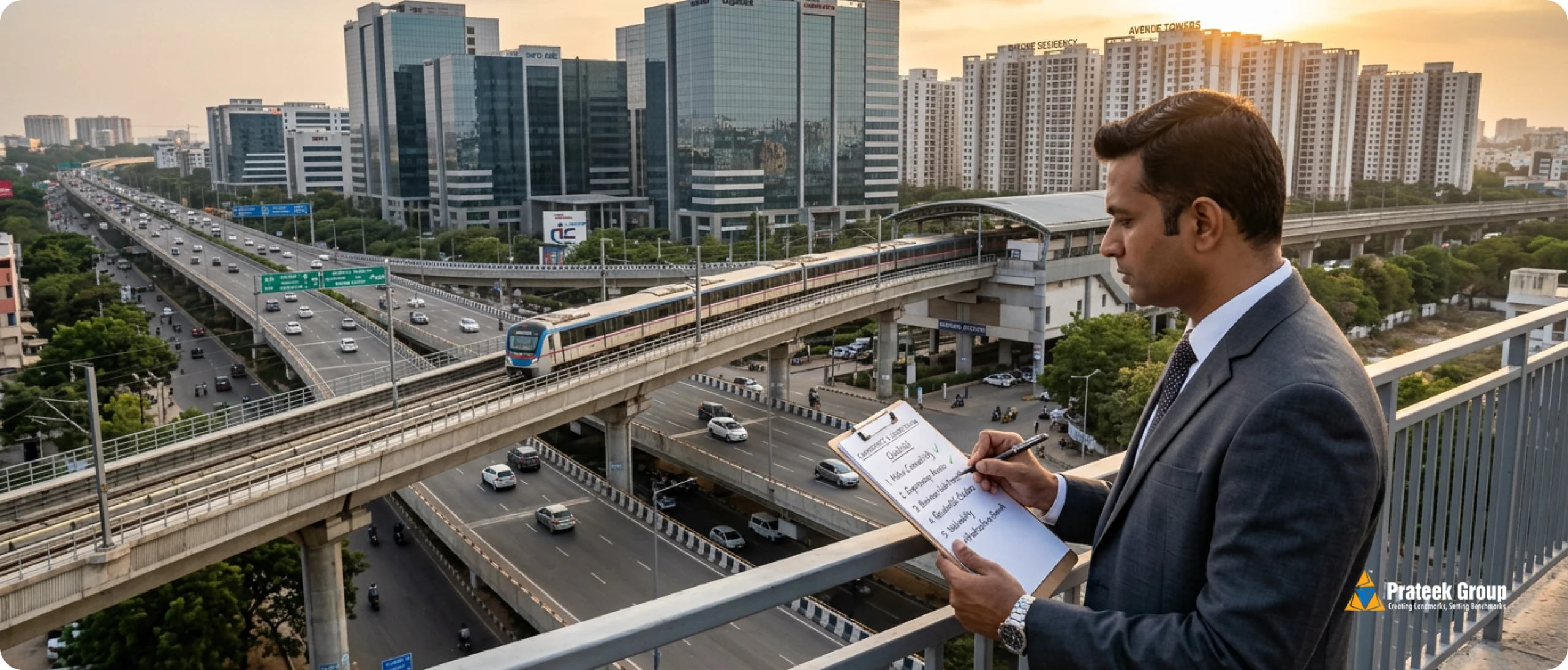
A home near a metro, expressway, RRTS station, or airport road may cost more.
That premium can make sense when the location saves time and supports long-term demand. It needs careful checking when the price is based on future news, unclear timelines, or a vague “near expressway” claim.
Hindustan Times reported that infra-led price growth lifted prices and rents across tracked micro-markets, with Sector 150 Noida leading price gains. Noida International Airport’s opening also brought fresh attention to road access, and Times of India noted both expressway connectivity and passenger convenience gaps in https://Noida airport coverage.
Check the project gate
- How long does it take to reach the expressway entry?
- Is the service road usable?
- Is there a traffic choke point near the gate?
- Is the road safe after dark?
- Can cabs reach the tower without confusion?
- Is public transport nearby?
Check the metro or RRTS route
- Is the station operational?
- What is the real gate-to-station distance?
- Are autos, e-rickshaws, or shuttles available?
- Is the walking route safe?
- Does the line connect to job hubs?
- How crowded is the route during office hours?
Check the price logic
- Has the area already seen a big rise?
- Are similar projects cheaper nearby?
- Is the premium linked to present use or future promise?
- Does the project have strong internal planning?
- Are schools, hospitals, and markets active nearby?
- Would the home still work if timelines shift?
For Prateek Group buyers, the checklist should be location-specific.
Prateek Grand City may fit someone who wants a Siddharth Vihar township near NH-24. Prateek Grand Begonia may suit someone comparing a newer phase within the same township setting. Prateek Canary may suit buyers looking at Sector 150 Noida with expressway access and lower-density planning.
The right answer depends on the actual route a resident will use.
Connectivity helps when daily life gets easier!
Expressways and metros can support property value because they change how people use a location.
A road can make a sector feel closer. A metro station can make a flat easier to rent. An RRTS corridor can change how people think about regional travel. Delhi Metro’s present network page and NCRTC’s Namo Bharat details show how large the NCR mobility story has become.
But the final decision should stay grounded.
The impact of metro on property prices depends on station distance, last mile connectivity, safety, feeder transport, project quality, and current price. Expressways work the same way. The main road can be strong, but the service road, entry point, traffic pattern, and last 2 km decide daily comfort.
For Prateek Group buyers, the comparison is clear.
Prateek Grand City and Prateek Grand Begonia sit inside the Siddharth Vihar story, where NH-24 access, township planning, and Ghaziabad-side movement matter. Prateek Canary sits inside the Sector 150 Noida, where expressway access, planned sector living, green surroundings, and resale comfort matter. The https://Prateek Group project pages can help with project details, but the site visit should test the real route.
A connected home should make daily life easier.
FAQs on how expressways and metros impact property value
1. How do expressways and metros impact property value?
They can improve property value by reducing travel time, increasing buyer interest, supporting rental demand, and making a location easier to resell. The actual effect depends on project quality, station distance, road access, local services, and pricing.
2. What is the impact of the metro on property prices?
Metro access can support prices when the station is close, safe, operational, and connected to office hubs. The effect is stronger when daily commuters can use the station without difficult last mile travel.
3. Is property near a metro station always a better choice?
A property near a metro station can be useful, but buyers should check the walking route, feeder transport, crowding, night safety, parking, and real travel time.
4. How close should a home be to a metro station?
A walkable or short feeder distance usually works better. A farther station can still help if the road is safe and transport from the society gate is reliable.
5. Do expressways increase property prices?
Expressways can support prices when they improve access to job hubs, airports, schools, hospitals, and nearby cities. The value depends on entry points, service roads, traffic, and local development.
6. Which is better for property value, metro or expressway?
It depends on the resident’s routine. Metro helps daily office travel without a car. Expressways help longer road movement, airport travel, inter-city movement, and township access.
7. Why is last mile connectivity important?
Last mile connectivity decides how easily a resident reaches the metro station, RRTS stop, expressway entry, or main road from the society gate. A weak last 2 km can reduce the benefit of good infrastructure.
8. Can metro connectivity improve rental demand?
Yes. Rental demand near the metro can improve because tenants often choose homes based on commute time. NCR rental trends also show that connectivity and amenities shape how renters compare locations.
9. How do expressways help townships?
Expressways help townships by improving access to city routes, business zones, schools, hospitals, airports, and nearby districts. Larger projects benefit when the road network supports daily travel.
10. How should Prateek Group buyers compare connectivity?
They should test the actual route from the project gate. For Prateek Grand City and Grand Begonia, NH-24 access and Siddharth Vihar movement matter. For Prateek Canary, Sector 150 access and Noida-Greater Noida Expressway routes matter.
11. Does Prateek Grand City benefit from expressway access?
Prateek Grand City is listed as a Siddharth Vihar township near NH-24. Buyers should still check peak-hour access, service roads, public transport, and travel time to Delhi, Noida, and Ghaziabad work areas.
12. Does Prateek Canary benefit from Sector 150 location?
Prateek Canary is listed as a Sector 150 Noida project. Buyers should compare expressway access, metro reach, daily convenience, sector planning, and resale demand.
13. Should buyers pay extra for future metro plans?
Future metro plans need caution. A working line is easier to judge than a proposed line. Official updates from https://DMRC project news can help, but site-level checks still matter.
14. What should buyers check before buying near an expressway?
Check entry distance, exit distance, service road condition, traffic bottlenecks, toll cost, noise, drainage, public transport, and nearby schools or hospitals.
15. Can infrastructure promises be risky?
Yes. Prices can rise before a route becomes usable. If timelines shift or last mile access remains weak, the buyer may wait longer for the expected value benefit.
16. What is the safest way to judge connectivity and property value?
Visit during office hours. Test the route from the project gate. Check station distance, expressway access, public transport, nearby services, project quality, and current price. Real travel time gives the best answer.