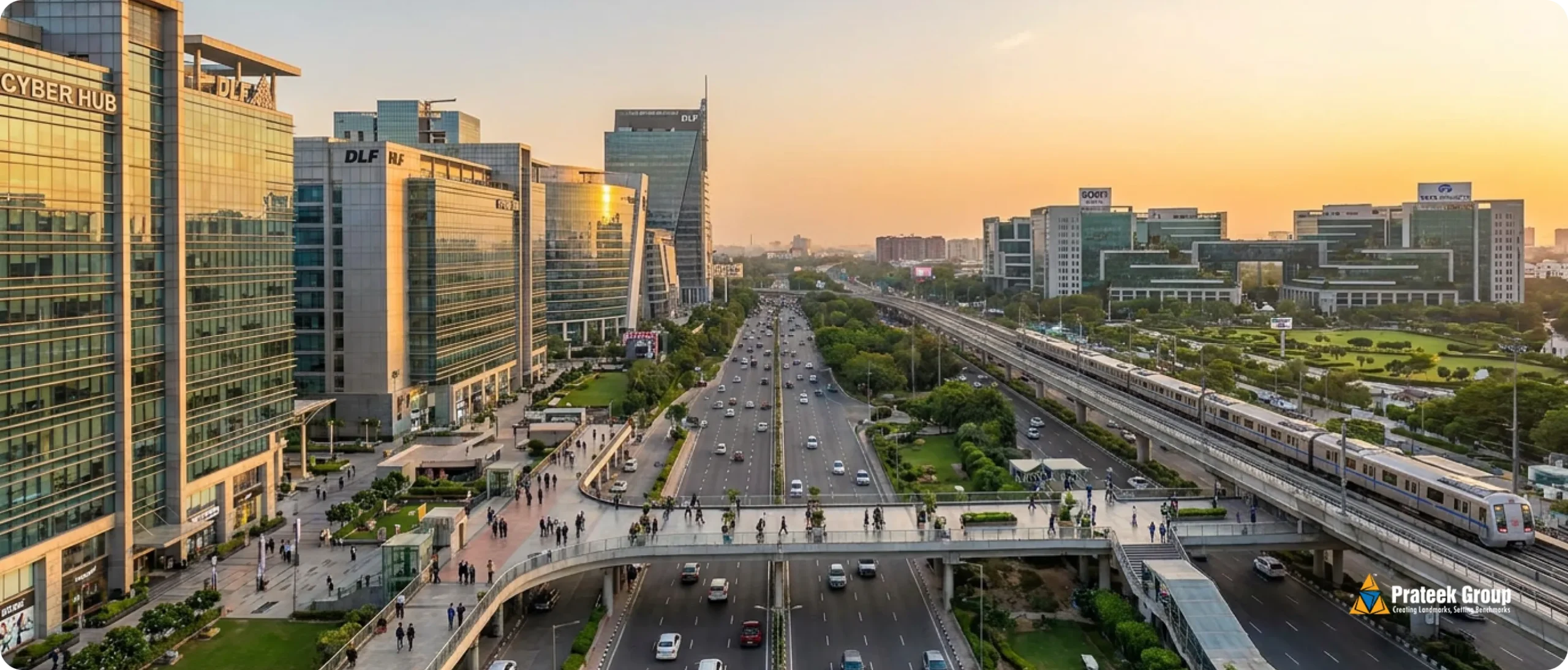
Stand inside an empty commercial floor in Delhi NCR. The lights are on. The floor is bare. The view is decent. The lift lobby looks clean enough. On paper, the space is simple: 8,000 sq. ft., good frontage, decent parking, main road access.
Then 5 people walk in.
A startup founder checks where the team can sit without feeling boxed in. A law firm partner looks at the reception area and asks if clients will take the address seriously. A café operator studies the ground-floor movement. A co-working brand asks about fire safety, washrooms, and floor efficiency. A local investor asks only one thing: “Will this rent come every month?”
Same property. Different minds.
That is why market segmentation in commercial real estate matters so much in Delhi NCR today. The region is no longer read only by age, income, company size, or pin code. Those basic details still matter, but they do not tell the full story.
Delhi NCR’s office market is active enough to demand sharper thinking. Cushman & Wakefield reported through its Delhi NCR office update that the region recorded 2.8 million sq. ft. of gross leasing in Q1 2026, with flex operators taking the lead. CBRE also recorded India’s office leasing at 82.6 million sq. ft. in 2025, with Bengaluru, Mumbai, and Delhi NCR together taking a large share in its India office figures.
So the better question is not only, “Who is the tenant?” Ask this: “How does the tenant think, work, spend, hire, move, and grow?” That is the shift from demographics to psychographics.
What market segmentation means in Delhi NCR commercial real estate?
Market segmentation means dividing the commercial real estate market into smaller, useful groups.
In Delhi NCR, this means understanding why one tenant wants Gurugram, another wants Noida, another wants Delhi, and another prefers a retail unit near a township in Ghaziabad.
A company looking for office space in Delhi NCR does not think like a salon owner looking for a shop. A GCC leasing a large floor plate does not think like a coaching centre near a metro station. A pharmacy near a residential community does not judge property the same way as a consulting firm near Cyber City.
Here is the simple version.
Segmentation type | What it studies | Delhi NCR commercial example |
Demographic segmentation | Company size, employee count, industry, income group | A BFSI company choosing a larger office in Gurugram |
Geographic segmentation | City, corridor, road, metro, airport, catchment | A retailer comparing Noida, Ghaziabad, and Delhi high streets |
Psychographic segmentation | Work style, brand image, flexibility, comfort, customer mindset | A startup choosing flexible workspaces in Delhi NCR |
Behavioural segmentation | Visit pattern, lease style, repeat use, timing | A clinic choosing a visible location near family housing |
The data supports this shift. Economic Times reported that Delhi NCR office leasing reached an all-time high of 15.8 million sq. ft. in 2025, while JLL’s Delhi office report noted that Noida and Gurgaon together dominated quarterly net absorption in Q1 2026.
So segmentation is not a textbook idea here.
It helps decide rent, tenant mix, frontage, floor plate, parking, launch pricing, lease risk, and even what kind of business can survive in a commercial property.
Why do demographics still matter?
Demographics are the first filter.
They tell you the basic facts: who the tenant is, how large the company is, what industry it belongs to, how many people use the space, and how much rent it can carry.
In commercial real estate Delhi NCR, these facts still matter because the region is wide and uneven. NCR Planning Board’s regional planning framework connects land use, settlements, transport, and economic activity across the region, while DDA’s Delhi master plans show how land use and commercial activity are shaped inside the capital.
For a developer, broker, investor, or business owner, demographic segmentation answers basic questions:
- Is the tenant a small business, mid-sized company, or large corporate office?
- How many people will use the space daily?
- Does the business need walk-in customers?
- Can the tenant carry premium rent?
- Does the space need road visibility, metro access, parking, or loading access?
A CA office, clinic, fintech company, café, and coaching centre will not read the same property in the same way. A clinic may need ground-floor visibility. A fintech company may care about employee commute. A coaching centre may study student movement. A law office may value a serious address more than a fancy café downstairs.
Cushman’s Delhi NCR MarketBeat tracks different office sub-markets across Gurugram, Noida, and Delhi. That split itself tells the story: tenant profile changes with the corridor.
Why do psychographics now decide the better fit?
Psychographics go deeper.
They look at what the tenant values. Work style. Brand image. Flexibility. Customer comfort. Employee mood. Growth plans. Fear of lock-in. Need for speed.
A company may have 200 employees on paper. That is demographic data.
But the real question is different. Does the team come to the office 5 days a week? Do clients visit often? Does the company want a premium lobby? Does it need flexible seating? Will the team double next year? Does the founder want a short lease?
Those answers change the property choice.
Hindustan Times reported through Cushman flex data that India’s flexible office stock touched 79.7 million sq. ft. in Q2 2025 and may cross 100 million sq. ft. by 2026. Colliers also reported that flex operators leased 13 million sq. ft. of Grade A office space in 2025.
That is a mindset signal.
Businesses are choosing speed, flexibility, employee comfort, and lower long-term lock-in. A startup may prefer a managed office. A GCC may prefer Grade A stock. A boutique brand may want a high-street presence because customer mood matters.
This is why psychographic segmentation in real estate has become useful. Demographics tell you the size of the user. But, Psychographics tell you why that user picks one building and ignores another.
Delhi NCR locations attract different commercial segments
Delhi NCR commercial real estate does not move as one market. Each city pulls a different user type. Each corridor has its own tenant behaviour.
Noida
Noida works for IT, media, electronics, start-ups, back-office operations, and companies that want larger floor plates at more controlled costs. JLL’s Q1 2026 office update said Noida dominated new office supply in the quarter, with 61% of the total.
-
Ghaziabad
Ghaziabad behaves differently. It is stronger for retail, clinics, coaching centres, food outlets, local offices, and commercial spaces that depend on nearby families. Business Standard reported that Delhi NCR retail leasing rose 25% in H1 2025, helped by better demand and new supply.
-
Ghaziabad
Ghaziabad behaves differently. It is stronger for retail, clinics, coaching centres, food outlets, local offices, and commercial spaces that depend on nearby families. Business Standard reported that Delhi NCR retail leasing rose 25% in H1 2025, helped by better demand and new supply.
-
Delhi
Delhi still matters for law firms, legacy businesses, government-linked work, high-street retail, and central access. A business may pay more because the address itself helps with trust.
Location segmentation is not only about map distance. It is about which business can grow in that location without fighting the daily rhythm of the place.
Where Prateek Group fits into commercial segmentation?
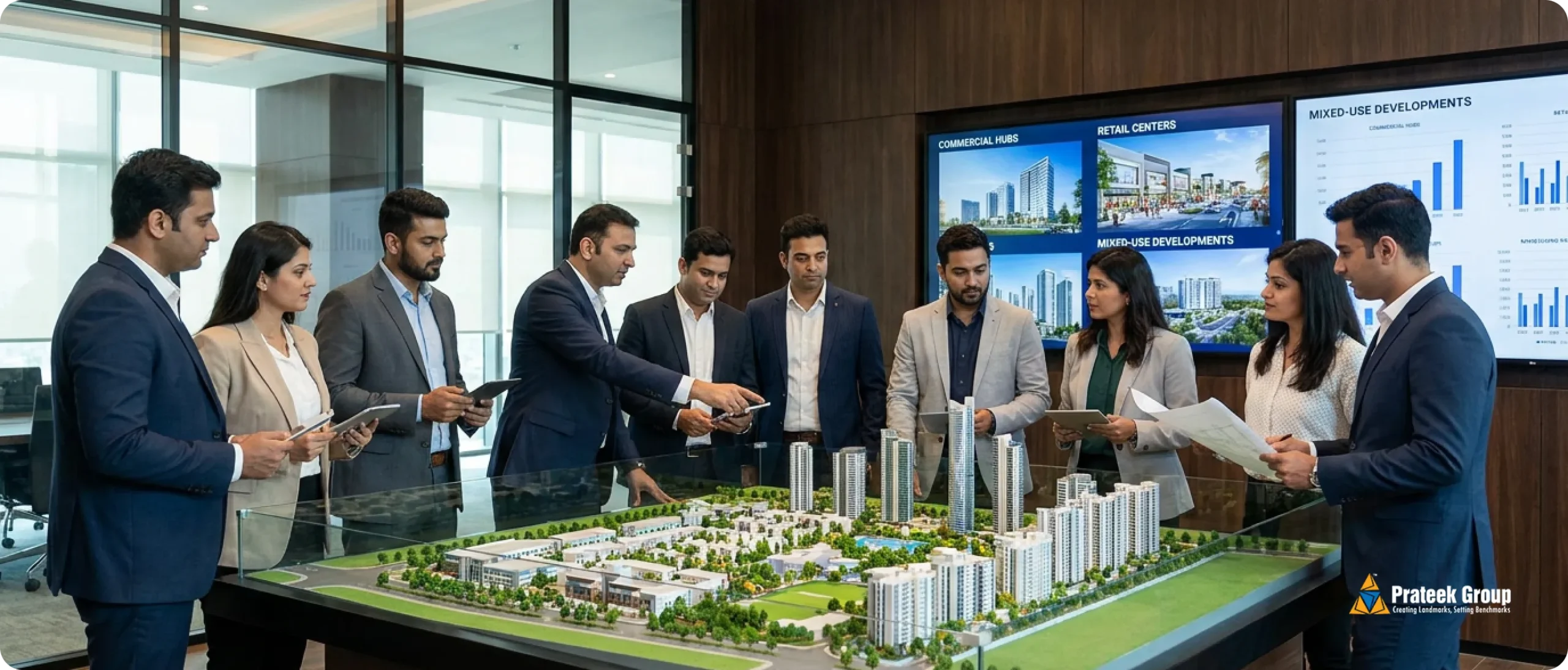
Prateek Group should be understood through the residential catchment lens.
The brand is known more for residential communities in Noida and Ghaziabad, but commercial demand around such communities depends on how people live there. A township creates more than homes. It creates repeat needs.
Morning tea. Pharmacy. Grocery. Clinic. Tuition. Salon. Café. Fitness. Small office. Daily services.
Prateek Group’s commercial projects page lists retail projects such as Prateek Grand City Walk, Prateek Stylome, Prateek Wisteria, Prateek Laurel, and Prateek Fedora. Its Prateek Grand City page describes a 40-acre ready-to-move township in Siddharth Vihar, Ghaziabad.
That makes Prateek useful for explaining township-led commercial demand.
|
Commercial segment |
What the tenant wants |
Why a residential catchment helps |
|
Pharmacy or clinic |
Repeat visits and trust |
Families nearby create daily need |
|
Café or food outlet |
Evening and weekend movement |
Residents and visitors can support regular orders |
|
Salon or wellness studio |
Convenience and repeat customers |
People prefer nearby services when quality is decent |
|
Grocery or convenience store |
Fast access and frequent purchases |
Large communities create steady buying |
|
Tuition or activity centre |
Children, parents, safe access |
Family-heavy pockets support this segment |
This does not mean every shop near a township will work.
Retail still needs frontage, parking, visibility, rent control, signage, and the right tenant mix. UP RERA’s Grand City Walk record gives buyers a formal project reference point, but business performance still depends on the market outside the paperwork.
For Prateek Group, the stronger point is simple.
Residential scale gives a base. Psychographic segmentation decides the tenant mix.
Work style has become a separate commercial segment
Two companies may have the same employee count and still need different offices. One wants cabins, boardrooms, visitor waiting, and a formal reception. Another wants flexible seating, meeting pods, call booths, common zones, and faster setup.
This is where work style becomes a segment.
Real Estate Asia reported through https://Real Estate Asia that Delhi NCR office leasing reached 3.05 million sq. ft. in Q1, with flexible office operators staying active. ET GCC also reported that GCC office leasing helped India’s office market reach record leasing levels in 2025.
|
Work style segment |
What the company wants |
Better commercial fit |
|
Startup team |
Speed, low lock-in, quick setup |
Managed office or flexible workspace |
|
GCC |
Scale, compliance, Grade A space |
Large office floor in business district |
|
Consulting firm |
Formal access, meeting rooms, brand address |
Premium office tower |
|
Creative team |
Open layout, informal work zones |
Flexible or design-led office |
|
Local service business |
Walk-ins, visibility, parking |
High-street or mixed-use space |
This matters because office space in Delhi NCR is no longer judged only by rent.
A bad work fit can make a cheaper office expensive. A good work fit can make a slightly higher rent feel practical.
Retail segmentation depends on how people spend their day
Retail works when it fits routine.
A café near an office tower needs morning and evening movement. A pharmacy in a township needs repeat family demand. A fashion store needs weekend browsing. A coaching centre needs student access and parent comfort.
Same shop size. Different business logic.
GRI Institute reported that Delhi NCR commercial activity in Q1 2026 was helped by office, retail, and industrial demand. Hindustan Times also reported that retail leasing touched 12.5 million sq. ft. in 2025 across top cities, with Delhi NCR leading.
Retail segmentation becomes easier when you watch the street:
- Morning crowd: cafés, pharmacies, breakfast counters, convenience stores
- Afternoon crowd: clinics, banks, salons, quick-service restaurants
- Evening crowd: groceries, tuition centres, family dining, wellness
- Weekend crowd: fashion, electronics, home décor, premium food
A township-linked commercial unit should not be planned like a corporate office lobby. In a residential catchment, people often want convenience first. In an office district, they want speed. In a premium high street, they want brand and experience.
That is why the target audience for commercial property is a real planning question, not a marketing formality.
Segment tenants by what they are trying to protect
A commercial tenant usually wants to protect something: Time. Brand image. Staff comfort. Customer flow. Cash flow. Expansion room.
-
The time-protection tenant
This tenant wants shorter travel, faster client visits, easy staff arrival, and fewer daily delays. Economic Times reported office leasing records in Delhi NCR in 2025, which shows how much office users are still willing to commit when the location supports business movement.
-
The image-protection tenant
This tenant cares about address, lobby, parking, visitor entry, and building quality. A consulting firm, law firm, wealth office, or premium service brand may pay more for a sharper address. Financial Express covered Delhi NCR’s record office deals and high-value property activity, which explains why address value still matters.
-
The flexibility-protection tenant
This tenant wants room to change. The team may grow, shrink, test a city, or avoid long lock-in. Times of India’s co-working real estate explainer shows how serviced and flexible offices fit start-ups, freelancers, small firms, and larger enterprises.
-
The customer-flow tenant
This tenant wants a repeat footfall. Food, pharmacy, clinics, salons, convenience stores, tuition centres, and local retail brands need daily movement. This is where township-led commercial spaces around large residential communities can make sense when the tenant matches the local routine.
The question is simple: What is this business trying to protect?
A simple screening flow for commercial investors
Use this before buying or leasing any commercial property in Delhi NCR.
Step 1: name the actual user
Who will use the space?
Corporate office. Café. Clinic. Co-working operator. Retail brand. Warehouse user. Coaching centre. Local service business.
Step 2: match the user with the corridor
A GCC may look at Gurugram or Noida. A daily-use retailer may do better near a residential pocket. A warehouse user may look toward logistics routes.
ET reported that industrial warehousing demand touched 20 million sq. ft. in H1 2025, with Delhi NCR and Chennai leading demand. For retail, HT’s retail leasing report showed Delhi NCR leading in 2025.
Step 3: check the daily pattern
Does the user need:
- morning office crowd?
- evening family footfall?
- Weekend shoppers?
- delivery access?
- metro walk-ins?
- easy parking?
Each answer changes the property score.
Step 4: read the lease risk
A good tenant with weak sales may leave. A high-rent shop with poor visibility may stay empty. A large office floor with a rigid layout may struggle when a tenant needs change.
Step 5: ask the Prateek-style catchment question
In a residential-led market, ask this:
Do enough people live close enough to use this commercial space again and again?
That is where a township catchment matters. Rent, frontage, signage, parking, and tenant fit still decide the outcome.
Step 6: decide the segment before deciding the price
A commercial unit should be priced after the likely tenant segment is clear.
Buying commercial space without knowing the user type is like opening a shop without knowing what can sell there.
Segmentation makes commercial real estate easier to read
Delhi NCR commercial real estate looks complicated from outside.
Office towers in Gurugram. Tech parks in Noida. Retail streets in Ghaziabad. Warehousing belts near logistics routes. Township shops near large residential communities.
Every location has demand and every demand has a different reason behind it.
That is why market segmentation in commercial real estate matters. Demographics give the basic profile: company size, employee count, industry, budget, customer type. Psychographics give the deeper story: how people work, what tenants fear, what customers expect, how teams travel, and what kind of address makes a business feel credible.
Delhi NCR is already showing this shift. Economic Times reported Delhi NCR office leasing at an all-time high in 2025, while Hindustan Times reported retail leasing growth led by Delhi NCR and Bengaluru.
For Prateek Group, this thinking fits naturally around residential-led commercial demand. A township such as Prateek Grand City creates a daily-use catchment, and a commercial project like Grand City Walk has to work around real routines.
Before choosing commercial property, ask who will use the space, why they will come, how often they will return, and what the location helps them protect.
That answer is the segment.
FAQs on market segmentation in Delhi NCR commercial real estate
1. What is market segmentation in commercial real estate?
Market segmentation in commercial real estate means dividing tenants, buyers, investors, and retailers into smaller groups based on their needs, location, budget, business type, and behaviour.
2. Why is market segmentation useful in Delhi NCR commercial real estate?
Delhi NCR has many different commercial markets. Gurugram, Noida, Delhi, Ghaziabad, and Greater Noida attract different businesses, so segmentation helps match the right tenant with the right location.
3. What is demographic segmentation in real estate?
Demographic segmentation looks at basic details such as company size, employee count, customer age group, income level, industry, and business category.
4. What is psychographic segmentation in real estate?
Psychographic segmentation studies mindset and behaviour. It looks at work culture, brand image, flexibility needs, lifestyle, comfort, customer expectations, and daily use patterns.
5. Why are psychographics becoming more important in commercial property?
Psychographics matter because two companies with the same employee count may want different offices. One may need a formal client address. Another may prefer flexible workspaces and short lease terms.
6. How does Gurugram fit into Delhi NCR commercial segmentation?
Gurugram usually attracts corporates, GCCs, BFSI firms, consulting companies, and premium office users. Cushman’s Delhi NCR office update showed Gurugram taking 60% of Q1 2026 leasing.
7. How does Noida fit into commercial real estate segmentation?
Noida is strong for IT, media, back-office operations, electronics, start-ups, and larger office floor plates. It also benefits from expressway access and newer supply.
8. How does Ghaziabad fit into commercial segmentation?
Ghaziabad often works through residential catchment. Retail, clinics, coaching centres, salons, food outlets, and daily-use shops can perform well when the nearby housing base is strong.
9. What role does Prateek Group play in this topic?
Prateek Group helps explain residential-led commercial demand in Noida and Ghaziabad. Its commercial projects page shows retail formats linked to residential communities and local catchments.
10. What is tenant profiling in real estate?
Tenant profiling means studying what kind of business can use a space well. It checks tenant type, customer base, rent capacity, lease preference, working style, and daily usage.
11. What type of commercial property works near townships?
Daily-use commercial spaces usually work better near townships. These include pharmacies, grocery stores, cafés, clinics, salons, tuition centres, wellness studios, and small service businesses.
12. Why do flexible workspaces matter in Delhi NCR?
Flexible workspaces matter because many companies want quick setup, lower lock-in, and room to grow or reduce team size. ET GCC reported record office leasing in India during 2025, helped by GCCs and changing workplace demand.
13. What should investors check before buying commercial property?
Investors should check location, tenant type, frontage, parking, lease demand, rent level, maintenance cost, competing supply, RERA status where applicable, and resale potential.
14. Why is retail segmentation different from office segmentation?
Retail depends on customer footfall and buying behaviour. Office segmentation depends more on employee travel, lease size, business image, floor plate, and workplace needs.
15. How does customer behaviour affect commercial property value?
A commercial unit becomes stronger when the right customers visit often. Daily footfall, repeat purchases, evening movement, weekend demand, and easy access can improve business performance.
16. What is the biggest mistake in commercial property selection?
The biggest mistake is choosing only by price or location name. A commercial property should be selected after studying the likely tenant, customer profile, visibility, access, and daily-use pattern.
17. Can a good residential catchment support commercial demand?
Yes, a good residential catchment can support daily-use commercial demand. But the unit still needs proper frontage, access, parking, tenant mix, and realistic rent.
18. What is the main takeaway for commercial real estate buyers?
Study the user before studying the unit. Commercial property in Delhi NCR works better when the tenant segment, customer behaviour, location, and price all fit together.