



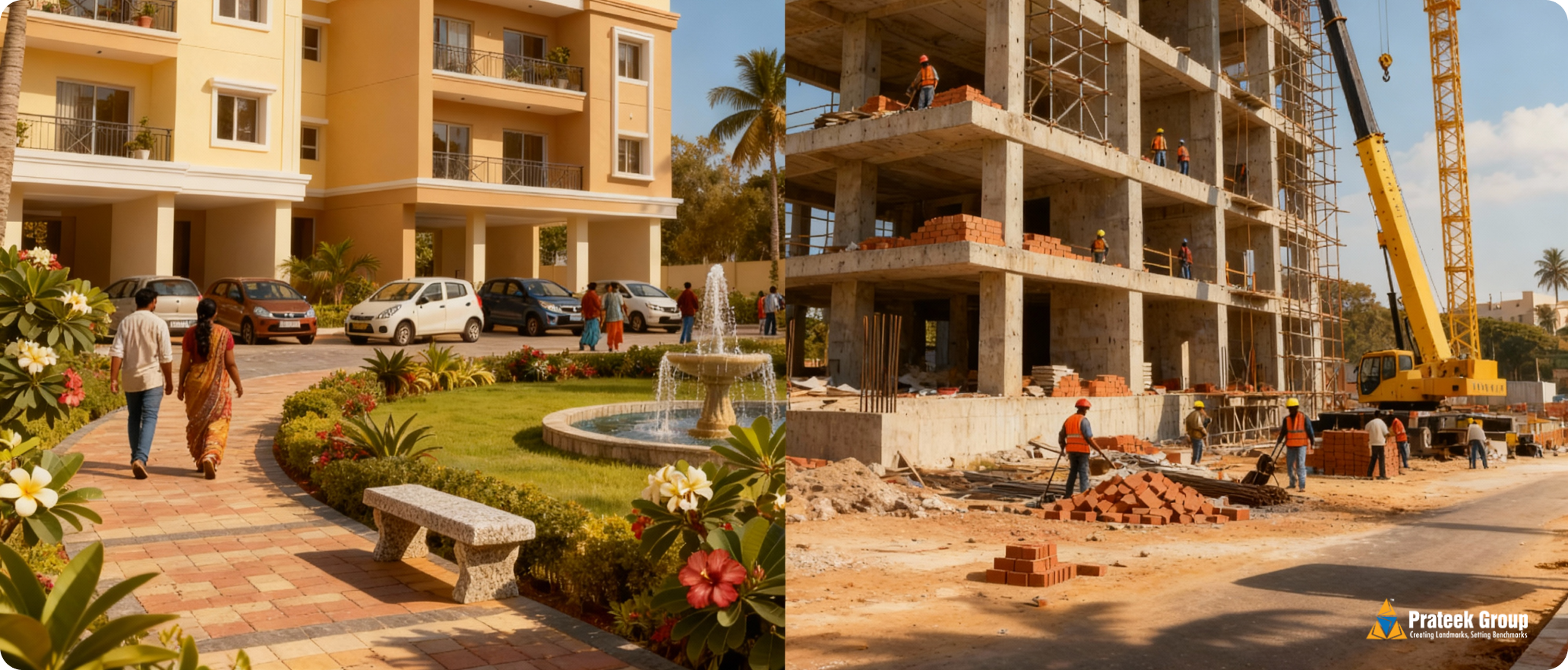
Choosing between a ready-to-move apartment and an under-construction home in 2025 involves far more than comparing prices. You also need to consider timelines, cash flow, tax impact, loan structure, legal safety, and long-term appreciation. Each option has its own strengths and trade-offs. With clear financial planning and the right priorities, the choice becomes easier and better aligned with your future goals.
This guide compares both options from every angle buyers look at today—price entry, appreciation potential, rental income, GST impact, EMI flow, legal assurance, RERA protection, and resale flexibility. Practical examples and quick checklists are included to simplify decisions.
A ready-to-move (RTM) property is fully constructed and available for immediate possession. Builders have completed all work, obtained the Occupancy Certificate (OC), and finished essential services such as water, electricity, lifts, and access roads.
Why buyers prefer it: You can see the exact home before paying, verify amenities in person, and avoid construction uncertainty. Legal checks are quicker since most approvals are already in place.
An under-construction property is still being built and hasn’t received its OC. Developers sell these units during construction, and possession may take one to five years depending on the project.
Why buyers choose it: Lower entry prices, flexible payment plans, early-bird discounts, and the possibility to customize interiors before possession.
Under-construction properties typically appreciate more—often 12–18% annually in emerging markets—because buyers enter at lower price points. Ready homes appreciate steadily but slower, as completed value is already factored in.
Ready-to-move properties offer instant rental income, often yielding 2.5–3.5% in key markets. Under-construction homes generate no rental returns until completion.
Ready homes: No GST if the OC is issued.
Under-construction: 5% GST for standard housing and 1% for affordable units.
Tax benefits also differ—ready homes allow immediate Section 24b and 80C claims; under-construction interest is claimable only after possession.
Nearly 90% of under-construction projects in India face delays, leading to rent + pre-EMI overlap. RERA mandates compensation, but recovery can be slow. Delays may nullify initial price advantages.
Under-construction units allow layout modifications during build stages. Ready homes offer less flexibility but enjoy higher resale liquidity.
Ready homes: Full loan released at once.
Under-construction: Funds disbursed in stages tied to progress.
Ready homes replace rent immediately. Under-construction homes create rent + pre-EMI overlap until possession.

Under-construction projects must be RERA registered. Check quarterly progress updates, escrow fund rules, and builder track record before buying.
OC ensures legal use of the property. Without it, utilities, loans, and resale become difficult. Ready properties with OCs offer higher legal safety.
Your choice depends on your budget, timeline, and investment goals.
Immediate possession, instant rental potential, no construction risks, and complete documentation. But prices are typically 10–30% higher.
Lower entry costs, better appreciation, flexible payments—but consider GST, delays, and lack of immediate usage.
In the end, both property types can deliver strong value when matched with the right financial strategy. Align your choice with your goals, risk comfort, and timelines to make a confident and sustainable home-buying decision.